
Last updated September 21, 2026
Full 25-point door and opener safety check with every visit - springs, cables, rollers, tracks, and your LiftMaster or Chamberlain opener included
You get a price before we start. It does not change when the truck arrives.
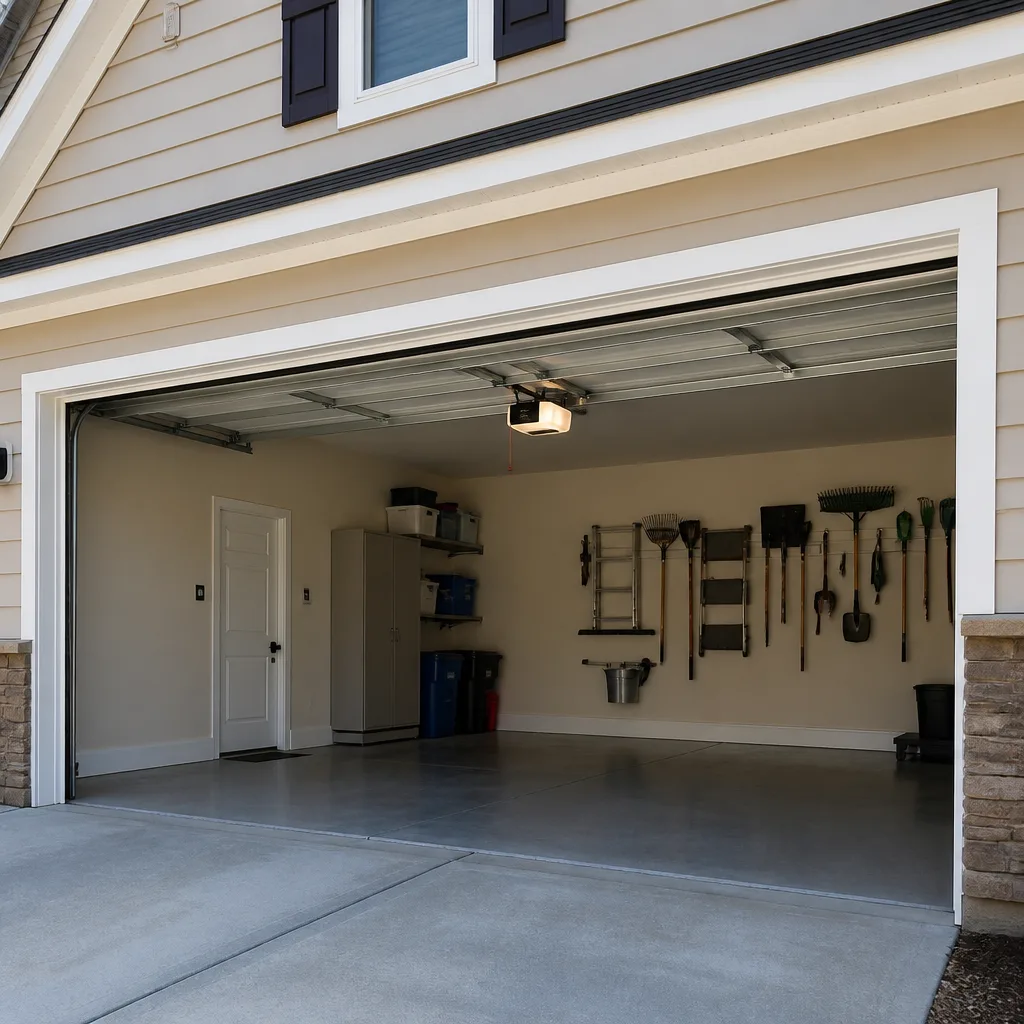
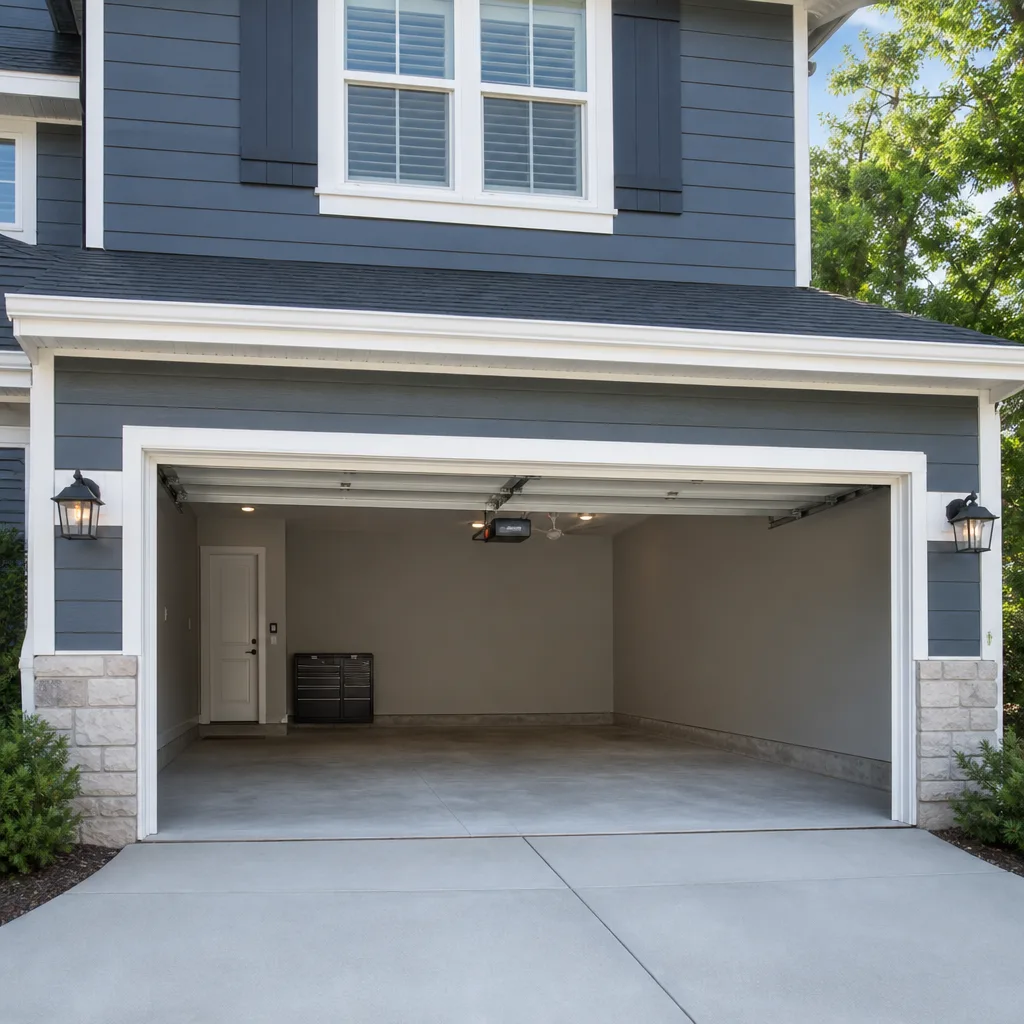
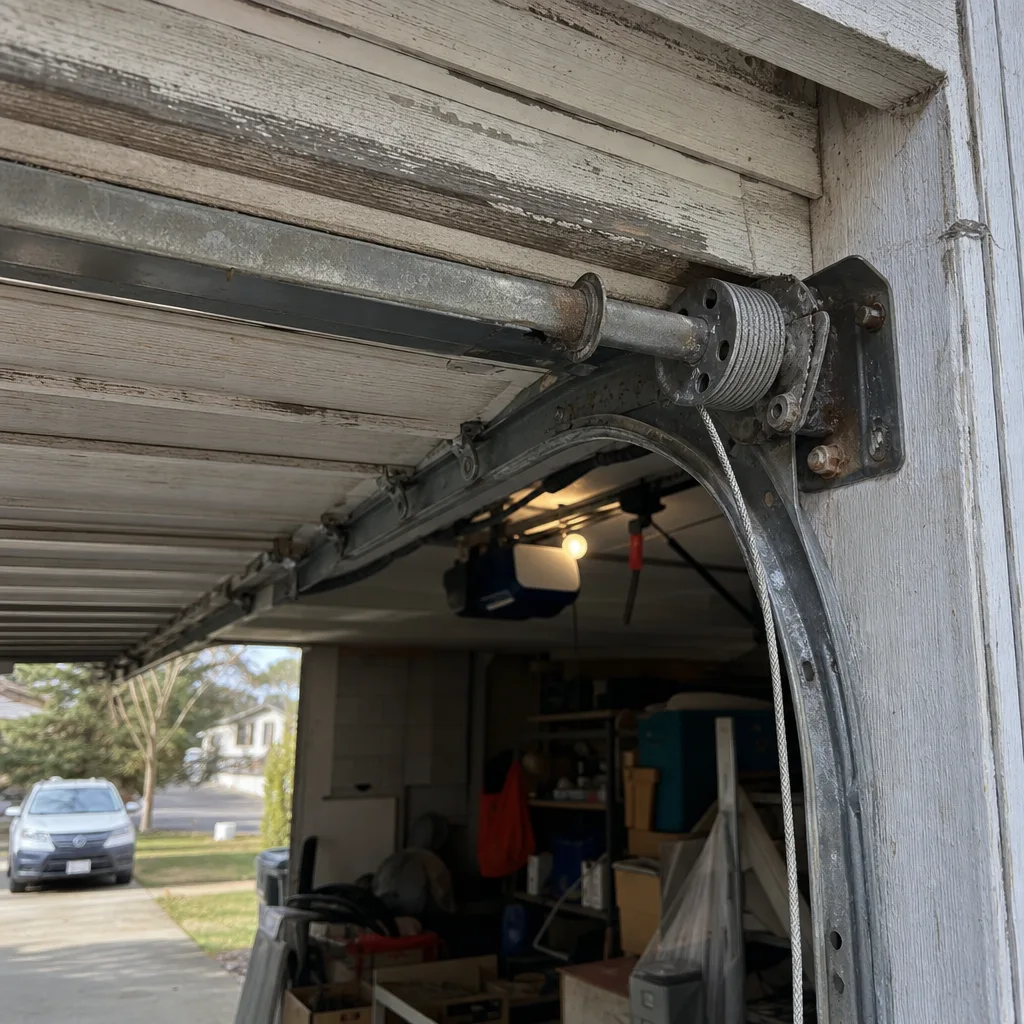 Before
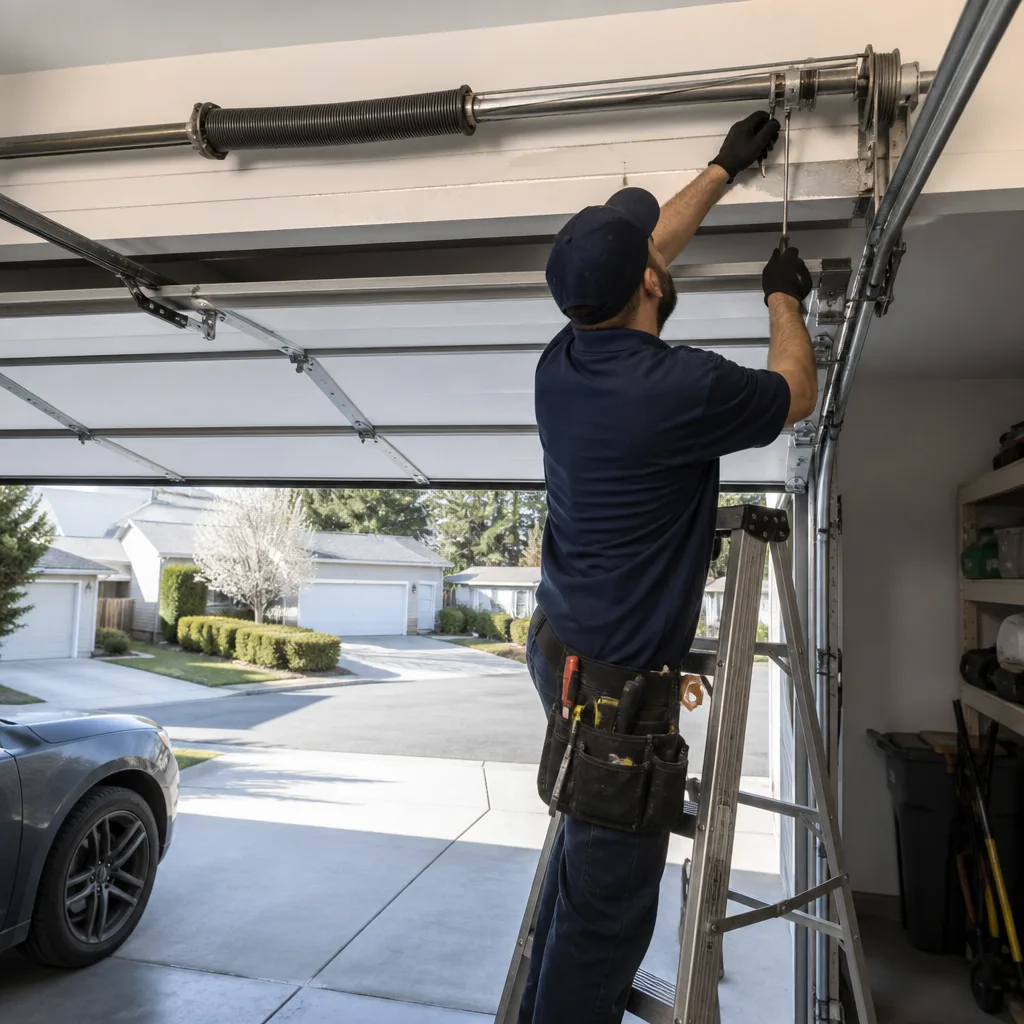 After
After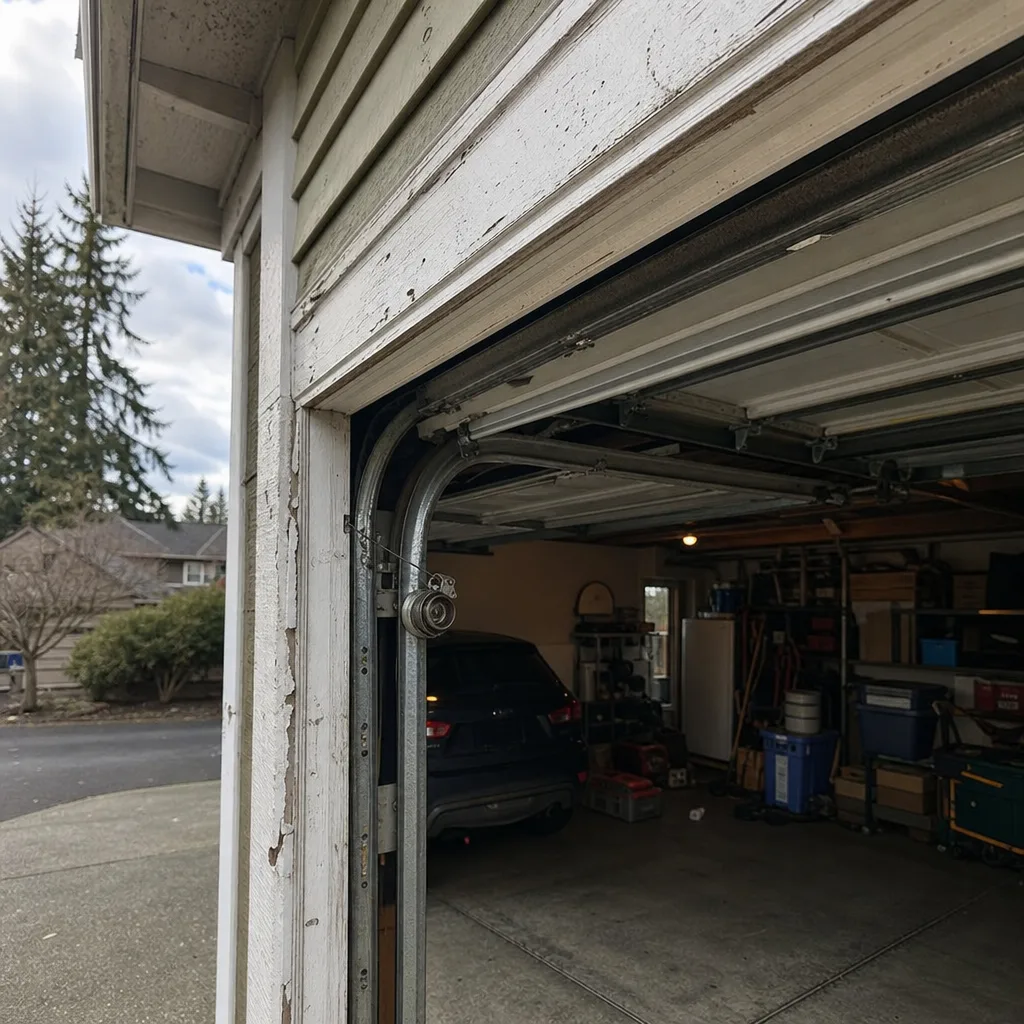 Before
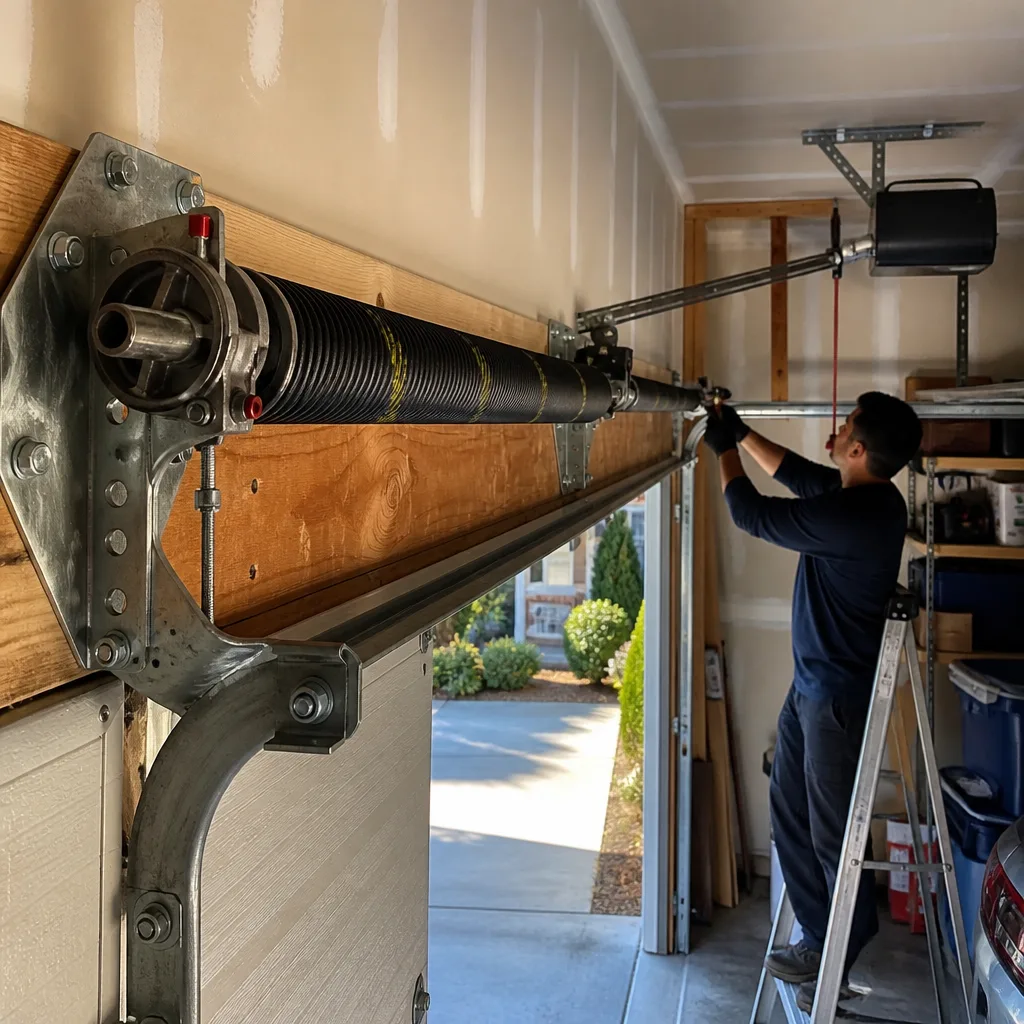 After
After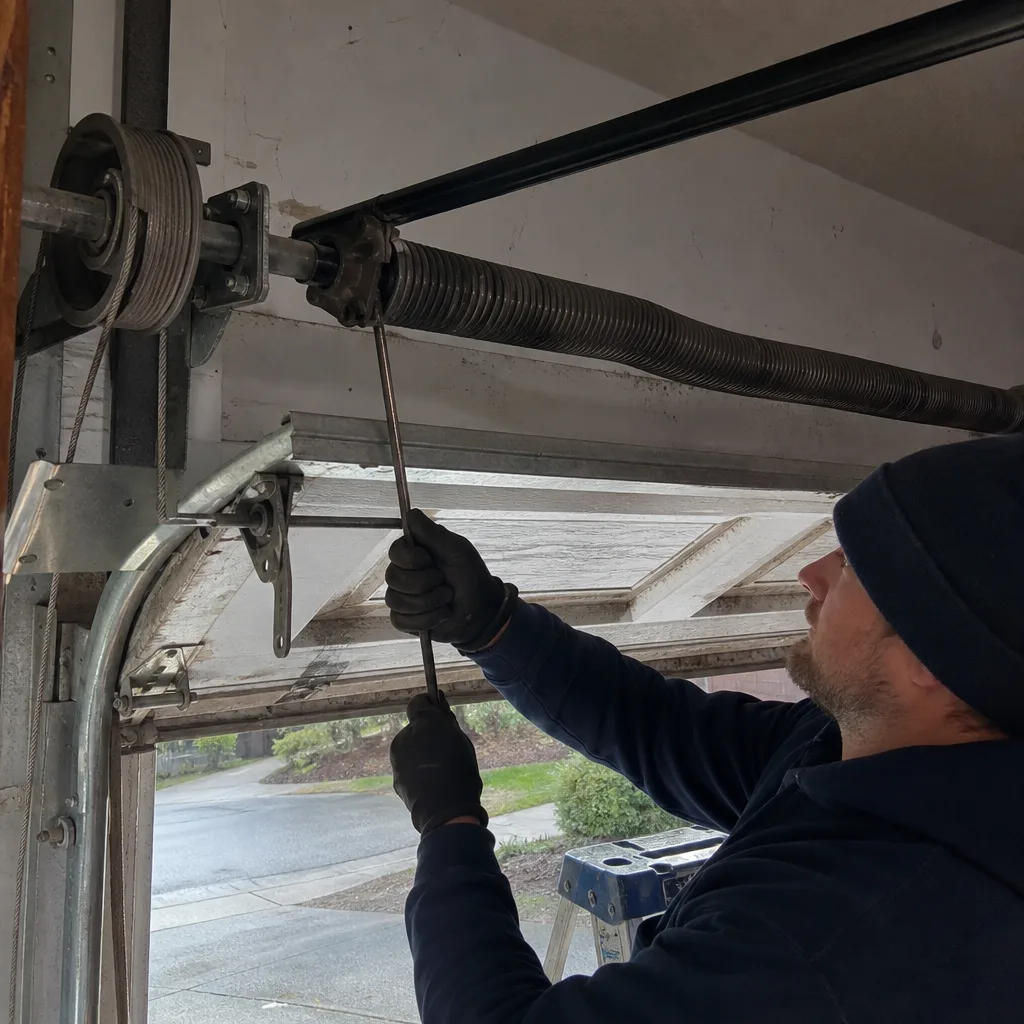 Before
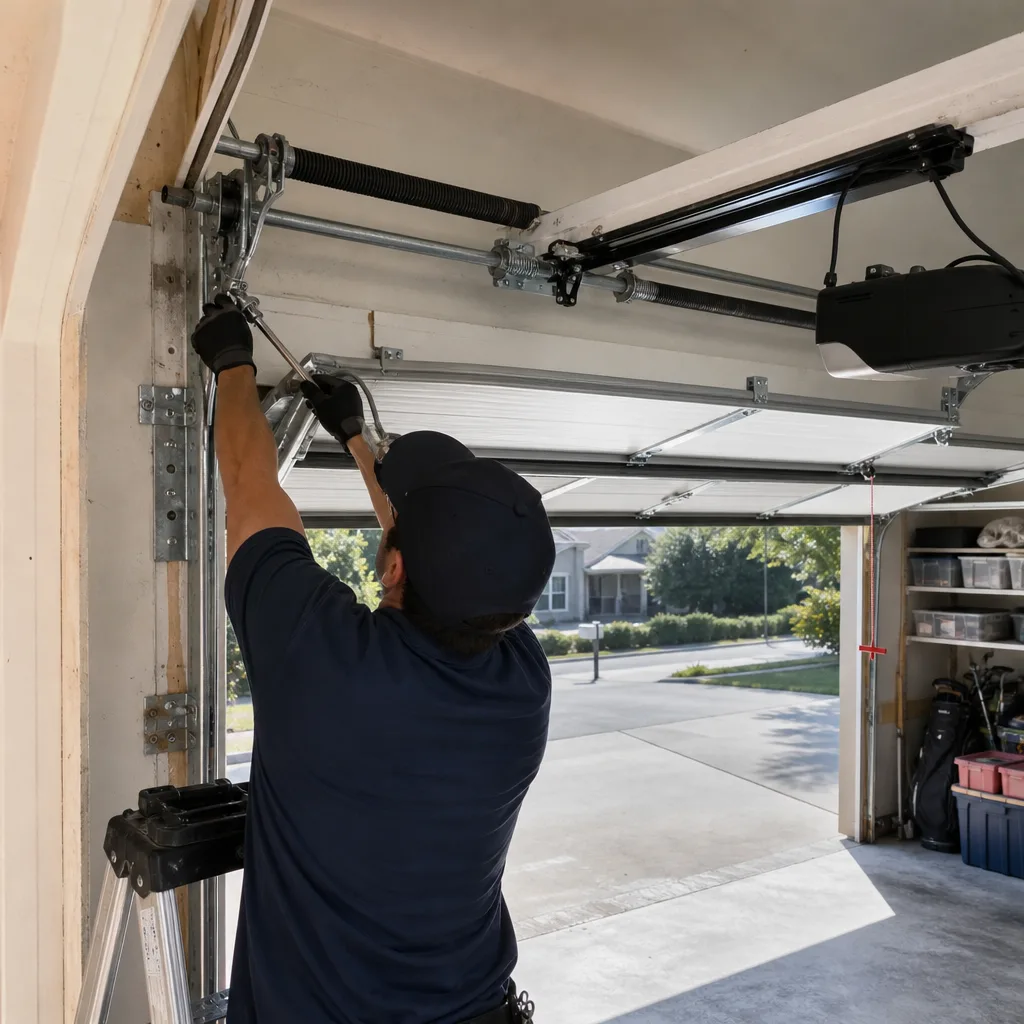 After
AfterGarage Door Cost Breakdown: The Bellevue Homeowner’s Reference for 2026
The $799 garage door installation advertised across Bellevue typically excludes the spring replacement, the new bottom seal, and the haul-away fee. The final invoice for that same call averages $1,340, and the gap isn’t a scam - it’s an incomplete quote. In our experience serving Bellevue since 2015, the only way to evaluate what you’re actually paying for is to see each cost line separated: the commodity part with its published price, the labor tied to job complexity, and the markup that has no market ceiling. This guide names the 2026 market ranges for each, shows how to spot bundled-quote padding, and explains why the photo-before-quote model eliminates the most common upcharge vector in the industry. For Garage Door Warning Signs: A Bellevue Homeowner’s Reference Guide, see our companion resource.
Quick Answer
In Bellevue, a complete garage door replacement in 2026 ranges from $1,150 for a basic 16-by-7 steel door with standard hardware to $3,800 for an insulated carriage-house style with a belt-drive opener and smart connectivity. Repair costs run narrower: a single torsion spring replacement typically costs $180-$340, while a full hardware overhaul - springs, cables, rollers, and drums - runs $650-$920. The widest variable is parts markup, which can range from 30% over distributor pricing to 200%, which is why we built Clause 1 of The Haven Standard around written, itemized pricing before any work starts.
Table of Contents
- Component-Level Pricing: What Each Part Costs in 2026
- Bellevue Labor Rate Ranges by Job Type
- How to Identify Parts Markup on a Bundled Quote
- Repair vs. Replace: When the Math Stops Working
- What the Photo-Before-Quote Model Changes About Pricing
- Bellevue-Specific Cost Factors: Climate, Code, and Market
- Opener and Door Brand Price Tiers
 Before
 After
AfterComponent-Level Pricing: What Each Part Costs in 2026
Garage door quotes bundle three distinct cost categories that behave differently in the market. Commodity hardware - springs, cables, rollers - has published distributor pricing any homeowner can verify. Doors and openers sit in the middle, with MAP (minimum advertised price) policies that limit how low retailers can go but say nothing about ceiling prices. Labor has no published standard at all. We’ll start with the parts you can price-check yourself.
Torsion Springs
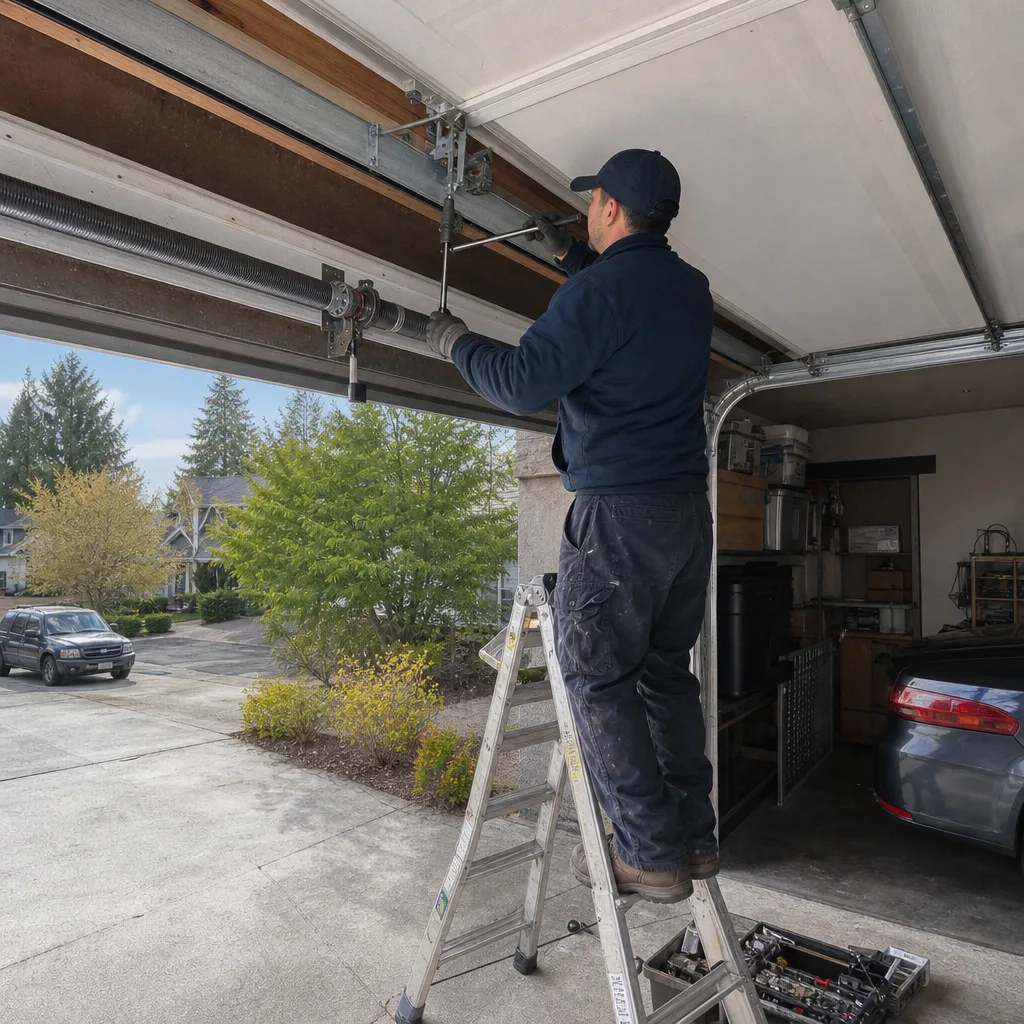
Torsion springs are the most commonly replaced component in Bellevue, and they’re specified by wire diameter, inner diameter, and length. A standard pair for a residential 16-foot door - 0.250-inch wire, 2-inch inner diameter, 33 inches long, rated at 10,000 cycles - costs $45-$65 from regional distributors in 2026. The 20,000-cycle upgrade, which we recommend for Bellevue homes with attached garages that see 4-6 cycles daily, runs $85-$120 for the pair. The heavier 0.273-inch wire used on solid wood doors or wind-rated systems pushes the pair to $140-$190.
What matters beyond price: cycle rating. A 10,000-cycle spring in a busy Bellevue household lasts 5-7 years. The 20,000-cycle version doubles that. We document the existing spring’s specifications in every photo record, so the homeowner sees exactly what was installed and why.
Cables, Drums, and Bottom Fixtures
A cable and drum set for a standard lift door - the configuration in 90% of Bellevue’s post-1985 housing stock - runs $35-$55. High-lift or vertical-lift hardware, common in newer homes with tall ceilings in neighborhoods like Somerset and West Bellevue, costs $75-$120. Bottom fixtures (the brackets that anchor cables to the door) add $18-$32 per side. These are rarely the failure point, but we replace them as a set when cables show fraying because the labor to return exceeds the part cost.
Rollers
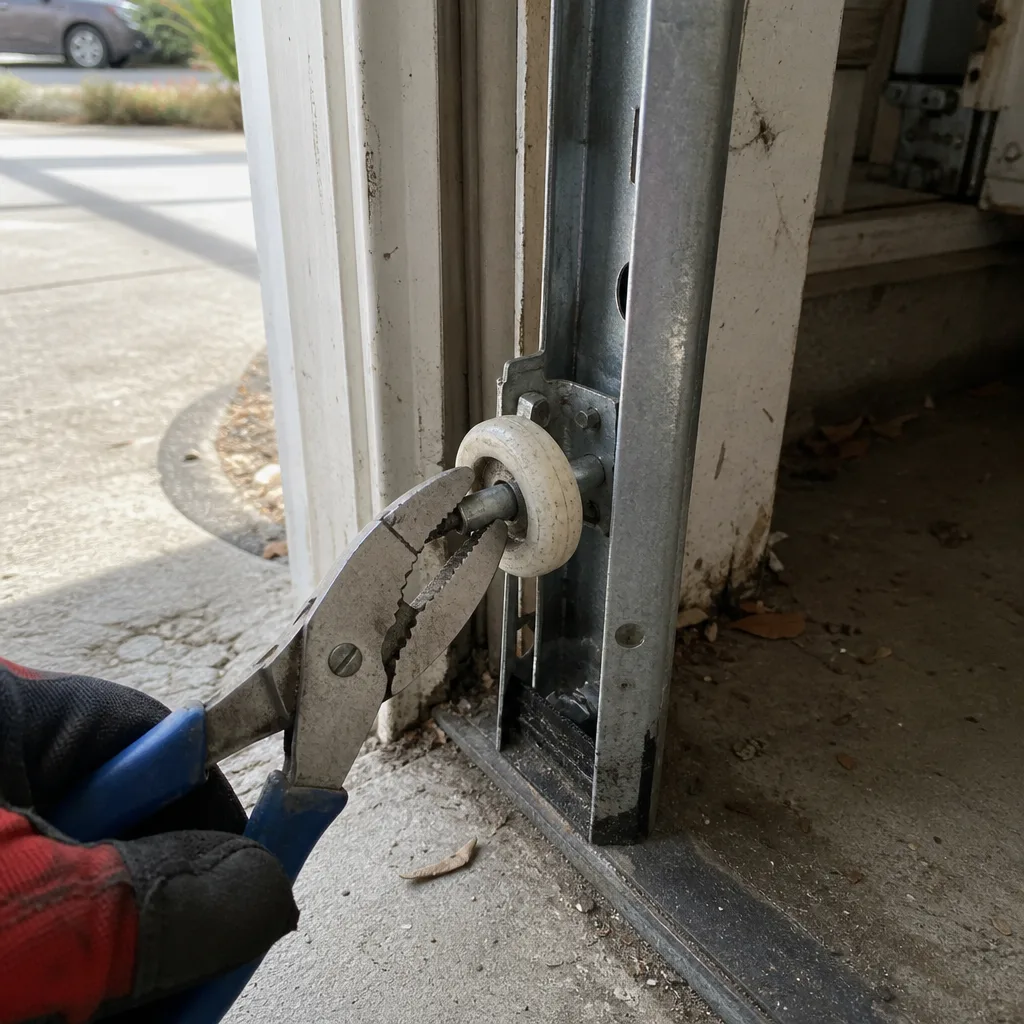
Rollers are where contractors often bury markup because homeowners don’t think to ask about grade. Standard 10-ball steel rollers - loud, short-lived, and prone to rust in Bellevue’s wet winters - cost $4-$6 each. Nylon 13-ball sealed rollers, which we specify for every replacement, run $8-$14 each. A 16-foot door has ten rollers. The difference between bottom-tier and quality rollers is $40-$80 in parts, but the quiet operation and 15-year lifespan versus 3-5 years for steel pays back quickly in a home where the garage sits under a bedroom or home office.
Weather Seals and Trim
Bottom seals deteriorate faster in Bellevue than inland markets because of Puget Sound’s salt-laden moisture and the temperature swings that harden rubber. A standard vinyl-bottom seal with aluminum retainer costs $25-$45. The heavy-duty EPDM rubber version, rated for 40°F below zero and essential for homes near Lake Washington’s wind exposure, runs $55-$85. Perimeter vinyl trim and stop molding adds $40-$90 depending on door size and whether the existing wood frame is sound.
Opener Components
When an opener fails, the component matters. A replacement logic board - the computer that controls modern openers - costs $85-$180 depending on brand and feature set. A trolley carriage assembly (the part that connects the door to the drive mechanism) runs $35-$65. The motor itself is rarely economical to replace separately; when it fails, full opener replacement is typically the better value.
| Component | Basic Grade | Quality Grade | Premium/Heavy-Duty |
|---|---|---|---|
| Torsion spring pair (10K/20K cycles) | $45-$65 | $85-$120 | $140-$190 |
| Cable and drum set | $35-$55 | $55-$75 | $75-$120 |
| Rollers (per 10-roller set) | $40-$60 | $80-$140 | N/A |
| Bottom seal with retainer | $25-$45 | $55-$85 | N/A |
| Logic board | $85-$120 | $120-$180 | N/A |
Bellevue Labor Rate Ranges by Job Type
Labor pricing in the Bellevue market reflects Eastside cost structures: higher technician wages than Tacoma or Everett, tighter parking and access in dense neighborhoods like Downtown Bellevue and Wilburton, and a customer base that expects evening and weekend availability. We’ve tracked our own dispatch data and collected range information from permit filings and competitor estimates to build the following picture.
Single Spring Replacement
A straightforward torsion spring swap on a standard steel door - one technician, one hour, no surprises - runs $120-$180 in labor across Bellevue-area contractors in 2026. The job requires releasing tension from the unbroken spring, removing the broken spring and winding cones, installing the new spring, and winding to the correct number of turns. Where this gets variable: doors with restricted headroom (common in Bellevue’s 1960s-1980s rambler stock), custom wood doors that require two technicians for safe handling, or springs in a shaft-mounted dual-spring system where both must be replaced as a matched pair even if only one failed.
Full Hardware Overhaul
Replacing springs, cables, drums, rollers, and bearings on a standard 16-foot door takes 2.5-3.5 hours and runs $280-$420 in labor. The range reflects door condition: rusted fasteners that require cutting and drilling, misaligned tracks that need realignment before new hardware will operate smoothly, and the occasional discovery of a cracked hinge or bent section that wasn’t visible on initial inspection. This is where the photo-before-quote model proves its value - we photograph the full hardware set during our diagnostic so the homeowner sees the rust, the wear patterns, and the specific parts before any labor clock starts.
Full Door Replacement with Opener
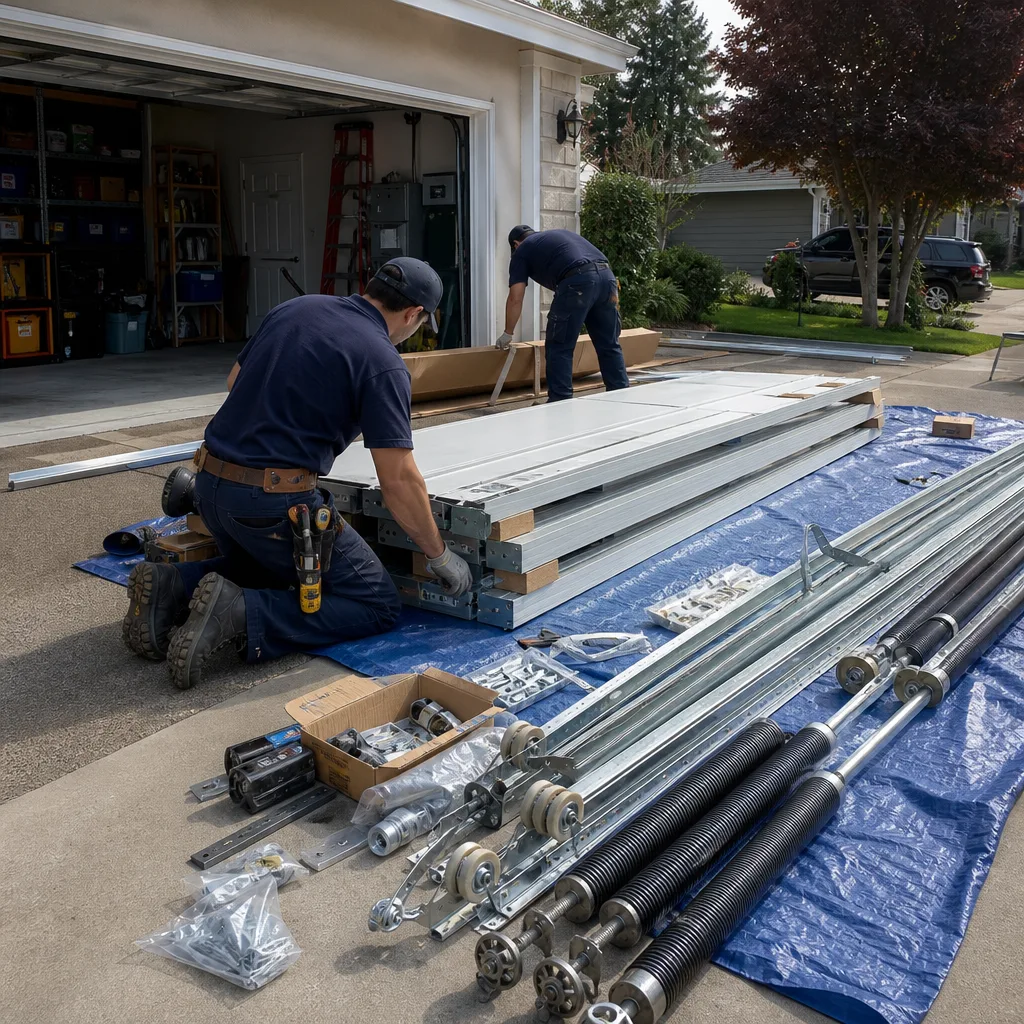
Removing an existing door and opener, disposing of both, installing new tracks, hardware, door sections, and opener, then testing and adjusting - this is a full-day job for two technicians. Labor ranges from $580-$920 in the Bellevue market. The high end applies to:
- Doors requiring header modification (raising the opening, common in garage conversions and ADU projects)
- Steel-to-wood or basic-to-insulated upgrades where the new door weighs 150+ pounds more than the old
- Opener relocations (moving from ceiling to wall mount, increasingly requested in Bellevue’s tall-ceiling new construction)
- Jobs in hillside homes with stepped driveways or limited side access, where every component must be carried by hand
New Installation (No Existing Door)
New construction or a freestanding garage with no prior door runs $420-$680 in labor, assuming standard framing and electrical. Header modification - reinforcing or replacing the 2-by-12 or engineered beam above the opening to handle the new load - adds $180-$340. In Bellevue, Garage Door Permits, Codes & Inspections in WA: What You Need to Know vary by jurisdiction: city limits require inspection for header work, while unincorporated King County does not. We handle permit pulling as part of our scope when needed, and the cost is itemized in the written quote.
| Job Type | Labor Range | Typical Duration | Common Complications |
|---|---|---|---|
| Single spring replacement | $120-$180 | 45-75 min | Restricted headroom, dual-spring systems |
| Full hardware overhaul | $280-$420 | 2.5-3.5 hrs | Rusted fasteners, track misalignment |
| Door + opener replacement | $580-$920 | 6-8 hrs | Header mod, weight increase, access limits |
| New installation (no existing door) | $420-$680 | 4-6 hrs | Header modification, permit requirements |
How to Identify Parts Markup on a Bundled Quote
This is where most homeowners lose visibility. A contractor presents a single number - “$1,895 for a new door, installed” - and there’s no way to tell whether the door itself cost $680 or $1,200, whether the opener was a $220 unit or a $520 unit, or whether labor was priced at $90 per hour or $190. The bundled quote isn’t illegal. It’s just not evaluable.
Here’s how to reverse-engineer it.
- Request the part numbers. Every door, opener, and hardware component has a manufacturer part number. A Clopay Gallery Collection door is GD1LU, GD2LU, or GD2SU depending on insulation level and window package. A LiftMaster 84505R has a specific SKU. Write these down.
- Check published pricing. Clopay, Amarr, Wayne Dalton, LiftMaster, and Chamberlain all publish MSRP or MAP pricing on their consumer websites. Distributor pricing for hardware - springs, cables, rollers - is available through online retailers like DDM Garage Doors or DIY Garage Door Parts. You’re not looking to buy; you’re looking to establish a baseline.
- Apply a reasonable markup. A contractor who stocks inventory, honors warranty claims, and covers callback labor deserves markup. In our experience, 40-70% over distributor cost for commodity hardware is standard. 100% is aggressive but not uncommon for emergency calls. Above 150% warrants a direct conversation about what’s included - expedited sourcing, extended warranty, or simply margin padding.
- Compare labor separately. With parts priced at baseline plus reasonable markup, the remainder is labor. Divide by estimated hours. If you’re seeing $250 per hour for routine work, that’s not Bellevue market rate - that’s a bundled quote obscuring inflated pricing.
At Servo Garage Doors Bellevue, we itemize every quote per Clause 1 of The Haven Standard: part number, manufacturer, our cost, our markup percentage, labor hours, and labor rate. The homeowner sees the same documentation we use internally. No bundled opacity, no “trust us” required.
Repair vs. Replace: When the Math Stops Working
The repair-or-replace decision isn’t about door age alone. It’s about failure type, remaining component life, and the cumulative cost of sequential repairs. We’ve replaced doors at 12 years and repaired doors at 28. Here’s how we evaluate it in Bellevue homes, with our Garage Door Repair Maintenance Checklist for Bellevue Homeowners as a starting framework.
When Repair Is the Clear Choice
- Single spring failure on a door under 15 years old with original hardware. The door sections, track, and bearings have remaining life. One spring replacement, matched to the unbroken spring’s cycle rating, restores full function for $280-$420 total.
- Opener logic board failure on a unit under 10 years old. The drive mechanism, rail, and motor are sound. Board replacement at $180-$320 total extends service life 5-8 years.
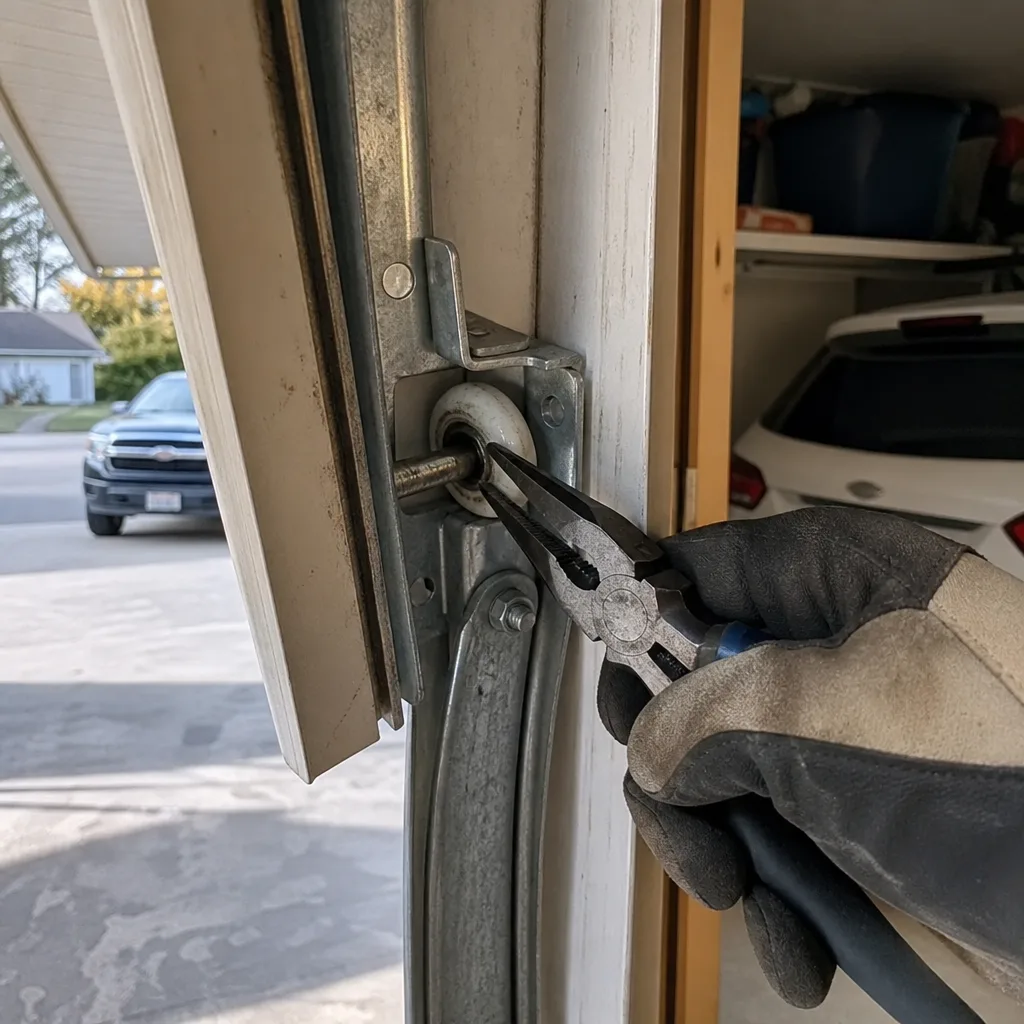
- Isolated cable fray or roller wear. These are maintenance items, not system failures. Addressing them prevents the cascade damage that would force replacement later.
When Replacement Makes Sense
- Second spring failure on a door over 18 years old. By this point, hinges are fatigued, sections are delaminating, and the track hardware is corroded. The next repair is 6-18 months away. Cumulative repair costs exceed 60% of replacement cost.
- Section damage on a non-insulated steel door without panel replacement availability. Manufacturers discontinue panel molds every 7-10 years. If the door is out of production, section replacement isn’t possible. Full replacement is the only path to weather-tight, secure operation.
- Opener failure on a chain-drive unit over 15 years old with no safety sensors. Pre-1993 openers lack the photoelectric reverse system required by federal law. Repair isn’t code-compliant. Replacement with a modern belt-drive or wall-mount unit is mandatory.
- Energy efficiency upgrade with attached garage. Bellevue’s heating degree days justify insulated doors for any garage sharing a wall with conditioned space. An R-6 or R-12 insulated door reduces heat loss through the largest uninsulated surface in most homes. The payback period runs 4-7 years depending on fuel type and garage usage.
The Cascade Failure Pattern
We see this most often in Bellevue’s 1970s-1990s neighborhoods - Lake Hills, Crossroads, Factoria - where original doors are hitting 30-40 years. The spring breaks. The homeowner replaces it. Six months later, a cable snaps because the drum was grooved by the unbalanced door running on a broken spring. Then a hinge cracks because the door has been shaking. Each repair is “just” $200-$400, but the total hits $900+ in 18 months on a door with delaminating sections and no insulation. At that point, replacement at $1,400-$2,200 would have been the better value.
Our documentation protocol - Clause 4 of The Haven Standard - is designed to catch this pattern early. The technician photographs not just the failed part but the adjacent components: drum condition, hinge stress cracks, section delamination. The homeowner sees the full system state, not just the single failure, and can make an informed repair-or-replace decision before the cascade accelerates.
What the Photo-Before-Quote Model Changes About Pricing
The most common upcharge vector in garage door service is the “surprise” discovery: the technician arrives, diagnoses the obvious failure, then “finds” additional problems that inflate the final invoice 40-200% above the phone estimate. This isn’t universal fraud. It’s the inevitable result of a business model that quotes by phone without visual verification, then compensates technicians on commission for upsells.
The photo-before-quote model inverts this entirely. Here’s how it works at Servo Garage Doors Bellevue:
- The homeowner describes the symptom by phone. “The door won’t open, and I heard a loud bang yesterday morning.” Our dispatcher - a live person, 24 hours a day - books a diagnostic visit with a flat $0 estimate fee.
- The technician arrives and photographs before touching anything. The door in its failed position. The broken spring with a tape measure showing wire diameter and length. The drum and cable set. The opener rail and trolley position. These images are time-stamped and uploaded to the customer’s record.
- The technician identifies the part numbers needed. Not “a spring like this one” - the exact spring specification, verified against the door weight and drum geometry. Not “probably the board” - the opener model and diagnostic code.
- The written quote is generated from verified parts and labor. The homeowner sees the distributor cost, our markup, the labor hours, and the total. They approve or decline before work starts. If they decline, they keep the photo record at no charge.
- After completion, the after photos document the installed components. The new spring with its specification tag visible. The torque measured in inch-pounds on the winding bars. The door balanced and tested. This closes the documentation loop.
What this eliminates: the “while I was in there” upsell that wasn’t in the quote. The “your cables are worn too” discovery that should have been visible in the initial photo. The parts markup that can’t be verified because no part number was ever stated. The homeowner who feels pressured to approve on the spot because the technician is already halfway through disassembly.
What it costs us: we don’t close every call. Some homeowners use our photo record to shop competitors, or to attempt DIY repair. We accept that. Clause 1 of The Haven Standard - written price before any work starts - is more valuable than a pressured sale. Our 18,000+ completed jobs since 2015 suggest the approach sustains a business over time.
Bellevue-Specific Cost Factors: Climate, Code, and Market
Garage door pricing isn’t uniform across markets. Bellevue’s specific conditions create cost pressures that don’t apply in Phoenix or Minneapolis.
Climate and Material Selection
Bellevue’s marine west coast climate - wet winters, mild summers, moderate temperature swings - is harder on garage doors than the raw numbers suggest. The issue isn’t extreme cold. It’s persistent moisture combined with salt-laden air from Puget Sound, particularly in neighborhoods west of I-405 like Medina, Clyde Hill, and West Bellevue. Standard galvanized steel hardware corrodes faster here than inland. We specify zinc-aluminum coated springs and stainless steel cables for any door within a mile of the water, adding $35-$65 to hardware costs but doubling corrosion resistance.
Wood doors, popular in Bellevue’s higher-end construction, require more frequent refinishing - every 2-3 years versus 4-5 in drier climates - or they delaminate and rot at the bottom panel. The maintenance cost belongs in the lifetime calculation even if it’s not in the installation quote.
Wind Load and Seismic Requirements
Bellevue sits in a moderate seismic zone and a low wind zone, so extreme-load hardware isn’t code-required for most residential construction. But hillside homes in Somerset, Newport Hills, and Cougar Mountain experience accelerated wind exposure that can stress standard doors. We evaluate site-specific conditions during our diagnostic and specify reinforced track and heavy-duty hinges when warranted. This adds $80-$150 to a standard installation but prevents the track flex and roller jump that cause callbacks.
Permit and Inspection Costs
New door installation in Bellevue proper requires a building permit for any structural modification, including header replacement or opening resizing. The permit itself runs $180-$280 depending on project value. King County’s unincorporated areas have different fee structures. We pull permits as part of our scope and itemize the cost. Contractors who skip permitting to hit a lower price create liability for the homeowner at resale, when unpermitted work surfaces in disclosure.
Access and Logistics
Bellevue’s density increases labor costs in specific ways. Downtown high-rises with parking-garage doors require after-hours scheduling and coordination with building management. Hillside homes with stepped driveways mean carrying door sections by hand rather than using a truck-mounted lift. Narrow lots in older neighborhoods leave no space for material staging. These aren’t upsells. They’re real cost drivers that honest quotes must account for.
Opener and Door Brand Price Tiers
Brand selection affects both upfront cost and long-term serviceability. We service all eight major brands - LiftMaster, Chamberlain, Genie, Clopay, Amarr, Wayne Dalton, Craftsman, and Raynor - and our recommendations vary by application, not by promotional margin.
Door Brands: Clopay and Amarr
For Bellevue’s market, Clopay and Amarr dominate residential sales. Clopay’s Gallery Collection - stamped steel with carriage-house overlay - runs $680-$1,200 for the door only depending on insulation (non-insulated, 2-inch Intellicore, or 1-3/8-inch polystyrene) and window package. The Coachman Collection, a composite overlay with woodgrain texture, pushes to $1,400-$2,200. Amarr’s Classica line competes in the same space at similar price points; their Oak Summit line offers a lower-cost carriage-house look at $520-$890.
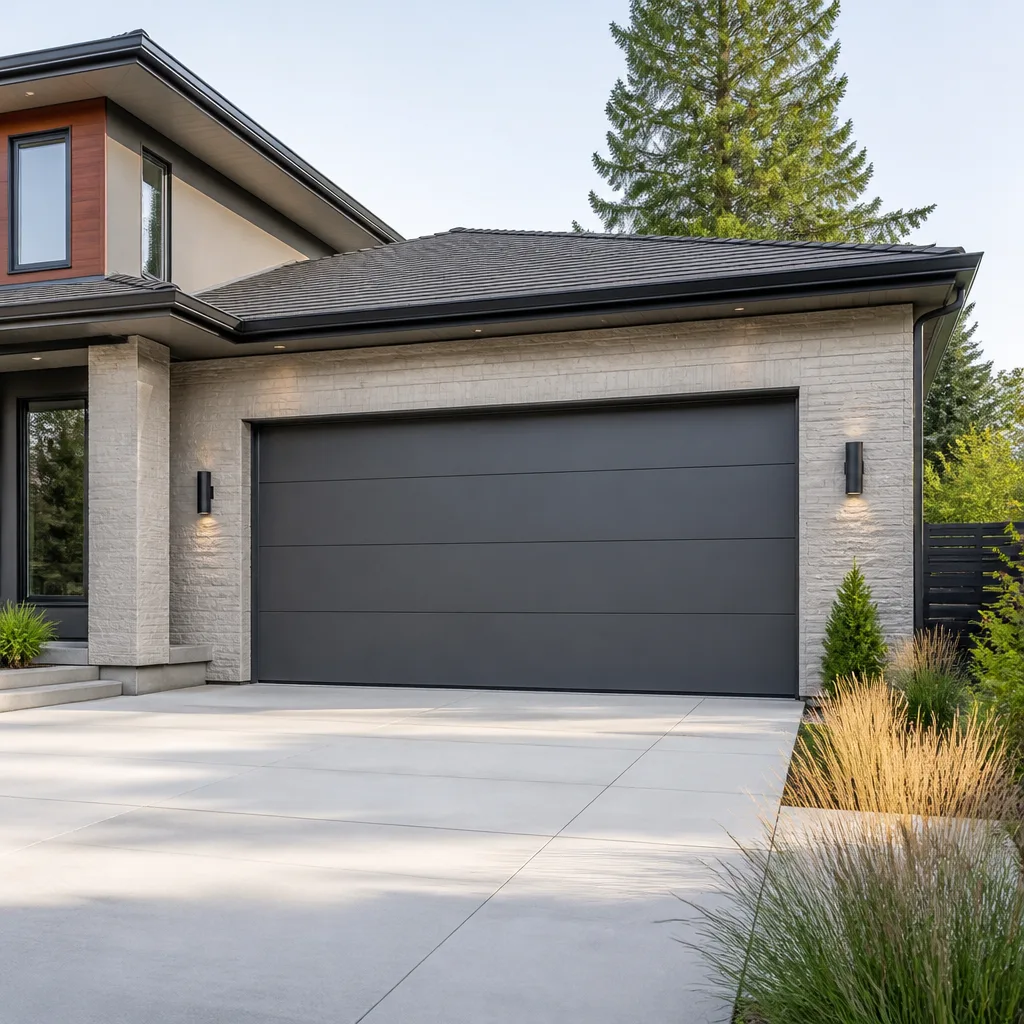
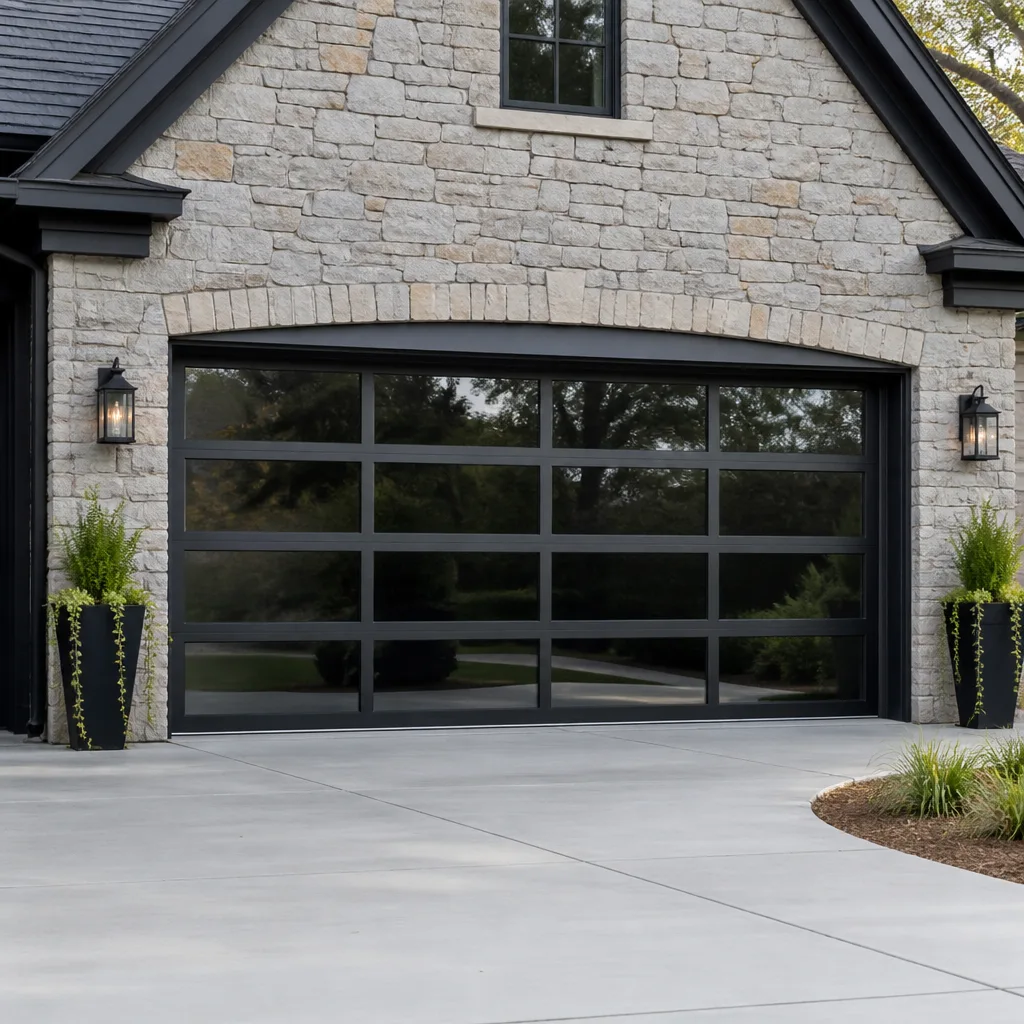
For modern and contemporary homes - increasingly common in Bellevue’s new construction - Clopay’s Avante full-view aluminum and glass door runs $2,800-$4,500 depending on panel opacity and anodized finish. These are specialty orders with 4-6 week lead times, not stock items.
Opener Brands: LiftMaster, Chamberlain, and Genie
LiftMaster and Chamberlain share a parent company (Chamberlain Group) but target different channels. Chamberlain sells primarily through retail (Home Depot, Lowe’s) with DIY installation emphasis. LiftMaster sells through professional dealers with extended warranties and smart-home integration. For our Bellevue installations, we specify LiftMaster because the warranty requires professional installation and the myQ ecosystem integrates with most home automation platforms.
2026 pricing for common LiftMaster models:
- 8165W (1/2 HP chain drive, Wi-Fi): $220-$280. Basic, loud, reliable. Suitable for detached garages where noise doesn’t matter.
- 8355W (1/2 HP belt drive, Wi-Fi): $320-$380. Quiet operation for attached garages. The belt eliminates chain rattle.
- 84505R (3/4 HP belt drive, battery backup, LED, myQ): $420-$520. Our standard recommendation for Bellevue homes. Battery backup is code-required for new construction in Washington; it’s worth retrofitting for existing homes that lose power during windstorms.
- 8500W (wall-mount, side-mount, no rail): $480-$580. Frees ceiling space for storage or lighting. Requires a front-mount torsion spring system; not compatible with all door configurations.
Genie’s ChainLift and SilentMax lines compete at lower price points - $180-$320 - but with shorter warranty terms and more limited smart-home integration. We install them when a homeowner specifically requests, but our default recommendation remains LiftMaster for the service network depth and parts availability.
Common Mistakes to Avoid
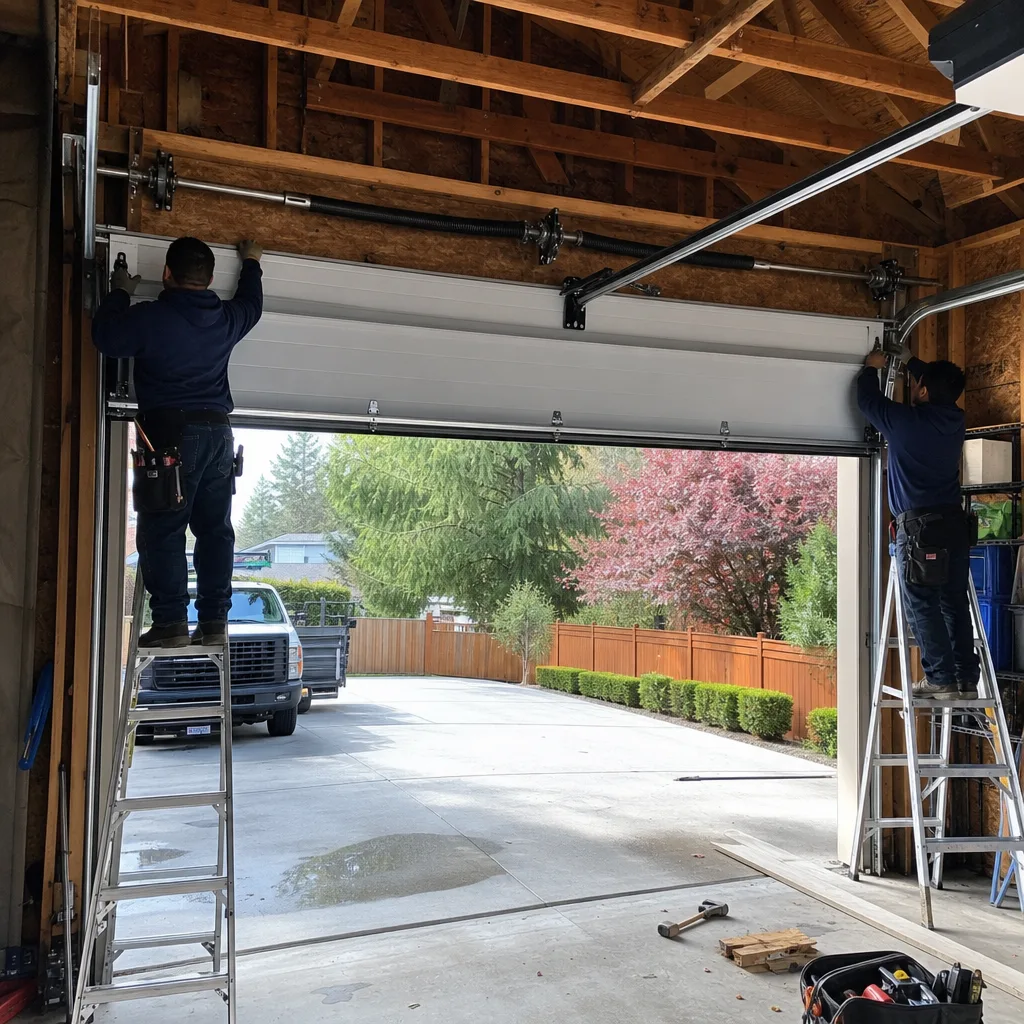
- Accepting a phone quote as final. No technician can verify spring wire diameter, door weight, or opener diagnostic codes over the phone. A “starting at” price that jumps 60% on arrival isn’t a quote - it’s a lead-generation tactic. Insist on an in-person diagnostic with written, itemized pricing.
- Ignoring cycle rating on spring replacement. A contractor who installs 10,000-cycle springs on a door that sees 8 cycles daily is planning to return in 3.5 years. Specify 20,000-cycle springs and verify the specification in writing.
- Replacing only one spring in a dual-spring system. Matched springs wear together. An old spring paired with a new spring creates imbalance, accelerates opener wear, and typically fails within 12 months. Both springs should be replaced as a set even if only one broke.
- Choosing a door without calculating R-value for attached garages. Bellevue’s heating season justifies insulation. An uninsulated steel door in an attached garage is a thermal bridge that increases energy costs year-round.
- Overlooking haul-away and disposal fees. A full door replacement generates 200-400 pounds of material. Some contractors quote “installation” without “removal and disposal,” then add $150-$250 on the final invoice. Verify this is included or explicitly itemized.
- Skipping permit verification for header modifications. Unpermitted structural work complicates home sales and insurance claims. A contractor who suggests “we can just do it” without pulling permits is transferring liability to you.
When to Call a Professional
Some garage door work belongs to technicians with proper tools and training. Torsion springs store lethal energy - a standard spring for a 16-foot door is wound to 1,000+ inch-pounds of torque, and the winding bars can cause serious injury if they slip. Cable replacement requires releasing this tension safely. Opener electrical work involves 120V circuits that demand lockout-tagout procedures.
Call a professional when: the door is stuck open or closed and you cannot secure your home; a spring is visibly broken or the door feels heavy to lift manually; the opener runs but the door doesn’t move, suggesting trolley or drive failure; or cables have jumped the drum and the door hangs unevenly. These are not DIY situations.
For any of these scenarios, Servo Garage Doors Bellevue offers free estimates in Bellevue - no phone quote bait-and-switch, no dispatch fee, no obligation. Call (425) 696-3561 and a live person will schedule a diagnostic visit with full photo documentation and written, itemized pricing before any work starts.
Frequently Asked Questions
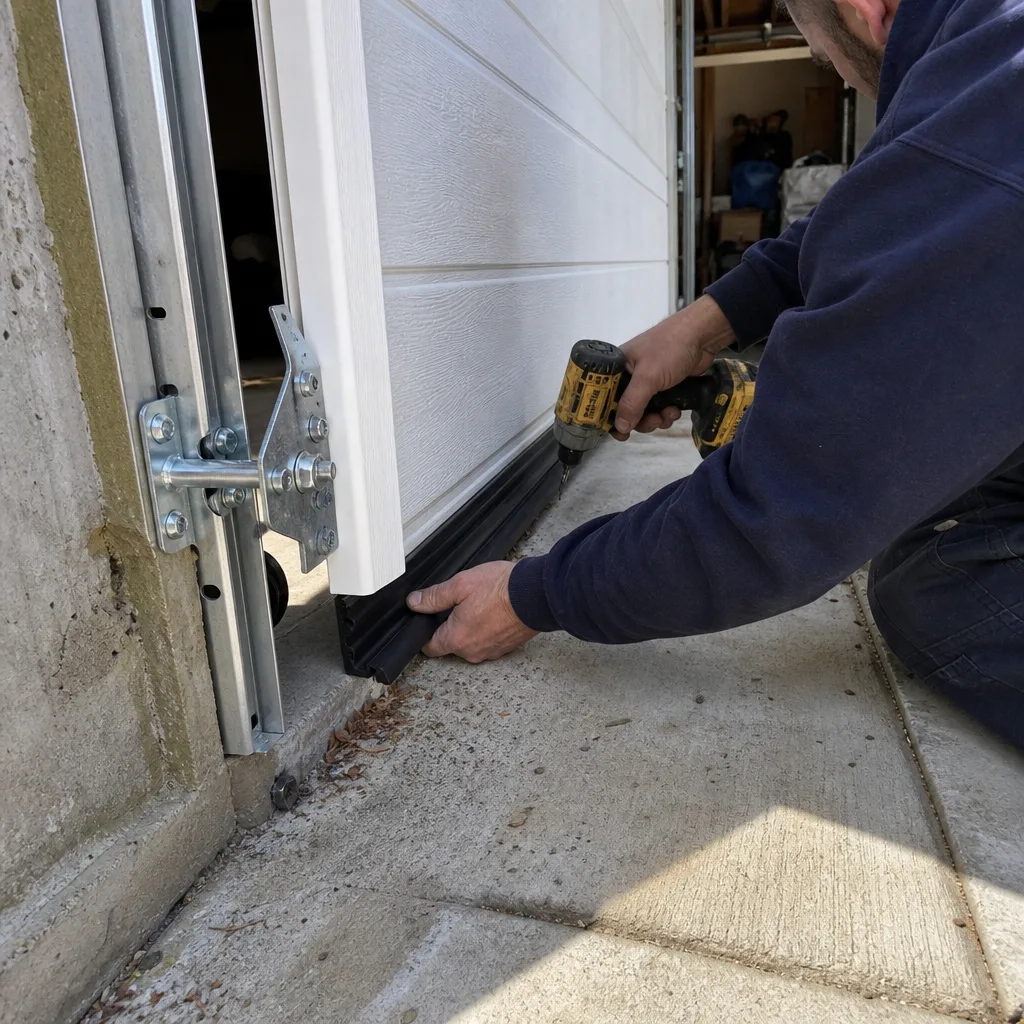
A complete garage door replacement in Bellevue ranges from $1,150 for a basic 16-by-7 non-insulated steel door with standard hardware to $3,800 for an insulated carriage-house style with a belt-drive opener and smart connectivity. The mid-range - where most Bellevue homeowners land - is $1,800-$2,600 for a quality insulated door with professional-grade hardware and a 3/4 HP opener with battery backup. Call (425) 696-3561 for an exact quote on your specific door size and configuration - estimates are free.
Quotes vary because contractors bundle differently: some exclude springs, seals, or disposal; some use 10,000-cycle springs versus 20,000-cycle; some mark up parts 40% and others 150%. The only way to compare is itemized pricing with part numbers. At Servo Garage Doors Bellevue, every quote under Clause 1 of The Haven Standard separates parts, labor, and markup so you can cross-check against published distributor pricing.
Typically no, and often it costs more. Professional dealers receive volume pricing below retail, and their installation warranty covers both door and labor. A homeowner-purchased door from a big-box store carries only manufacturer warranty, and many installers won’t warranty labor on customer-supplied doors because they can’t verify proper handling and storage. The savings are usually illusory.
A quality steel door with proper maintenance lasts 25-30 years in Bellevue’s marine climate. Wood doors last 15-20 years with regular refinishing. The hardware - springs, cables, rollers - wears faster: springs 7-15 years depending on cycle rating, rollers 10-15 years for nylon, 3-5 for steel. Salt exposure within a mile of Puget Sound accelerates corrosion; specify stainless or coated hardware for these locations.
At Servo Garage Doors Bellevue, no. Clause 1 of The Haven Standard requires a flat, written price before any work starts. The diagnostic visit is free. The technician photographs the failed components, identifies the exact parts needed, and generates an itemized quote. You approve the exact price before work begins. If you decline, you owe nothing and keep the photo record. Call (425) 696-3561 to schedule.
Our Bellevue service trucks stock the 20 most common spring sizes, standard cable and drum sets, nylon rollers, weather seals, and opener logic boards for LiftMaster, Chamberlain, and Genie. Same-day completion is standard for spring replacements, cable repairs, roller swaps, and most opener component failures. Specialty doors, custom wood panels, or specific anodized finishes require ordering with 2-6 week lead times - this is stated explicitly in the written quote.
The Bottom Line
Garage door pricing in Bellevue bundles three separable costs - commodity parts with verifiable pricing, labor that varies by job complexity, and markup that has no ceiling. The informed homeowner demands itemization: part numbers, distributor baselines, labor hours and rates, and what’s included versus extra. The $799 advertised installation that averages $1,340 in practice isn’t a scam - it’s a quote structure designed to obscure the true components. The antidote is documentation: photos of what failed, written scope of what will be done, and a flat price approved before work starts. That’s Clause 1 of The Haven Standard, and it’s how we’ve completed 18,000+ garage doors since 2015 - every one with a written price first and a photo record at the end. Explore more guides & resources for maintaining and protecting your investment.
Written by Marcus Deller, Owner at Servo Garage Doors Bellevue, serving Bellevue since 2015.