
Last updated September 21, 2026
Full 25-point door and opener safety check with every visit - springs, cables, rollers, tracks, and your LiftMaster or Chamberlain opener included
You get a price before we start. It does not change when the truck arrives.
 Before
 After
After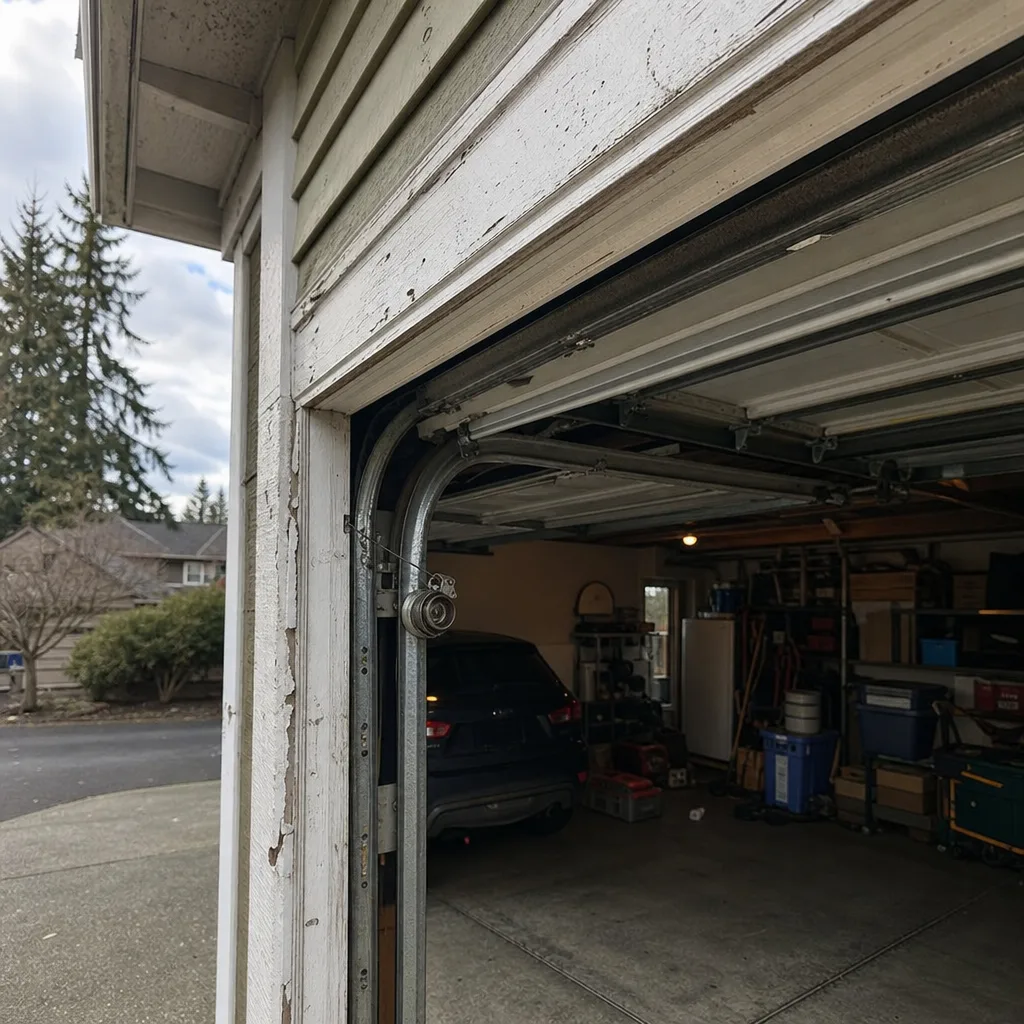 Before
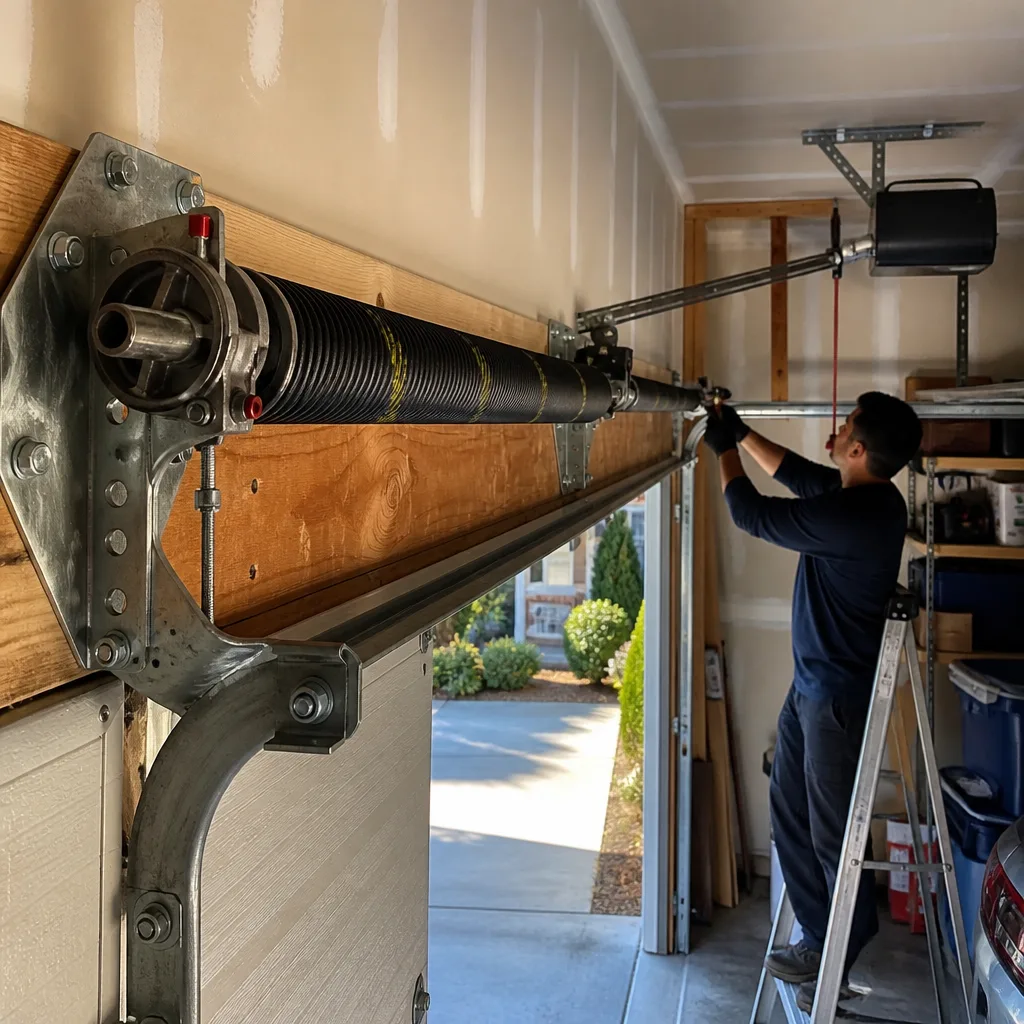 After
After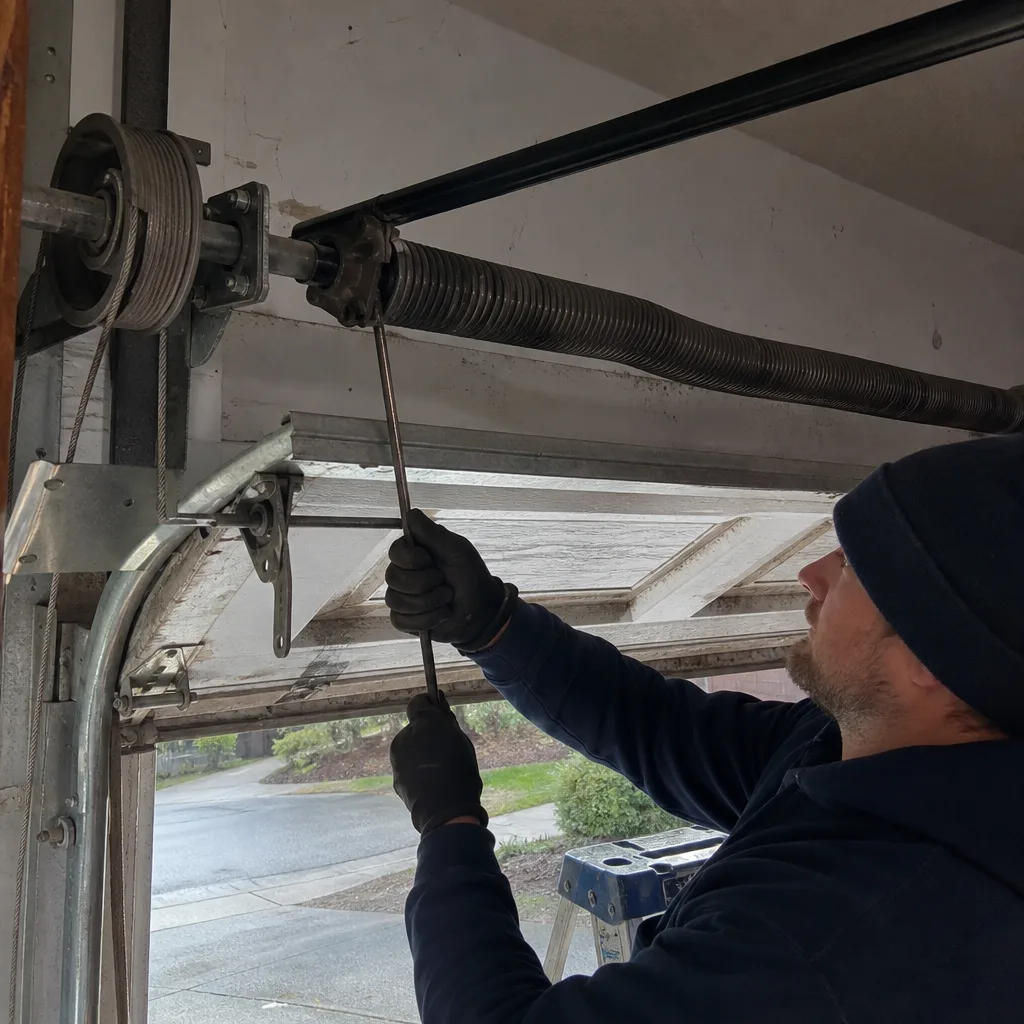 Before
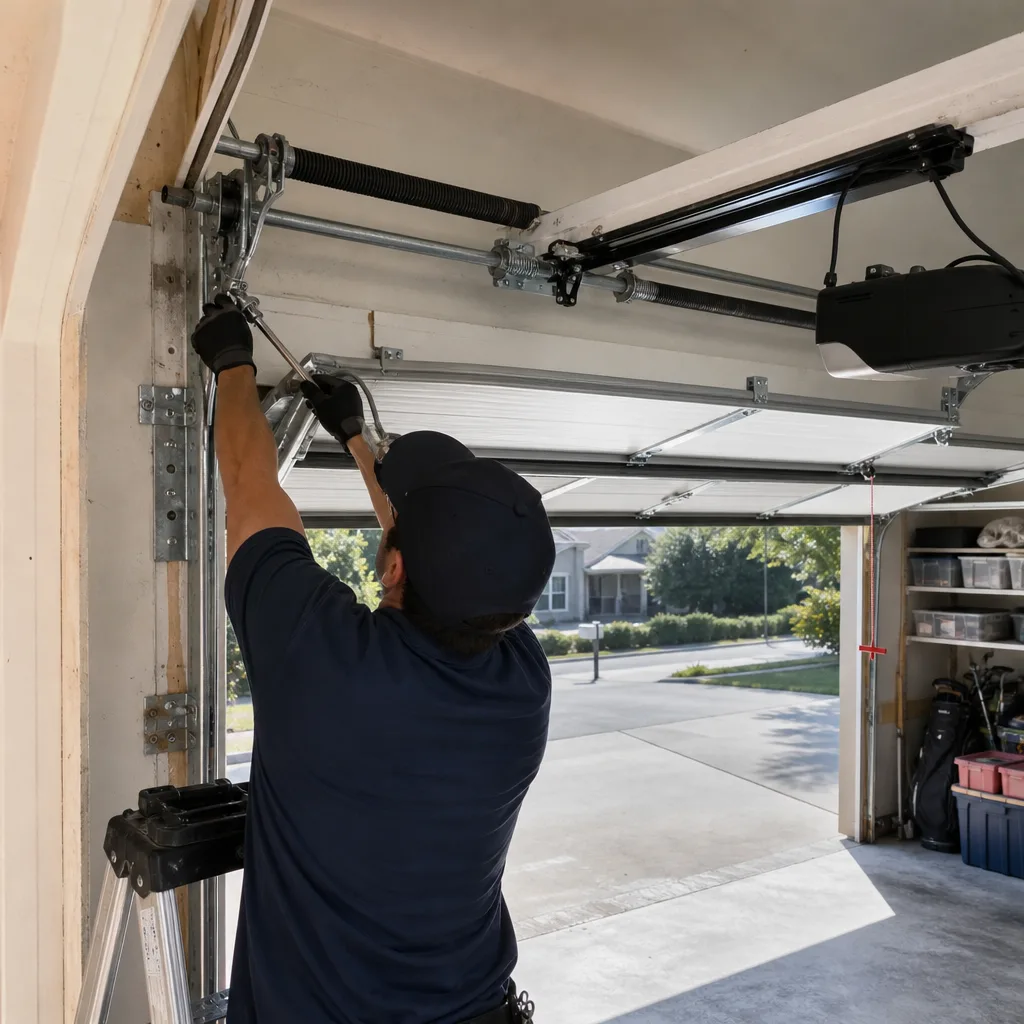 After
AfterGarage Door Warning Signs: A Bellevue Homeowner’s Reference Guide
Most Bellevue homeowners first notice their garage door when it stops working. The torsion spring doesn’t snap without warning - it telegraphs failure through coil gap widening, visible rust banding, and a door that requires more opener torque to lift, none of which look dramatic until the morning it goes. This guide works backward from the actual failure mode to name what each critical component looks like 60, 30, and 7 days before it breaks, so your repair is scheduled on your calendar instead of forced by a door that won’t open at 6:47 a.m. in January.
Quick Answer
A garage door that needs attention shows predictable physical changes before functional failure: torsion springs develop widening gaps between coils and rust banding at the stress point; lift cables fray at the drum anchor and develop visible S-curves; openers strain audibly or slow their travel speed; and safety sensors accumulate moisture debris or shift out of parallel alignment. In Bellevue’s wet climate, these warning signs accelerate - surface rust becomes active corrosion within a single rainy season, and temperature swings between the Eastgate valley and Somerset hilltop neighborhoods stress metal components unevenly.
Table of Contents
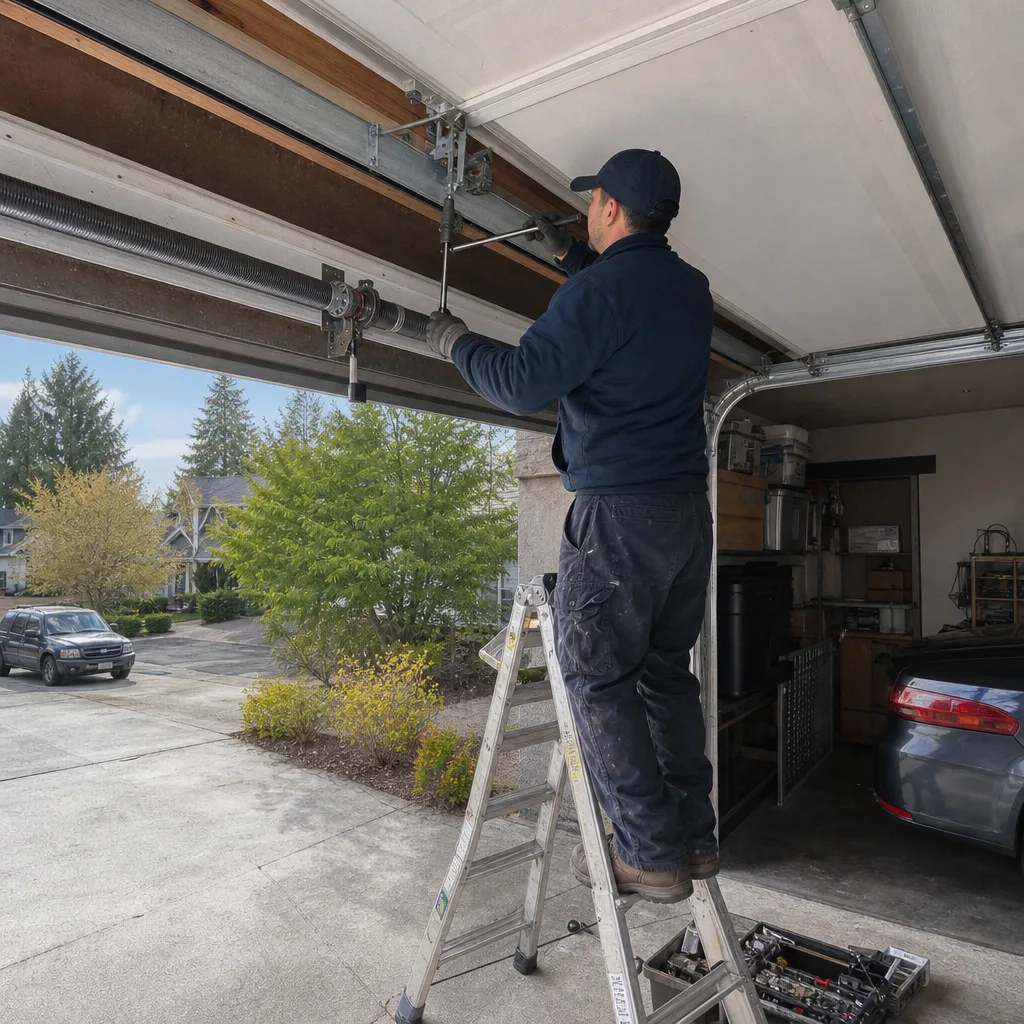
- Torsion Spring Failure Timeline: 60, 30, and 7 Days Before the Snap
- Cable Warning Signs Visible From Six Feet Away
- Opener Strain Versus Door Resistance: Telling Them Apart
- The Safety Sensor Test Most Homeowners Never Run
- Decision Matrix: Monitor, Schedule, or Stop Using the Door
- How Bellevue’s Climate and Geography Accelerate Wear
- A 10-Minute Monthly Inspection Routine
- Common Mistakes to Avoid
- When to Call a Professional
- Frequently Asked Questions
 Before
 After
AfterTorsion Spring Failure Timeline: 60, 30, and 7 Days Before the Snap
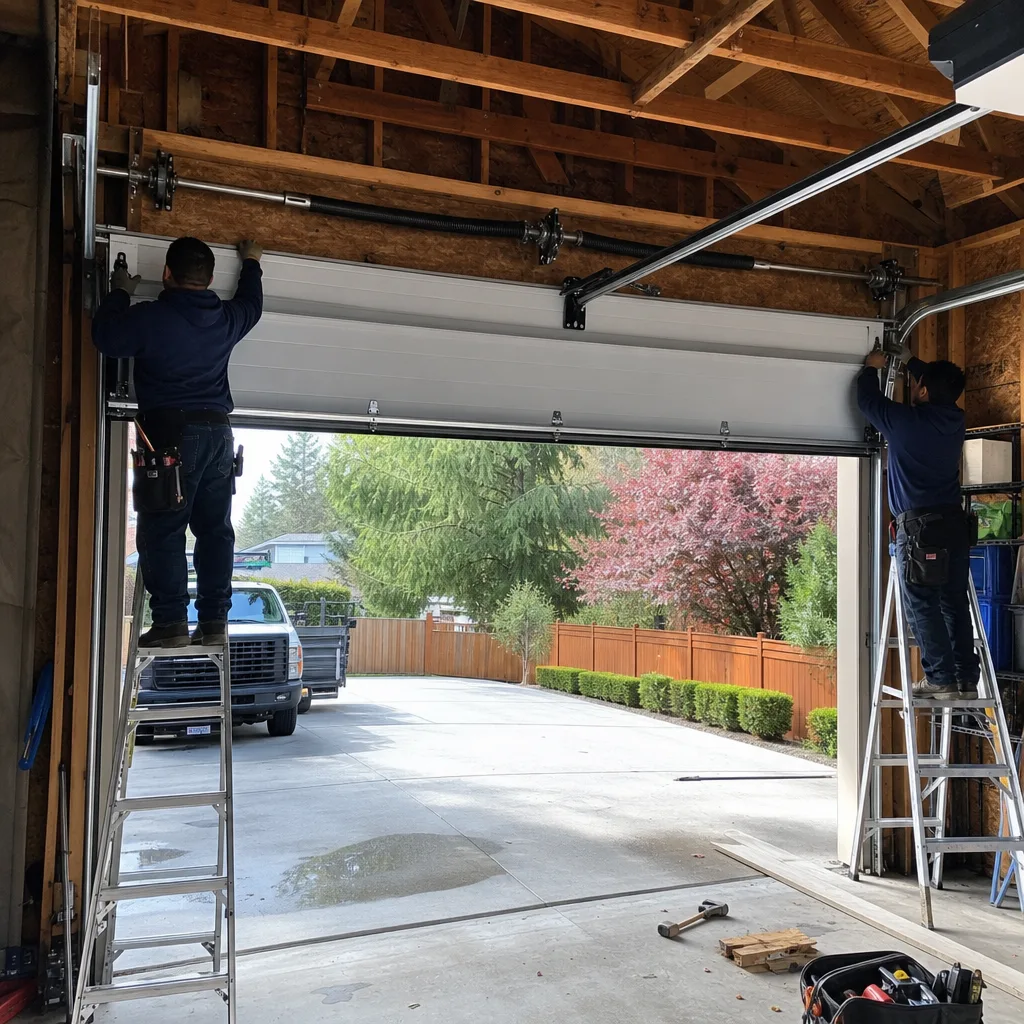
Torsion springs are the most dangerous component on a residential garage door. They’re wound under extreme tension - typically 10,000 to 30,000 pounds of force depending on door weight and spring specification - and when they fail, they release that energy in a violent uncoiling motion that can damage property or cause serious injury. A broken spring is not a DIY repair. The warning signs, however, are measurable and visible if you know what to look for.
60 days before failure: The spring begins showing coil gap inconsistency. In a healthy torsion spring, the coils sit nearly touching when the door is closed. As fatigue sets in, you’ll see one or more gaps where coils no longer meet. Measure this with a standard ruler: a gap exceeding 3/16 inch between any two adjacent coils indicates the spring has lost significant tension and is working the remaining coils harder. In our work across Bellevue, from the 1960s ranches in Lake Hills to the newer construction in Crossroads, we see this pattern most often on doors that cycle 4-6 times daily - well above the 3-cycle average most manufacturers design for.
30 days before failure: Active rust appears as distinct banding, typically at the third or fourth coil from the stationary cone end. This isn’t surface oxidation you can wipe away; it’s pitting corrosion that creates stress risers in the wire. The spring wire diameter at this stage often measures 0.001 to 0.003 inch below specification - enough to reduce cycle life by 40% or more. The door itself may feel heavier to lift manually, and the opener motor housing will run warmer after a full open-close cycle.
7 days before failure: The spring emits a sharp creak or pop during door travel, distinct from normal roller noise. The coil gap widens dramatically - often to 1/4 inch or more - and the spring may show visible unwinding at the cone attachment. At this stage, we recommend stopping all door use and calling for replacement. The spring is operating on its final cycles.
Wire diameter wear estimation: Standard residential torsion springs use 0.207-inch, 0.218-inch, 0.225-inch, or 0.250-inch wire. A digital caliper measurement at the rust banding point, compared to a clean section, tells you how much material remains. When wear exceeds 5% of original diameter, replacement is the only safe option. We document this measurement on every garage door repair in Bellevue - Clause 4 of The Haven Standard requires the photograph before any quote.
Cable Warning Signs Visible From Six Feet Away
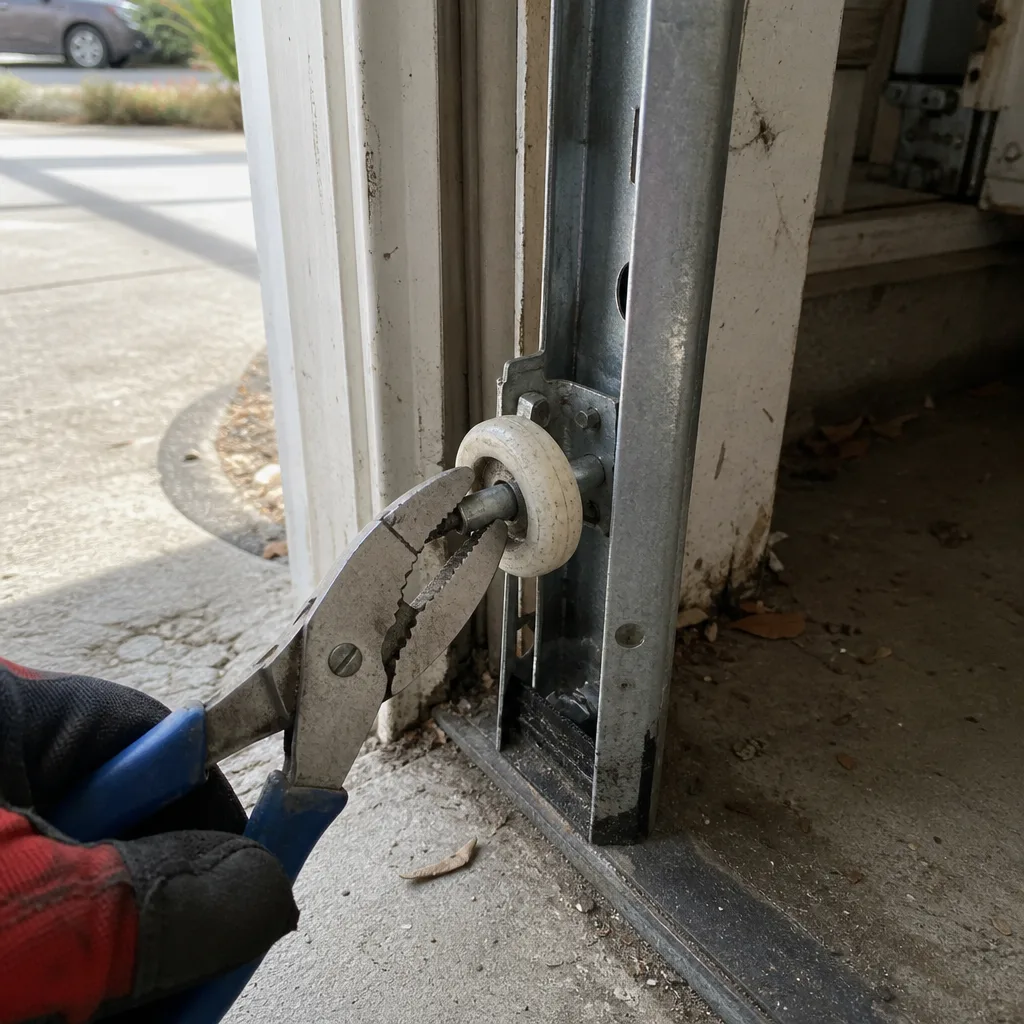
Lift cables do their work in tension, running from the bottom bracket of each door panel up to the cable drum at the end of the torsion tube. Because they’re under load whenever the door moves, cable failure drops the door suddenly and asymmetrically - a genuine safety hazard if someone is nearby.
The good news: cables announce trouble clearly if you inspect from the right angles.
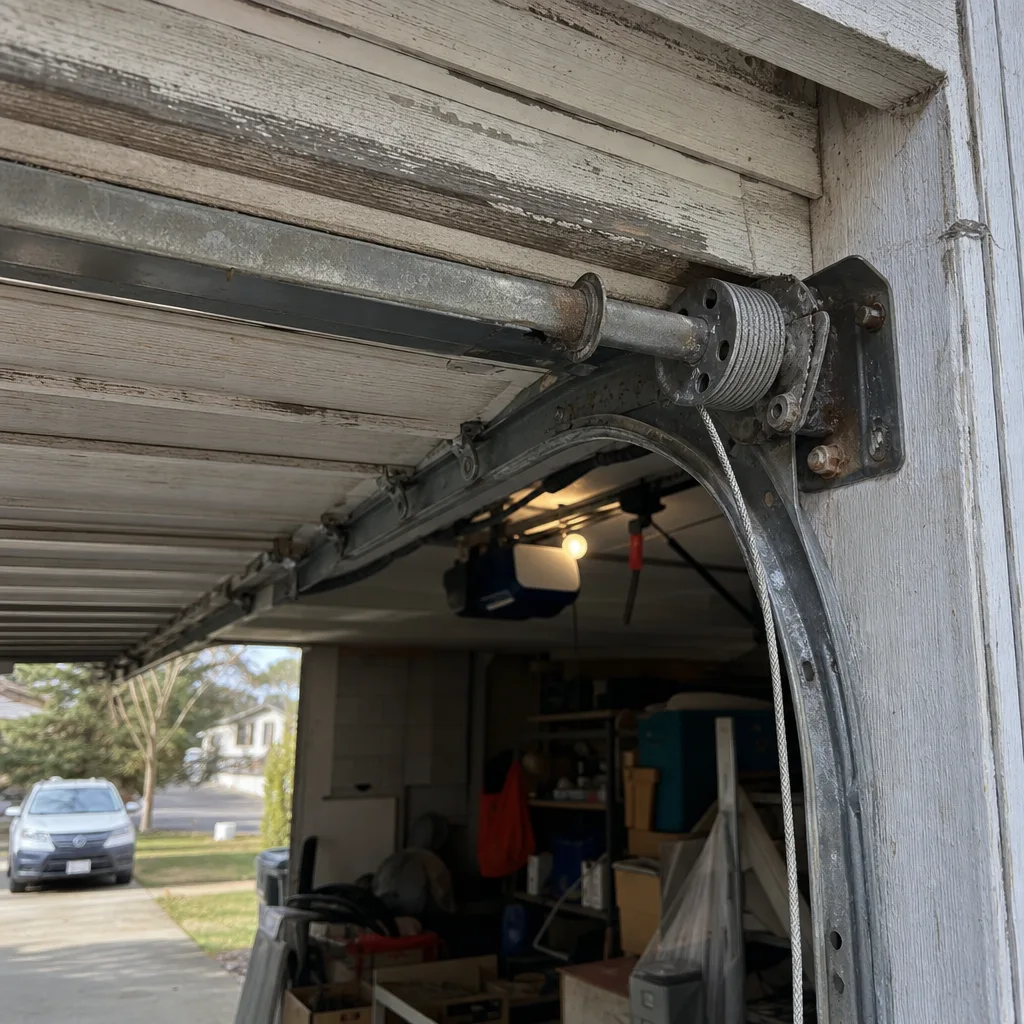
Fraying at the drum anchor: The cable wraps around a small peg or slot in the cable drum. At this stress concentration point, individual strands break first, creating a bristled “brush” appearance. You can see this without touching anything - stand inside the garage with the door closed and look up at the drum. Any fraying beyond two broken strands means the cable is compromised. We’ve replaced cables in the Bridle Trails area where this pattern appeared after only 8 years, well short of the 15-20 year typical service life, due to a manufacturing defect in the cable weave that accelerated strand fatigue.
S-curve deviation from straight: A healthy cable runs in a clean vertical line from bottom bracket to drum. When the cable develops internal fatigue or the drum groove wears, the cable develops a visible S-curve or spiral pattern rather than tracking straight. This indicates the cable is no longer seating properly in the drum groove and is wearing itself and the drum simultaneously.
Rust staining on the cable drum face: Even if the cable itself looks intact, orange-brown streaking on the drum’s zinc-plated surface means moisture is wicking down the cable and collecting at the low point. In Bellevue, this pattern correlates strongly with homes that lack proper garage ventilation - a common issue in converted garages or those with sealed crawlspace interfaces. The moisture doesn’t just rust the cable; it lubricates the drum groove unevenly, causing cable slip and door imbalance.
Bottom bracket deformation: The bracket where the cable attaches to the door panel should sit flat and square. If you see the bracket twisted or the cable exiting at an angle rather than perpendicular, the cable has been operating off-axis and is wearing asymmetrically. This often accompanies a door that has come out of its horizontal track alignment.
Cable replacement runs $140-$220 per pair in the Bellevue market, including labor and a documented photo record. We carry standard cable sizes for Clopay, Amarr, and Wayne Dalton doors on every service truck.
Opener Strain Versus Door Resistance: Telling Them Apart
Homeowners often misdiagnose a struggling opener when the real problem is a door that has become mechanically resistant. Replacing a $400 opener to fix a $180 spring problem is an expensive error. Here’s how to distinguish the two failure modes.
Test the door balance: Disconnect the opener trolley carriage (the arm that connects the motor to the door) by pulling the red release cord. Lift the door manually to waist height and release. A properly balanced door stays put or drifts slowly. If it crashes down, the spring is failing and the opener is overworking to compensate. If it rises on its own, the spring has too much tension. Either condition forces the opener motor to draw excess amperage, which eventually burns out the logic board - a $280-$450 repair on LiftMaster and Chamberlain units.
Opener-specific warning signs: When the door itself is balanced but the opener struggles, look for these patterns:
- Travel speed reduction: The door takes noticeably longer to open or close than when the opener was new. Most residential openers move at 6-8 inches per second. Time a full cycle with your phone - if it’s stretched to 12+ seconds, the motor is losing torque capacity, often from worn drive gears or capacitor degradation.
- Logic board click without motor response: You hear the relay engage but the motor doesn’t turn, or turns briefly and stops. This indicates the motor is drawing excessive current and the board’s overload protection is cycling - a pattern that destroys the board if repeated.
- Trolley carriage slippage: The motor runs but the door doesn’t move, or moves intermittently. The trolley carriage teeth are stripped or the belt/chain has stretched beyond adjustment range.
- Limit switch drift: The door stops short of full open or doesn’t seal at the floor, and the adjustment hasn’t been changed. The limit switches - small mechanical or magnetic sensors that tell the opener when to stop - are failing to repeat their position accurately.
In Bellevue’s older homes, particularly in the Newport Hills and Factoria areas where many openers date to the 1990s or early 2000s, we see a distinct pattern: the original Craftsman or Raynor chain-drive units were built with metal gears that outlast their modern plastic equivalents, but their capacitors and logic boards are now failing from age. The motor itself runs fine; the control electronics don’t. A garage door opener repair in Bellevue often means board or capacitor replacement rather than full unit replacement - something we verify with an amperage draw test before quoting either option.
Critical distinction: Never replace an opener without first verifying door balance. Clause 1 of The Haven Standard requires we quote the actual problem, not the most expensive component. We’ve declined opener replacement jobs when the spring was the real issue, even when the customer came in asking for a new opener.
The Safety Sensor Test Most Homeowners Never Run
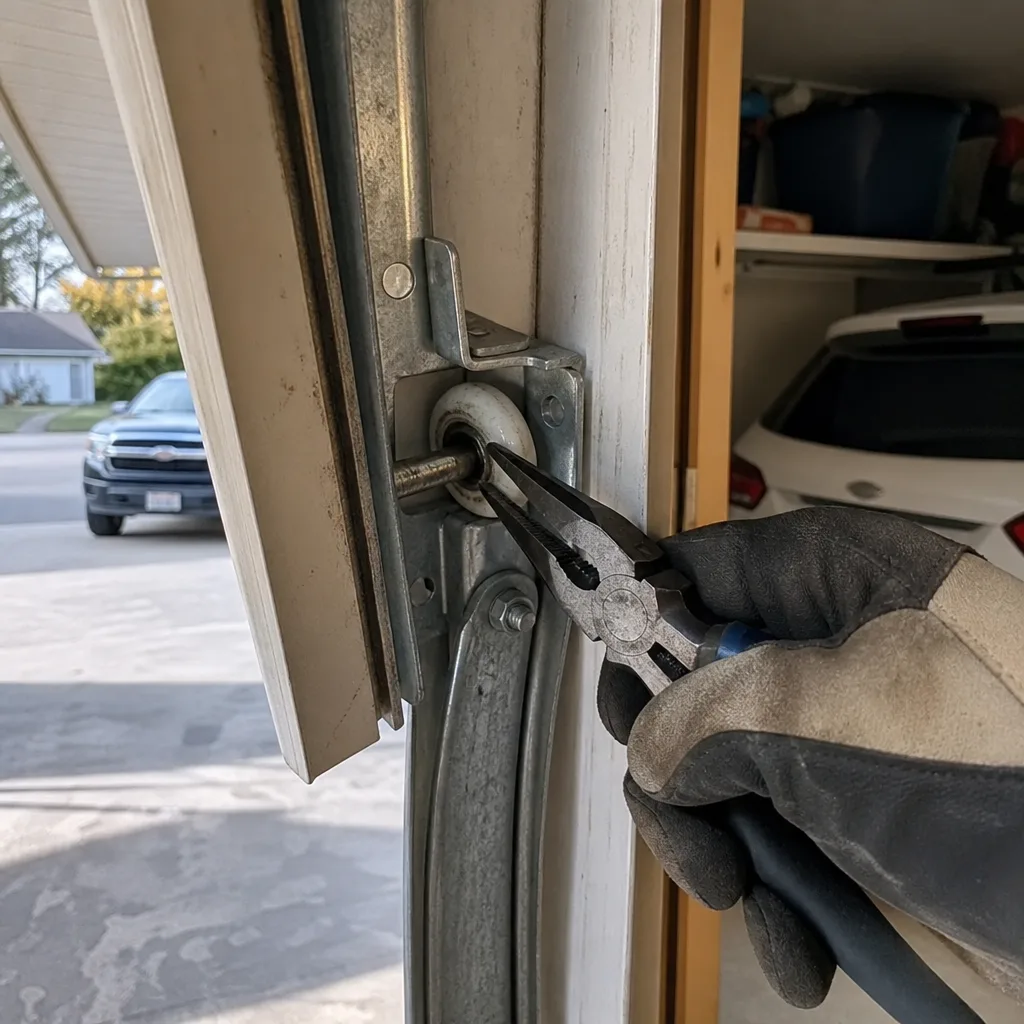
Photo-eye safety sensors have been federally required since 1993. They’re simple devices - an infrared beam crosses the door opening at 4-6 inches above the floor - but their failure modes are subtle and their consequences severe. A door that closes on a child or pet because sensors failed is a liability no homeowner wants to carry.
The standard test you probably already do: Wave a broom handle through the beam while the door is closing. It should reverse. Most homeowners check this once, maybe twice a year.
The test you likely don’t do:
- Alignment drift test: With the door open, check the LED indicators on both sensors. One typically glows steady green or amber; the other glows only when receiving the beam. Slightly bump one sensor with your foot - just enough to shift it 1/8 inch. If the receiving LED flickers or goes out, the sensors are operating at the edge of their alignment tolerance. Real-world vibration from door operation, thermal expansion of the mounting bracket, or a bump from a garbage bin will eventually push them past the threshold.
- Moisture intrusion test: In Bellevue’s climate, sensor housings develop micro-cracks that allow condensation. Look for fogging inside the lens housing, or water droplets on the interior surface after a rainy night. Fogged sensors may pass the broom-handle test in dry conditions but fail when humidity peaks - exactly when you’re rushing to get inside from the rain.
- Sun-angle interference test: Stand where the sensors point and look toward the light source. Direct morning or afternoon sun at a low angle can overwhelm the infrared emitter, making the sensor think the beam is broken. This happens seasonally in east-facing garages in the Somerset and Lakemont neighborhoods, where sunrise angles align with the door opening in winter months. The symptom is a door that reverses randomly at certain times of day - not a mechanical failure at all.
- Obstruction accumulation test: Spider webs, leaf debris, and garage floor dust build up on sensor lenses. Clean them with a dry cloth, then run the broom test again. If response improves, accumulation was degrading performance even when it hadn’t yet caused failure.
Sensor replacement costs $85-$150 for the pair in Bellevue, including alignment and testing. We see more sensor-related service calls in October and November than any other months - the combination of falling leaves, increased spider activity, and lower sun angles creates multiple failure paths simultaneously.
Decision Matrix: Monitor, Schedule, or Stop Using the Door
Not every warning sign demands immediate action. Some conditions allow scheduled repair; others require stopping door use until a technician arrives. The difference matters for your safety and your budget - emergency calls carry after-hours rates, and a door that fails completely may need additional components replaced.
| Warning Sign | Action | Failure Consequence If Ignored | Typical Bellevue Repair Cost |
|---|---|---|---|
| Torsion spring coil gap 1/8-3/16 inch, no rust | Schedule within 2-3 weeks | Sudden snap; door crashes closed; possible injury | $180-$340 (single spring); $280-$480 (pair) |
| Torsion spring active rust banding, any gap | Schedule within 1 week | Snap imminent; spring may fail during operation | $180-$340 (single spring); $280-$480 (pair) |
| Torsion spring audible creak/pop, gap >1/4 inch | Stop using door; call today | Failure within days; high injury risk | $180-$340 (single spring); $280-$480 (pair) |
| Lift cable fraying (1-2 strands) | Schedule within 1-2 weeks | Progressive failure; door drops asymmetrically | $140-$220 (pair) |
| Lift cable fraying (3+ strands) or S-curve | Stop using door; call within 24 hours | Sudden cable release; door falls freely | $140-$220 (pair); possible panel damage add $200-$600 |
| Door out of balance (falls or rises when released) | Schedule within 1 week | Opener motor burnout; logic board failure | $180-$340 (spring adjustment/replacement) |
| Opener travel speed reduced 25%+ | Schedule within 2 weeks | Motor or board failure; door stuck open or closed | $180-$320 (gear/capacitor); $400-$750 (full opener) |
| Opener logic board click, no motor response | Schedule within 1 week; avoid repeated cycling | Board destruction; possible motor damage | $280-$450 (board); $400-$750 (full unit if motor damaged) |
| Safety sensor intermittent response | Schedule within 1-2 weeks | Door closes on obstruction; liability exposure | $85-$150 (sensor pair) |
| Safety sensor no response to obstruction | Stop using door; call today | Confirmed safety system failure; federal non-compliance | $85-$150 (sensor pair) |
The cost ranges above reflect our flat, written pricing under Clause 1 of The Haven Standard - the price we quote is the price you pay, documented before any work begins. For garage door installation in Bellevue, where a full door replacement is indicated, we provide a separate written scope with line-item pricing for panels, hardware, and opener.
How Bellevue’s Climate and Geography Accelerate Wear
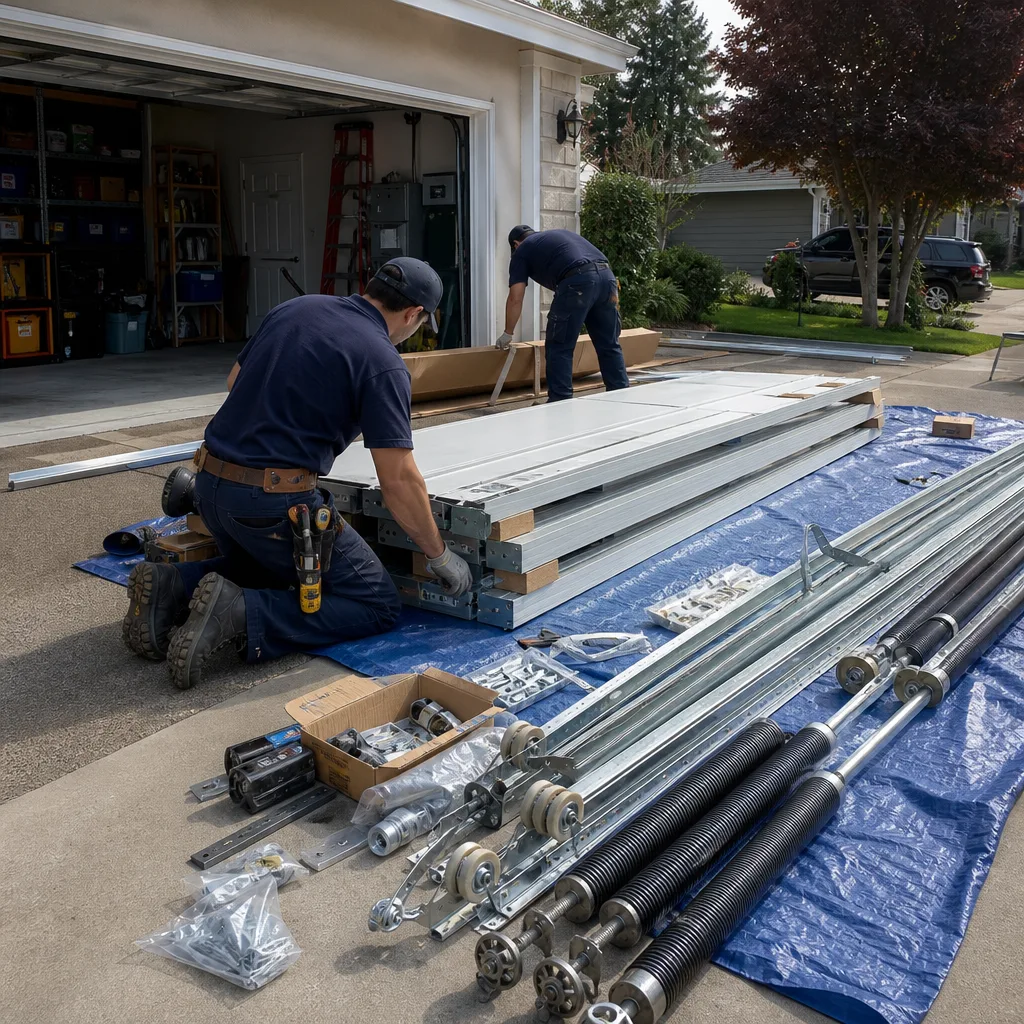
Bellevue’s location between Lake Washington and the Cascade foothills creates specific conditions that shorten garage door component life compared to drier inland climates.
Moisture patterns: Annual precipitation in Bellevue runs 37-42 inches, concentrated October through April. This moisture doesn’t just fall - it condenses. Garages with south-facing doors experience rapid temperature swings: morning fog burns off to direct sun, heating the door surface to 120°F or more while the interior remains cool. This thermal cycling drives condensation in the torsion spring tube and cable drum assemblies. We see accelerated rust in homes near the Lake Washington shoreline, particularly in Medina and Clyde Hill, where humidity persists longer after rain events.
Elevation and temperature gradients: The difference between a garage in the Lake Hills basin (roughly 200 feet elevation) and one on Somerset hill (500+ feet) affects how often freeze-thaw cycles occur. When overnight temperatures drop below freezing but daytime sun warms the door above 40°F, any moisture in the spring coils or cable strands expands and contracts, accelerating fatigue. Spring replacement frequency runs 15-20% higher in the hilltop neighborhoods than in the valley floor, based on our service records since 2015.
Wind exposure: Bellevue’s prevailing winds come from the southwest, carrying moisture from Puget Sound. Doors on exposed west-facing garages - common in the West Bellevue and Enatai areas - experience more wind-driven rain infiltration at panel joints and bottom seals. This moisture reaches the bottom brackets and cable lower terminations, creating corrosion that starts from the bottom up rather than the more common top-down pattern.
Soil and foundation settling: The clay-heavy soils in parts of Crossroads and Factoria expand and contract with moisture, causing subtle foundation movement. A garage door frame that was square at installation can shift enough to bind the door in its tracks, forcing the opener to work harder and masking itself as an opener problem. We check frame squareness with a laser level on every service call - it’s not the first thing most technicians look for, but it’s the root cause of a significant percentage of “opener failures” we diagnose.
A 10-Minute Monthly Inspection Routine
A systematic inspection catches warning signs before they become emergencies. Do this on the first Saturday of each month - it takes less time than brewing coffee.
- Visual spring inspection (2 minutes): With the door closed, stand at the end of the torsion tube and sight down the spring. Look for coil gaps, rust banding, and any shine that suggests recent rubbing against the tube or end bearing plates. Measure the largest gap with a ruler. Note the date and measurement in your phone - trend is more informative than any single reading.
- Cable observation from door opening (2 minutes): Open the door halfway and look up at the cable drums. Check for fraying at the anchor point, S-curves in the cable run, and rust staining on the drum face. Do this from both sides of the door.
- Balance test (2 minutes): Disconnect the opener trolley carriage. Lift the door manually to waist height and release. Note whether it stays, drifts, or moves decisively. Reconnect the opener.
- Opener cycle timing (2 minutes): Time a full open-close cycle. Compare to your baseline - typically 12-15 seconds for a standard 7-foot door. A 2-second increase is meaningful.
- Sensor function and alignment (2 minutes): Clean both lenses with a dry cloth. Check LED indicators for steady glow. Perform the foot-bump alignment test described above. Run the broom-handle obstruction test.
Document what you find. When you call for service, this record lets us quote more precisely and arrive with the right components. Clause 4 of The Haven Standard means we’ll photograph what we find and add it to your documented record - but your monthly notes help us understand whether a condition is stable or accelerating.
Common Mistakes to Avoid
- WD-40 on the torsion spring: This is perhaps the most common and most dangerous homeowner error. WD-40 is a solvent and light lubricant, not a corrosion inhibitor. Applied to a spring, it attracts dust and can penetrate between coils, reducing friction in a component that depends on controlled coil binding for proper function. Use a silicone-based garage door lubricant sparingly, or better yet, don’t lubricate the spring at all - it’s a sealed system that doesn’t need homeowner intervention.
- Ignoring a “slightly” slow door: A door that takes 18 seconds instead of 12 isn’t “just getting old.” The opener is compensating for mechanical resistance, drawing excess current and heating its motor windings. This thermal cycling degrades the motor insulation and the logic board capacitors simultaneously. Address the root cause - typically spring tension or track alignment - and you avoid the $400-$750 opener replacement.
- Testing sensors only in daylight: Sensor alignment issues often appear at dawn or dusk when sun angles are low. Test at multiple times, or at minimum, note whether any reversals correlate with time of day.
- Assuming a new door means new problems: Even a new garage door installation in Bellevue can have installation-related issues: improper spring sizing for the actual door weight, track alignment off by fractions of an inch, or opener force limits set too high to compensate. We provide free second opinions on any competitor’s written estimate or installation - bring the paperwork, no coupon needed.
- Waiting for “both springs” to fail: On a two-spring system, when one spring breaks, the door is out of balance and the remaining spring is overloaded. Operating in this condition guarantees the second spring fails prematurely, often within weeks. Replace springs in pairs - the cost difference is modest compared to a second service call.
- Not checking the emergency release: The red cord that disconnects the opener trolley carriage should move freely and re-engage positively. A stuck or frayed release cord means you can’t open the door manually during a power outage - a real concern given Puget Sound Energy’s winter storm frequency in Bellevue’s hilltop areas.
When to Call a Professional
Call today if your door shows any of these conditions: a torsion spring with audible noise or gap exceeding 1/4 inch; any lift cable with three or more broken strands or visible S-curve; a safety sensor that fails to reverse the door on obstruction; or a door that has come out of its horizontal tracks. These conditions present genuine injury risk and should not wait for a convenient appointment.
For monitor-and-schedule conditions - early spring gap widening, single-strand cable fraying, reduced opener speed with confirmed door balance - schedule within the window indicated in the decision matrix above. Early scheduling lets you choose appointment timing and avoids emergency rates.
Servo Garage Doors Bellevue offers free estimates in Bellevue - call (425) 696-3561. Every estimate includes a documented photo record of what we find, a flat written price before any work starts, and the 365-Day Done Right Promise backed by The Haven Standard. Our technicians are background-checked, uniformed, and carry license documentation. Calls are answered by a live person 24 hours a day, including holidays, with a named technician and an on-the-way text.
Frequently Asked Questions
Single torsion spring replacement in Bellevue typically runs $180-$340; a matched pair runs $280-$480, including parts, labor, and a documented photo record. The exact price depends on wire diameter, inner diameter, and overall length - we measure these on-site and quote a flat written price before any work starts, per Clause 1 of The Haven Standard. Call (425) 696-3561 for an exact quote - estimates are free.
No. Torsion springs store lethal energy - a standard residential spring holds enough force to cause serious injury or death if mishandled during winding or unwinding. The winding cones, set screws, and winding bars require specific tools and training. We document the failed component photographically before quoting replacement, and our technicians carry the specialized tools and safety equipment this work requires. This is not a homeowner project.
Standard torsion springs are rated for 10,000 cycles (roughly 7-10 years at average use). In Bellevue’s wet climate, active rust can reduce this by 20-40% if the garage lacks proper ventilation. Springs in lakeshore homes or unventilated garages may need replacement at 6-8 years. We specify cycle-rated springs and can install 20,000 or 30,000 cycle upgrades for high-use doors - the additional cost is typically $60-$120 per spring, often the better investment.
Temperature affects both the opener and the door mechanics. Cold increases grease viscosity in rollers and bearings, making the door harder to move. Simultaneously, motor torque decreases in cold conditions and battery backup systems (if equipped) lose capacity. In Bellevue, where overnight winter temperatures in Somerset and Lakemont can drop 10-15 degrees below the valley floor, we see this pattern frequently. The fix is usually door lubrication with low-temperature grease and a spring tension verification - not a new opener.
No. Our written price is flat and final - Clause 1 of The Haven Standard. We quote after inspection, not before, because we need to measure spring specifications and assess all components. But once quoted, the price doesn’t change unless you request additional work. The photo record documents what we found and what we proposed; you have that documentation before deciding whether to proceed.
Yes. Our service trucks carry torsion springs in standard wire diameters, lift cables, rollers, hinges, safety sensors, and logic boards for LiftMaster, Chamberlain, and Genie openers. For garage door repair in Bellevue, we complete most spring, cable, and sensor replacements in a single visit. Specialty order items - custom panel sections, unusual spring configurations, or specific Clopay hardware kits - are ordered with next-day availability and installed on our return visit at the originally quoted labor rate.
The Bottom Line
Garage door failure is almost never sudden - it’s a progression of measurable physical changes that most homeowners don’t know to look for. A torsion spring telegraphs its demise through coil gaps and rust banding. Lift cables announce fatigue through fraying and S-curves. Openers reveal strain through speed reduction and thermal load. Safety sensors flag trouble through alignment drift and moisture intrusion. The homeowner who inspects monthly and understands the decision matrix schedules repairs at their convenience, avoids emergency rates, and never faces a door that won’t open on a rainy Bellevue morning.
We’ve made 18,000+ garage doors right since 2015, every one with a written price before work started and a documented record when the technician left. If you’re seeing warning signs now, or want us to verify what you’ve found, call (425) 696-3561. Estimates are free, the price is flat, and Clause 4 means you’ll see what we found before we quote a dollar.
Written by Marcus Deller, Owner at Servo Garage Doors Bellevue, serving Bellevue since 2015.