
Last updated September 21, 2026
Full 25-point door and opener safety check with every visit - springs, cables, rollers, tracks, and your LiftMaster or Chamberlain opener included
You get a price before we start. It does not change when the truck arrives.
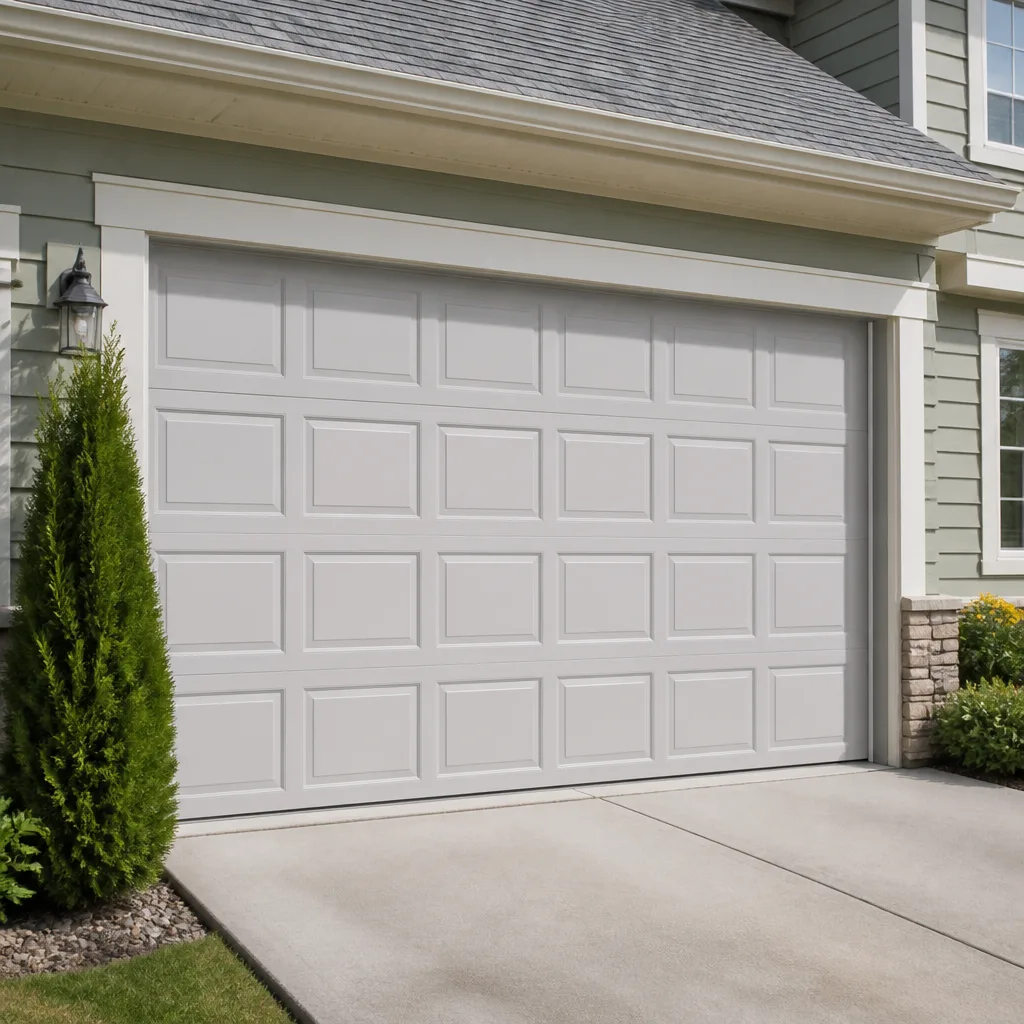
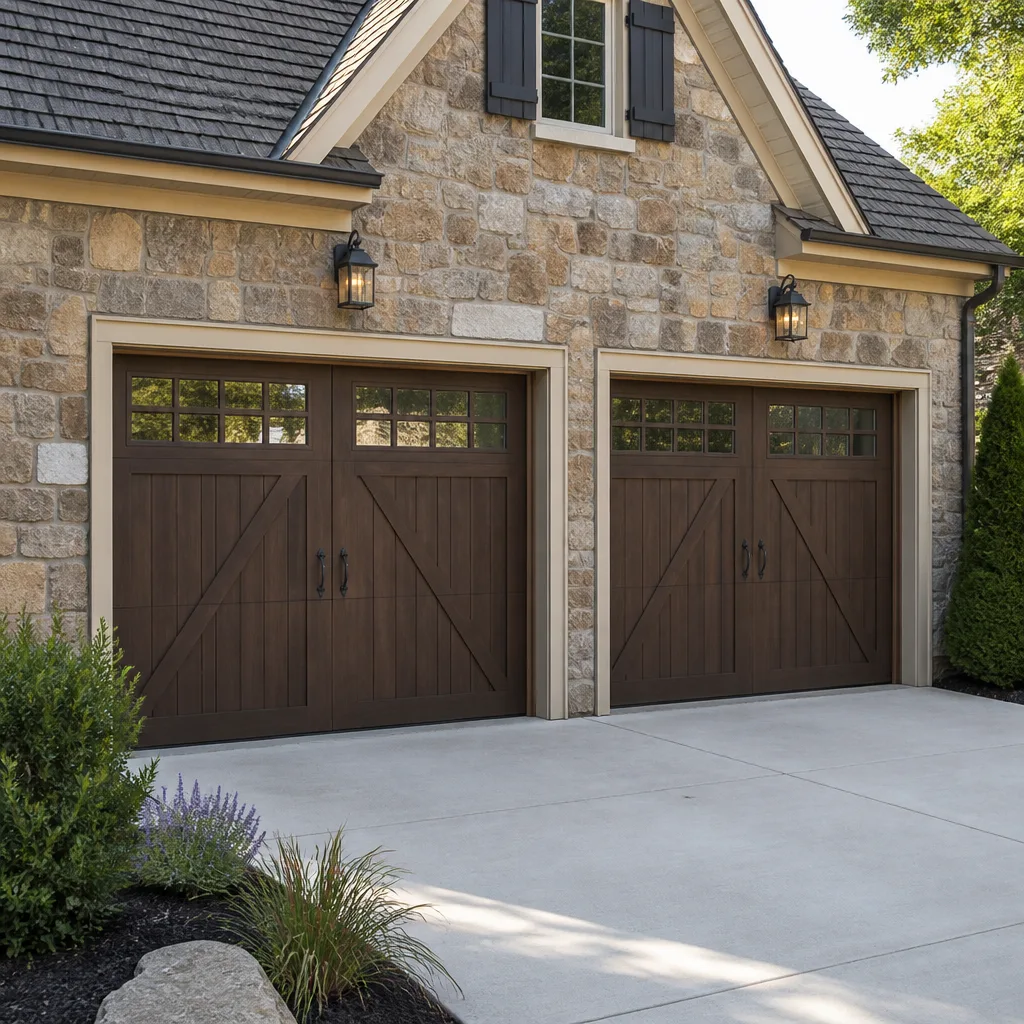
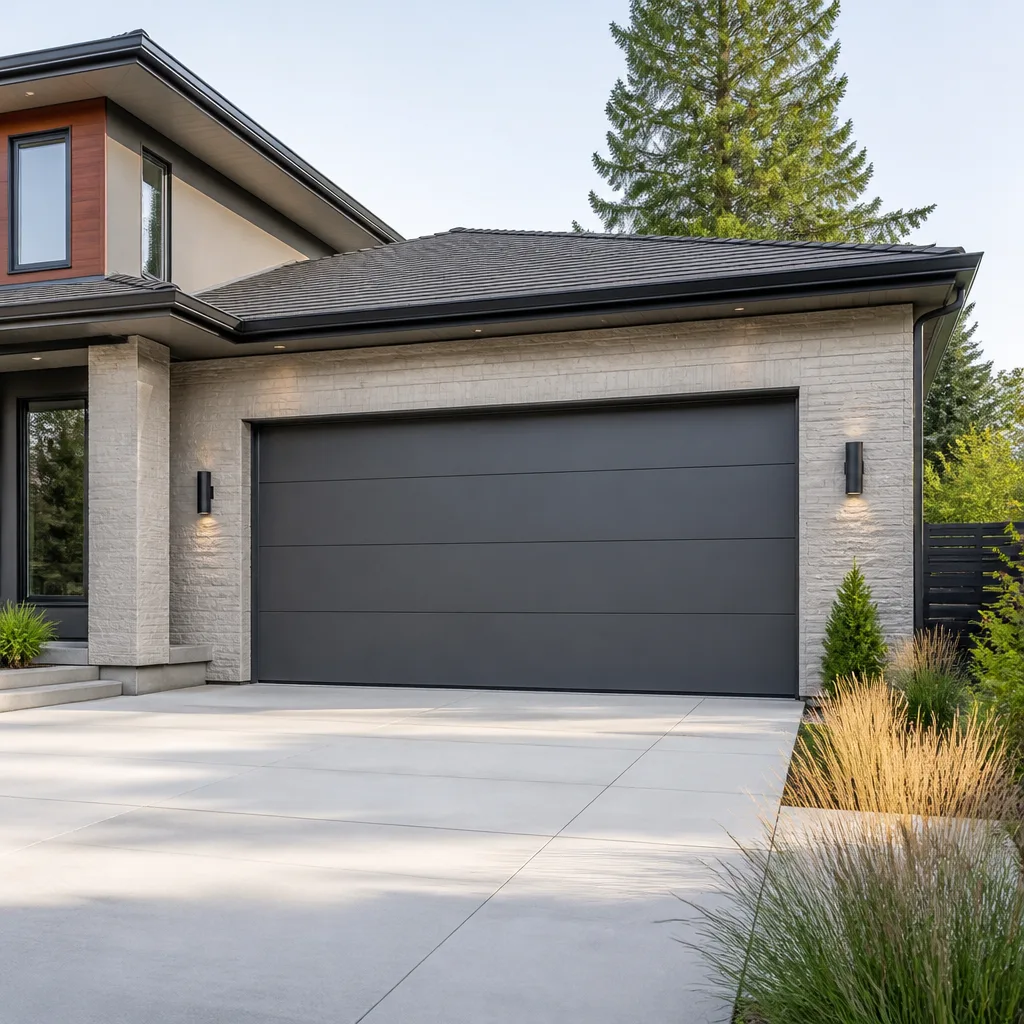
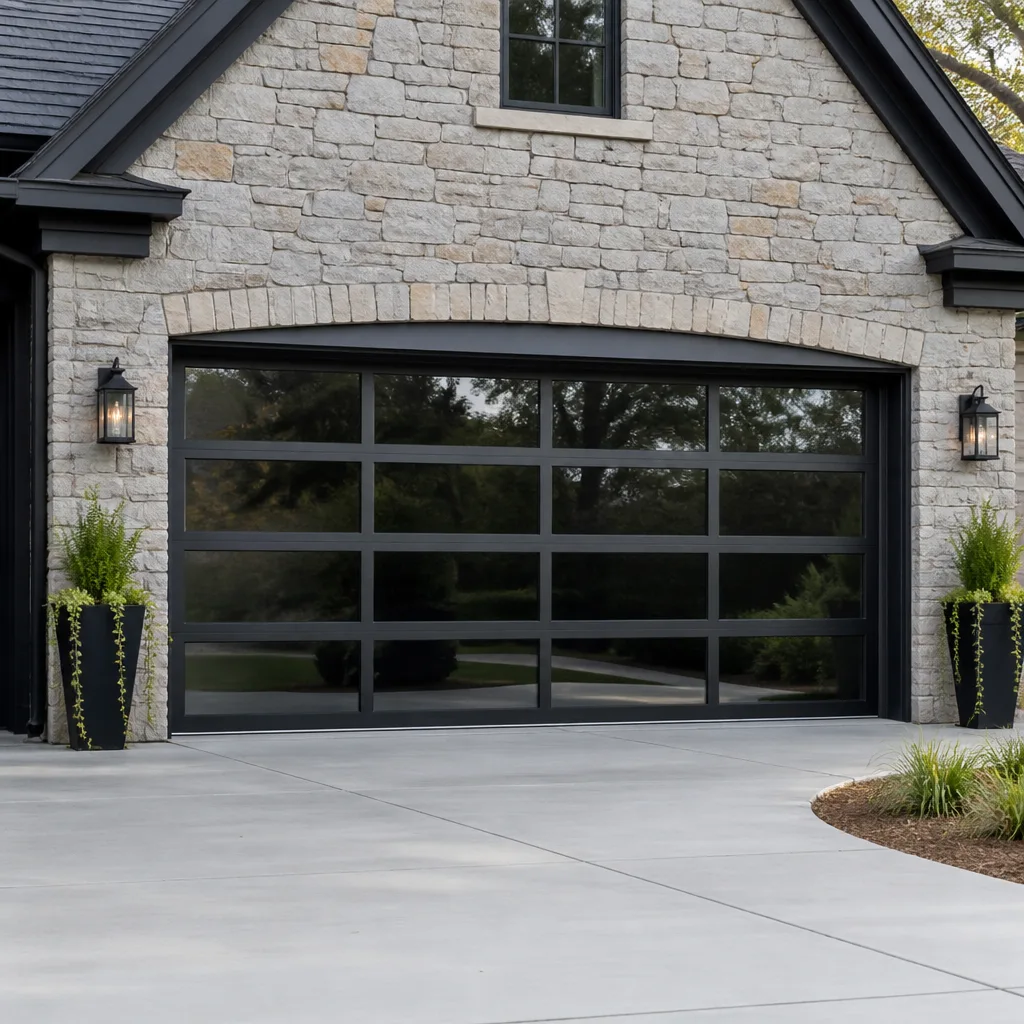
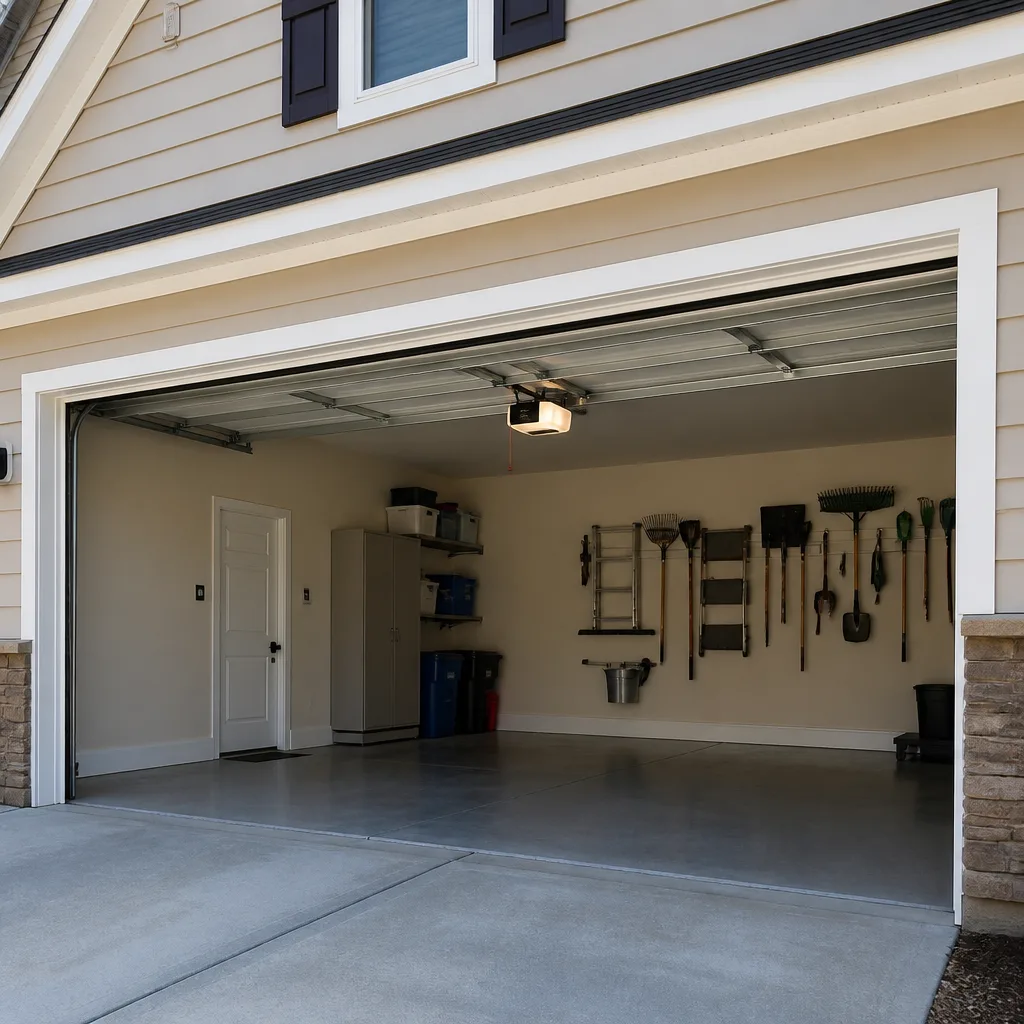
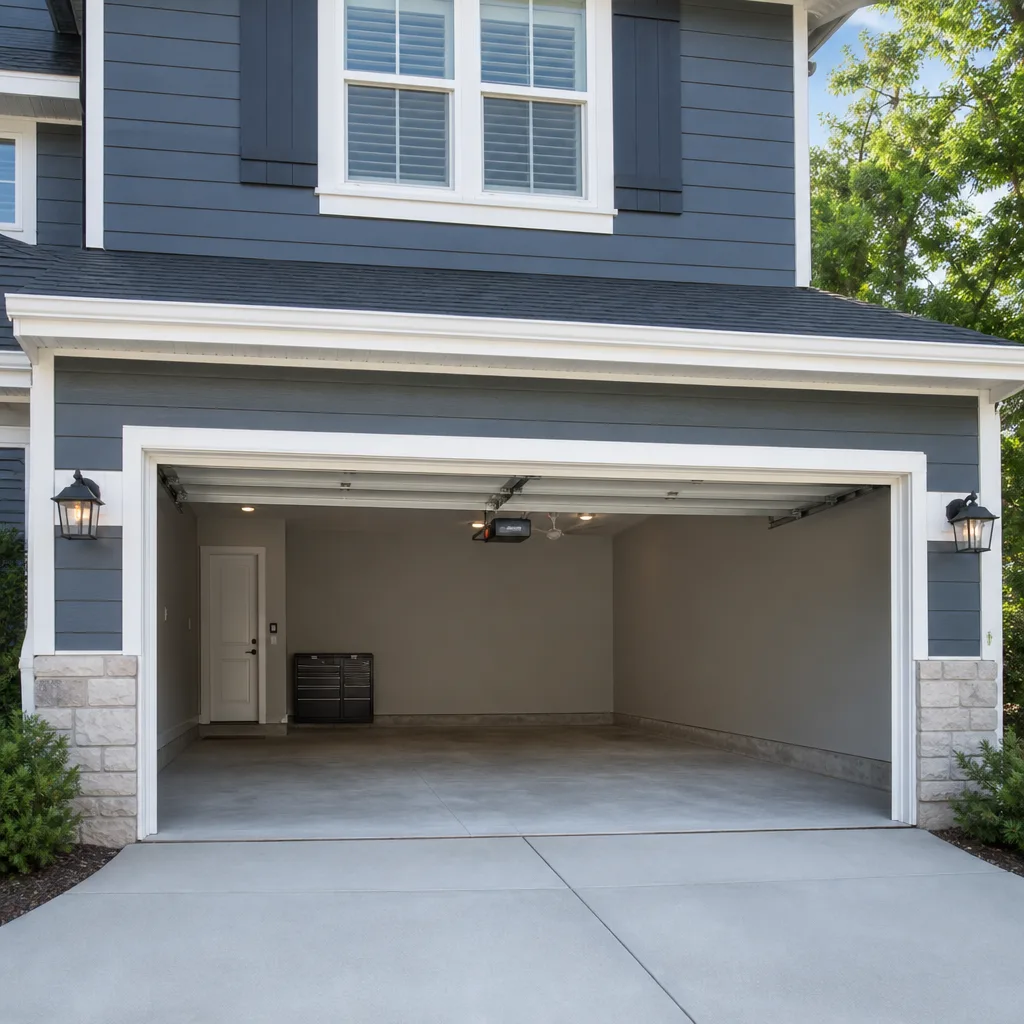
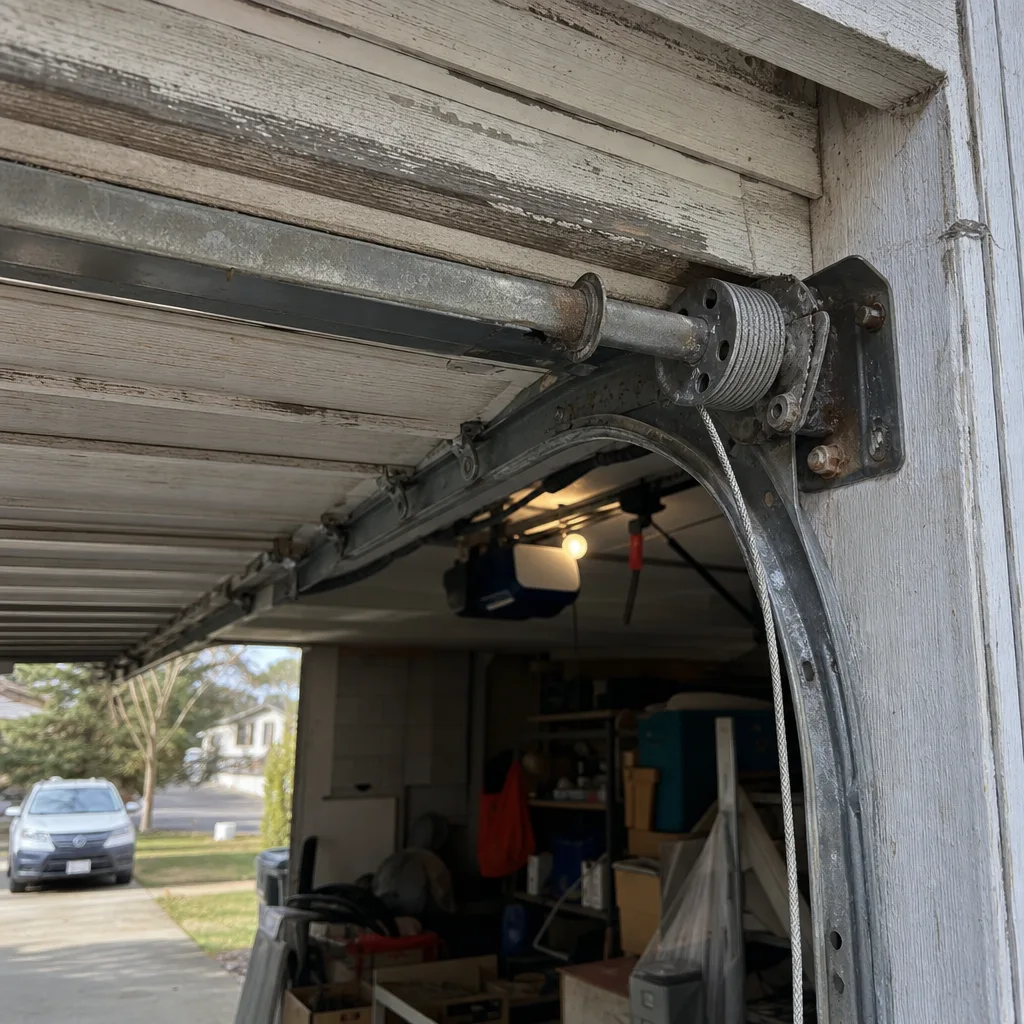 Before
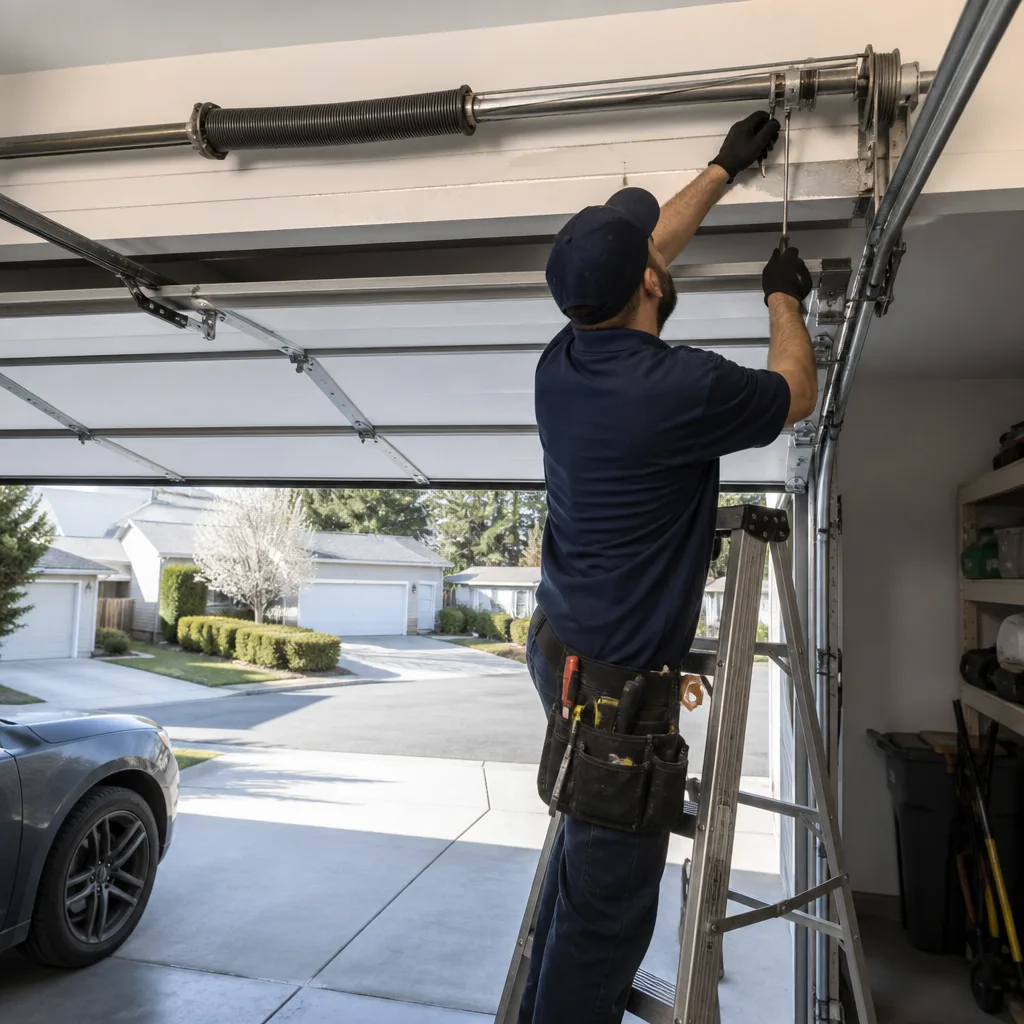 After
After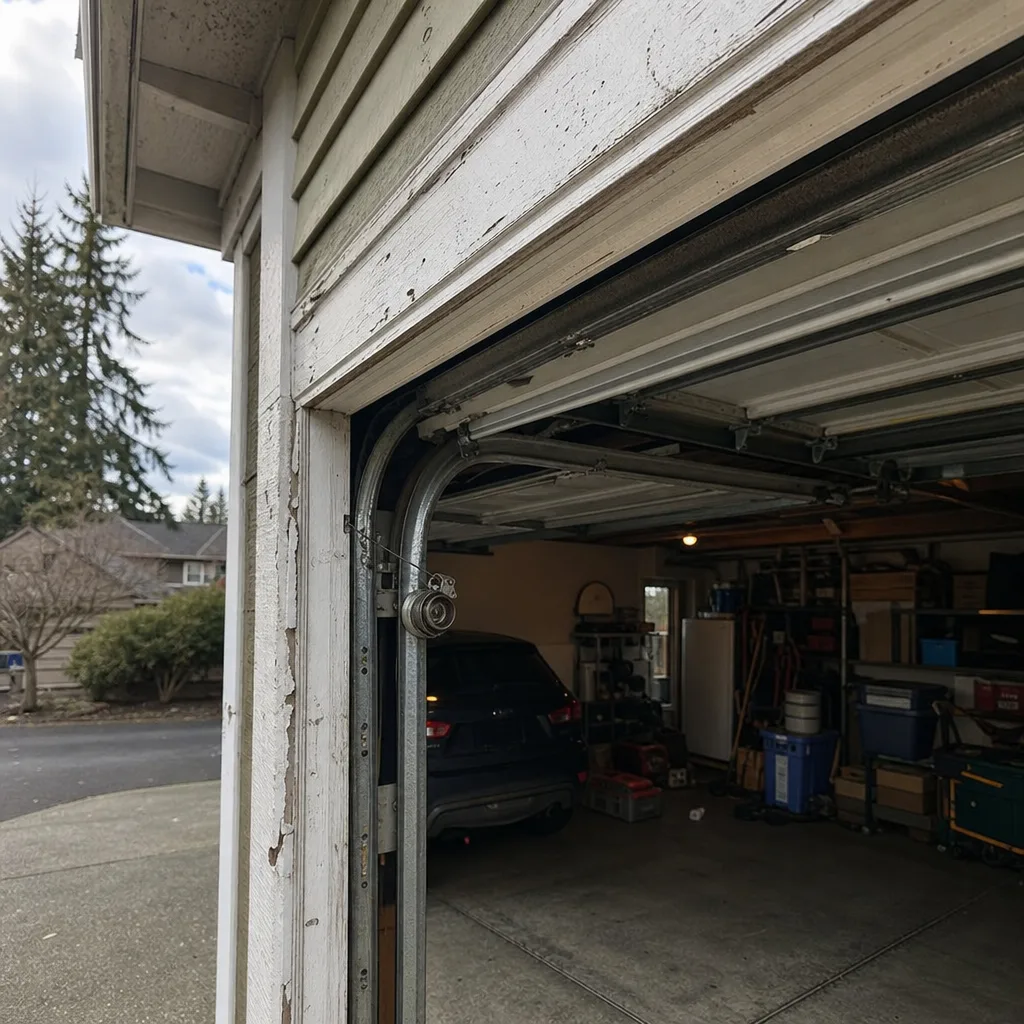 Before
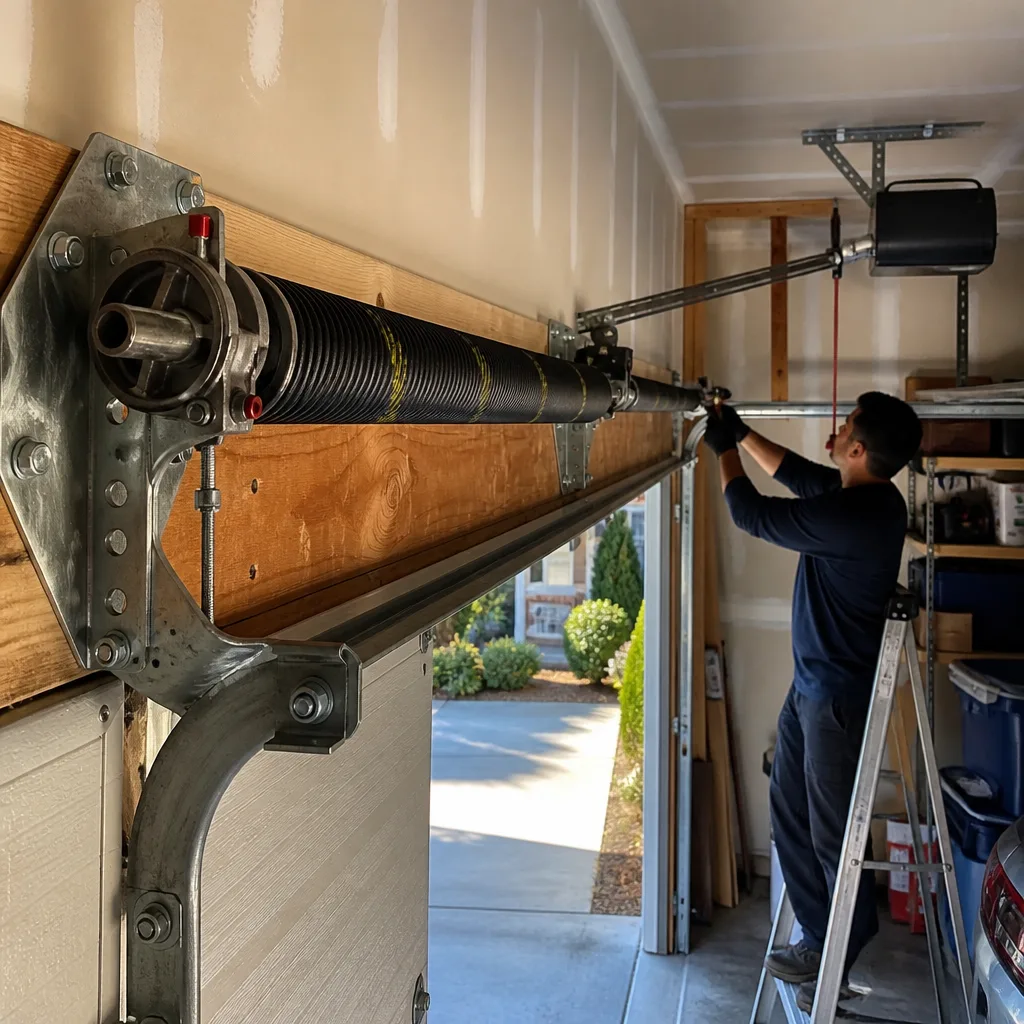 After
After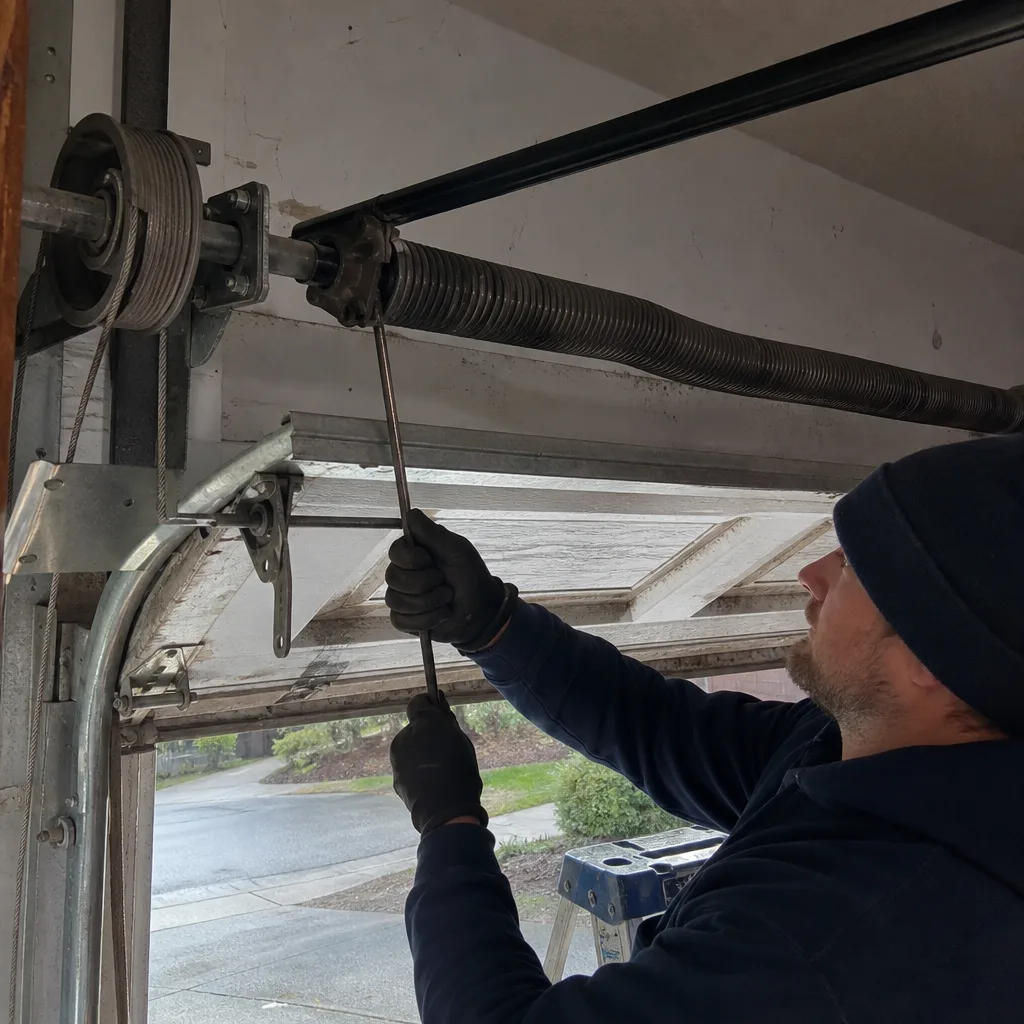 Before
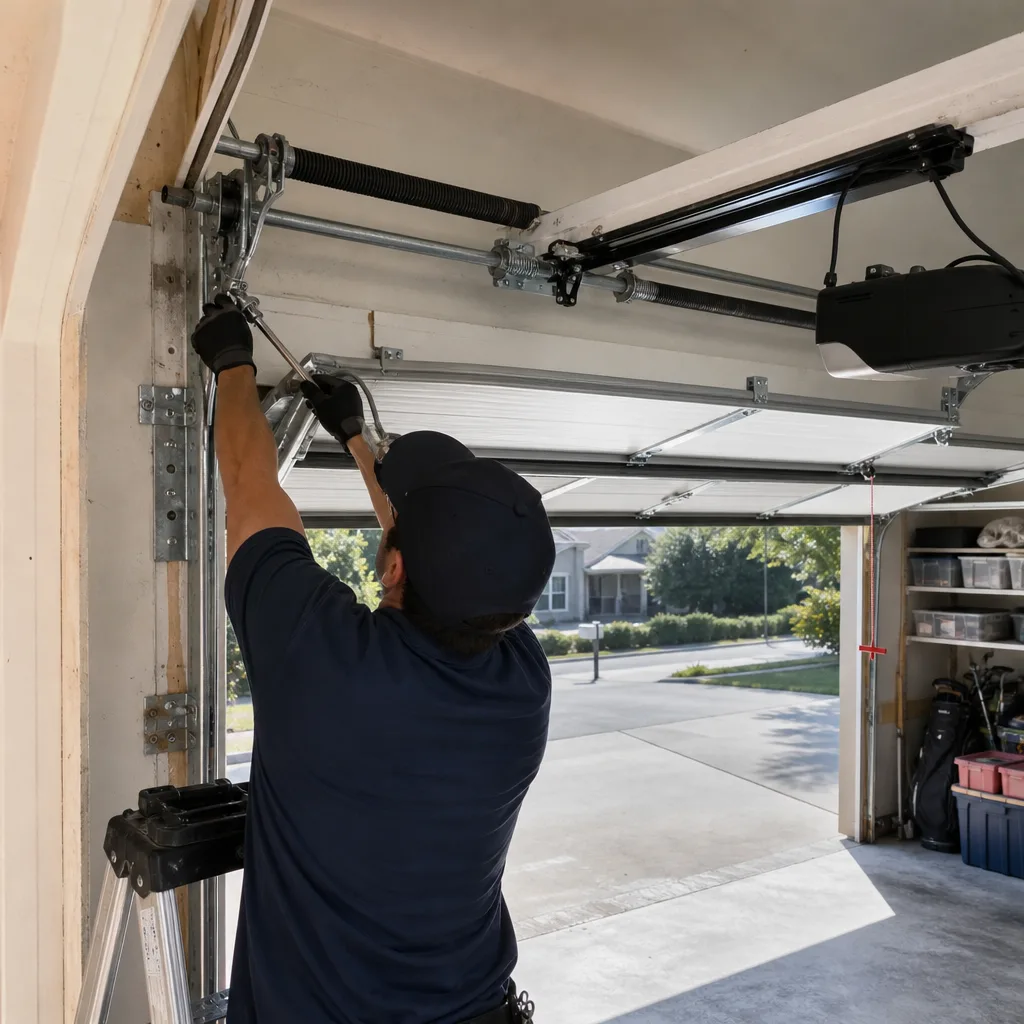 After
AfterThe Complete Guide to Garage Door in Bellevue
Most homeowners replace their garage door once in 20 years. That means the contractor you hire knows the product vocabulary, and you don’t. In Bellevue, where wet winters and salt-laden air from Puget Sound accelerate corrosion on unprotected steel, a single mismatched spec - a 24-gauge panel on a 16-foot opening, or a non-galvanized spring in a coastal microclimate - can cut a door’s service life in half before you notice the sag. This guide maps the dependencies between panel material, spring type, opener class, and insulation value so you can audit a quote before the first truck arrives, not after the invoice. For Garage Door Cost Breakdown: The Bellevue Homeowner’s Reference for 2026, see our detailed pricing guide.
Quick Answer
A garage door in Bellevue is a system of interdependent components - panel gauge, spring load rating, opener horsepower, and insulation R-value - where one under-spec part quietly fails the others. For the typical two-car attached garage in Bellevue, that means 25- to 27-gauge galvanized steel, a torsion spring sized to the door weight and cycle count, a ½-horsepower belt-drive opener with battery backup, and an R-value between 12 and 18 measured at the installed panel, not the center section alone.
Table of Contents
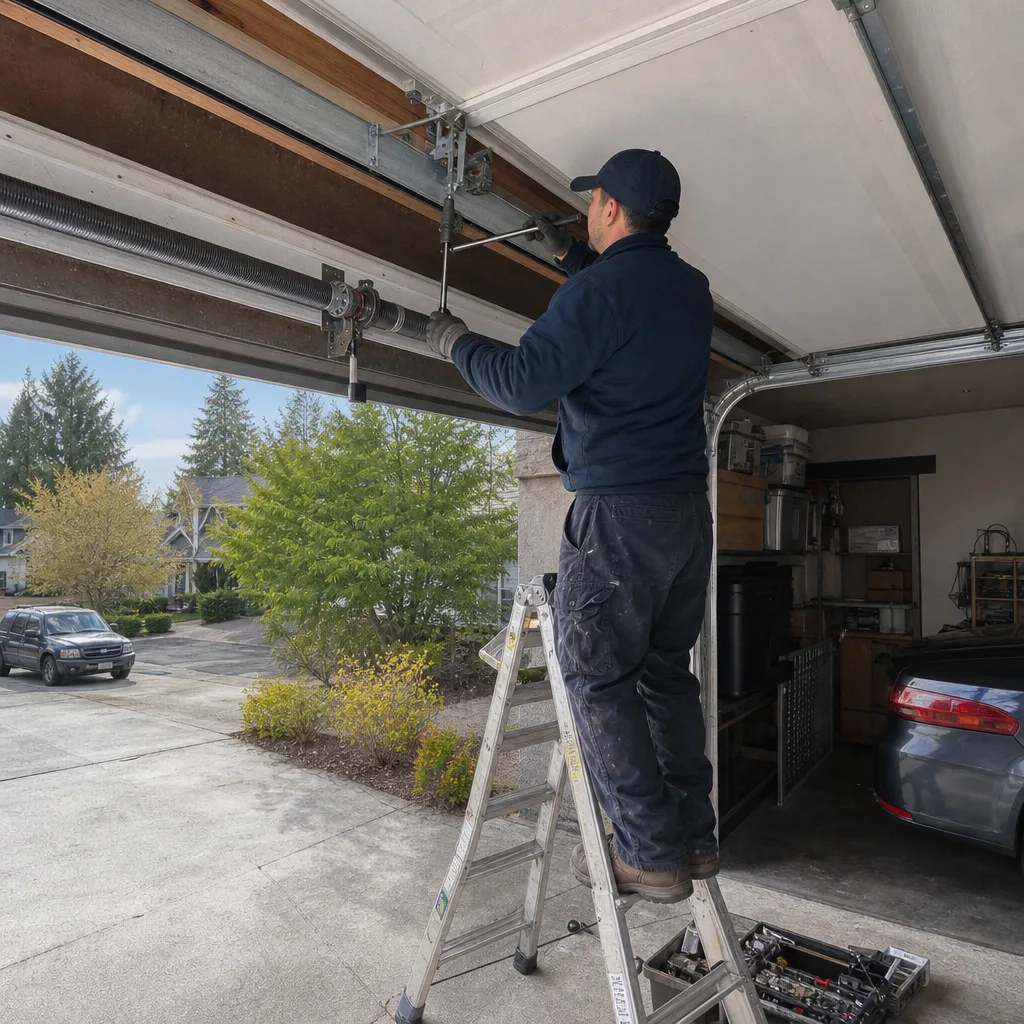
- How Bellevue’s Climate Affects Material Choice
- Understanding Panel Gauge and Steel Grade
- Spring Systems and Load Ratings for Bellevue Door Widths
- Opener Classes and Matching Horsepower to Door Weight
- How to Read Insulation R-Value Claims
- How to Read a Quote Line-by-Line
- The Documentation Checklist Before Any Installer Leaves
- Common Mistakes to Avoid
- When to Call a Professional
- Frequently Asked Questions
 Before
 After
AfterHow Bellevue’s Climate Affects Material Choice
Bellevue sits in a modified marine climate. Annual rainfall exceeds 39 inches, humidity stays elevated eight months of the year, and winter temperatures rarely freeze hard but hover long enough in the 30s to sustain condensation on uninsulated metal surfaces. For garage doors, that climate profile creates three specific risks: galvanized coating failure on under-spec steel, accelerated wear on non-stainless hardware, and thermal bridging in attached garages that drives heating load and moisture migration into living spaces.
The salt factor is often missed. Bellevue is not coastal in the Oregon sense, but Puget Sound’s marine layer carries enough chloride to accelerate corrosion on bare or poorly coated steel within five to seven years. We’ve replaced doors in the Newport Hills and Somerset areas where the original 28-gauge non-galvanized panels developed perforation rust at the bottom corners before year eight. The replacement spec: 25-gauge G60 hot-dip galvanized steel with a baked-on polyester or fluoropolymer paint system and a 20-year film integrity warranty.
Wood composite and fiberglass doors are available alternatives, but each carries trade-offs in Bellevue’s climate. Wood composites absorb moisture if the surface seal fails, and we’ve seen swelling and delamination in shaded north-facing installations in the Bridle Trails neighborhood. Fiberglass resists corrosion but becomes brittle in cold snaps and offers poor insulation value per inch. For most Bellevue homes, steel remains the rational default, with material choice focused on gauge, coating, and paint-system specification rather than substrate type.
The attached-garage consideration is equally specific. In Bellevue’s 2015-2025 housing stock, particularly in the Wilburton and Eastgate areas, the garage shares at least one wall with conditioned space. An under-insulated door creates a thermal bridge that the HVAC system compensates for, often without the homeowner tracing the energy cost to the source. The fix is not maximum R-value at any cost; it’s matching the door’s thermal performance to the wall assembly it replaces, typically R-13 to R-21 for 2×4 or 2×6 framing, and verifying that the R-value claim covers the full panel, not just the center section.
Understanding Panel Gauge and Steel Grade
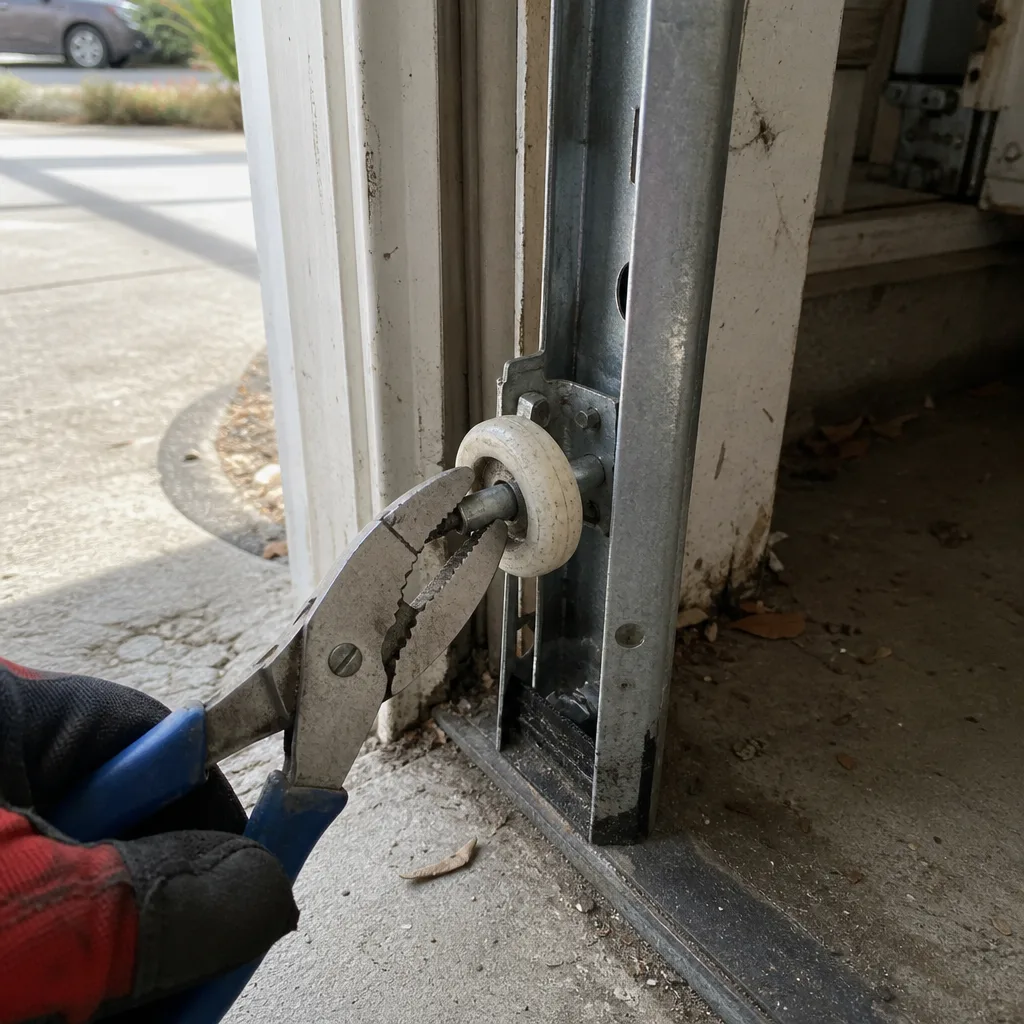
Steel gauge is backward: lower numbers mean thicker metal. For residential garage doors in Bellevue, the relevant range is 24-gauge (thickest common residential) to 28-gauge (thinnest). The difference is structural and cosmetic. A 24-gauge door resists denting from basketballs, wind-borne debris, and the occasional backing miscalculation. A 28-gauge door dents from light impact and will show oil-canning - visible waviness - across wide panels within a few seasons.
The gauge also determines what spring system, track hardware, and opener horsepower the installation requires. A heavier door needs a higher cycle-count spring and a more powerful opener. Mismatch these, and the opener strains, the spring fatigues prematurely, or the door drifts out of balance. This is the dependency stack in action: panel gauge is the first domino.
For Bellevue’s typical installations, we specify:
- Single-car doors (8 to 10 feet wide): 25- or 26-gauge steel, adequate for wind loads and moderate impact resistance
- Two-car doors (16 feet wide): 24- or 25-gauge steel, necessary to prevent sag across the span and to support window inserts without flexing
- Three-car or oversized doors (18 feet and above): 24-gauge minimum, often with reinforced struts or a heavier track system
Galvanizing specification matters as much as gauge. G60 hot-dip galvanizing - 0.60 ounces of zinc per square foot, both sides - is the minimum we accept for Bellevue installations. G90 (0.90 ounces) is available on premium lines from Amarr and Wayne Dalton and extends corrosion resistance significantly in exposed locations. The paint system layered over the galvanizing is the final barrier: a baked-on primer and topcoat with a 15- to 20-year film integrity warranty against chalking, fading, and peeling. “Painted steel” without specification is not enough information to compare quotes.
We document the gauge and coating on every garage door installation in Bellevue with a photo of the manufacturer’s label and a written note in the job record. Clause 4 of The Haven Standard requires the customer see the specification before we quote, not after we install.
Spring Systems and Load Ratings for Bellevue Door Widths
The spring does the lifting; the opener only guides. An incorrectly specified spring causes opener failure, panel damage, and safety risk. In Bellevue, we see three spring systems in residential use, each with specific load and cycle characteristics.
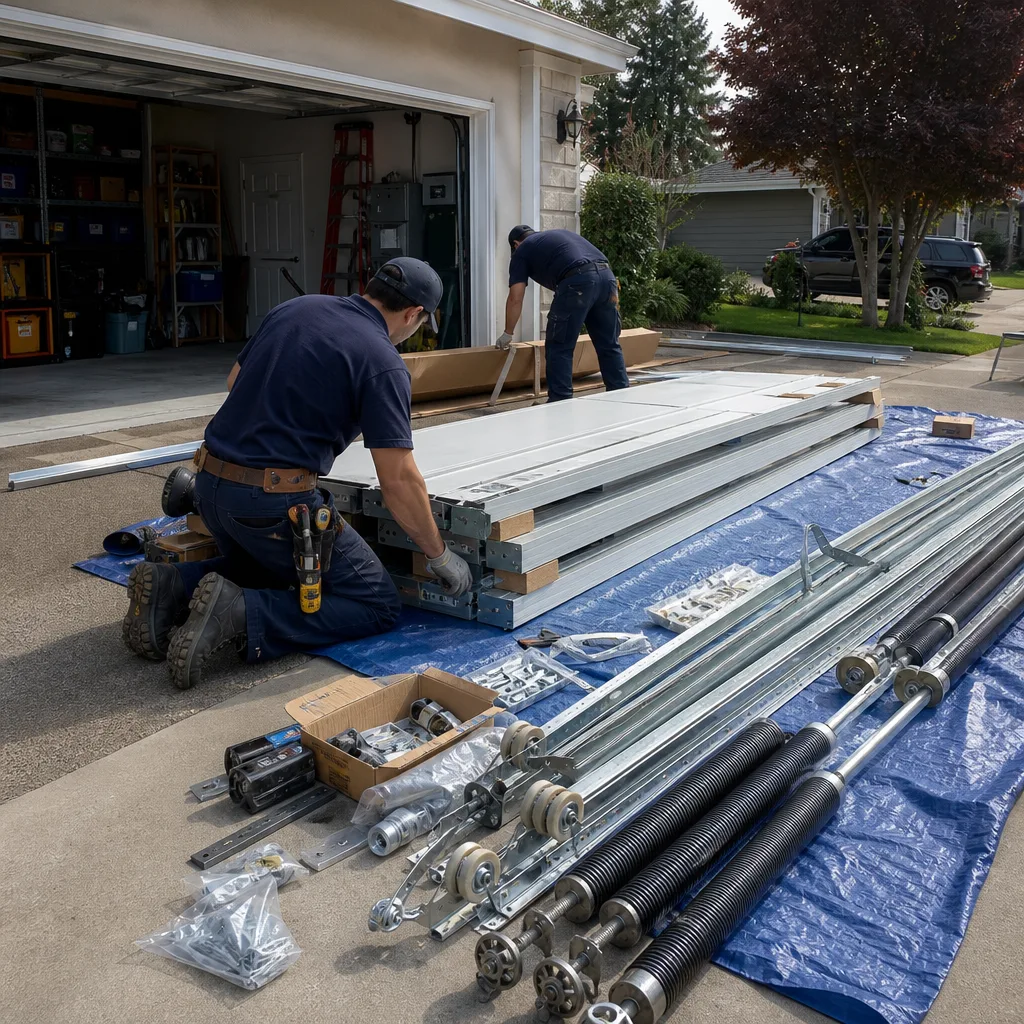
Torsion springs are the professional standard. A single or pair of springs mounts on a steel shaft above the door, wound to store mechanical energy. The spring is sized to the door weight and the desired cycle count - one cycle equals one open and close. Standard torsion springs are rated for 10,000 cycles, which translates to roughly seven years at four cycles per day. High-cycle springs rated for 20,000, 30,000, or 50,000 cycles are available and cost proportionally more upfront but reduce lifetime cost.
For Bellevue’s common door widths, torsion spring sizing follows this pattern:
- 8-foot wide, single-car door, steel construction: One 207 x 1.75-inch spring (wire diameter 0.207 inches, inside diameter 1.75 inches) for doors up to 150 pounds; heavier wood or insulated doors require 218 or 225 wire with matching ID
- 16-foot wide, two-car door, standard 25-gauge steel: Two 225 x 2-inch springs, paired to balance the load across the full width; door weight typically 175 to 250 pounds depending on insulation and window inserts
- 18-foot wide or custom door, heavy-gauge or wood-grain overlay: Two 250 x 2-inch or larger springs, often with a heavier shaft and bearing plates to handle the torque
Extension springs run parallel to the horizontal tracks and stretch to provide lift. They are cheaper to install but less precise in balance, more dangerous when they fail (they store energy in extension and can whip when broken), and generally limited to lighter, single-car doors. We do not recommend extension springs for two-car doors in Bellevue and will not install them on doors over 200 pounds.
Wayne Dalton TorqueMaster is a proprietary system that houses the spring inside a steel tube. It is cleaner-looking and safer for DIY contact but requires manufacturer-specific tools and parts for service. In Bellevue, we’ve replaced a growing number of TorqueMaster systems with standard torsion hardware after the original springs reached cycle limit, because the enclosed design makes field adjustment and individual component replacement impractical. If you are quoted a TorqueMaster system, understand that future garage door repair in Bellevue may be brand-locked to Wayne Dalton dealers.
Spring safety note: torsion springs are under hundreds of pounds of tension. A winding bar slipped from a cone can cause serious injury or death. We do not provide DIY winding instructions; spring adjustment and replacement require trained technicians with proper tools and liability coverage. See DIY vs Professional Garage Door: The Bellevue Homeowner’s Decision Guide for why this work belongs to professionals. Clause 4 of The Haven Standard is why our technician photographs the failed spring and measures the wire diameter, inside diameter, and length before quoting a replacement - the customer sees the evidence before any price is named.
Opener Classes and Matching Horsepower to Door Weight
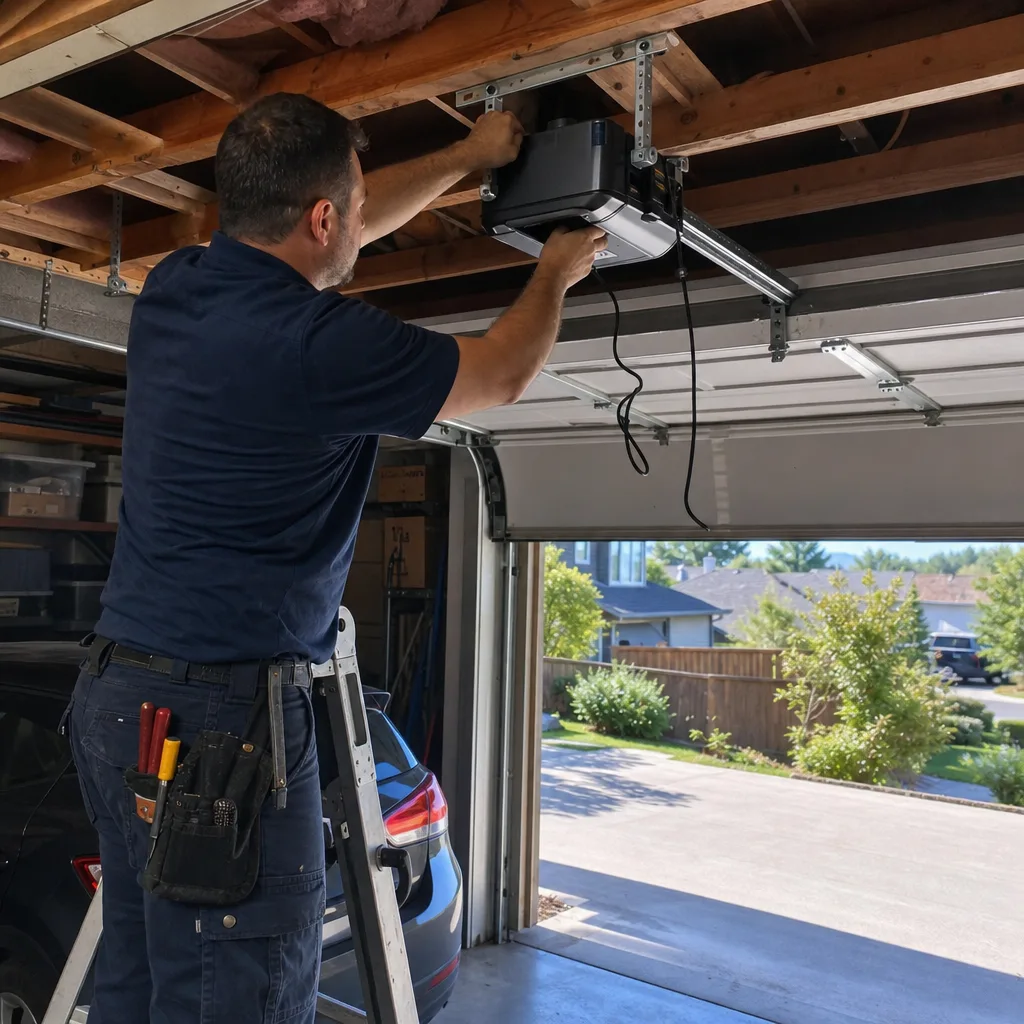
The opener moves the door; it does not hold it. A properly balanced door should stay at any position in the vertical track when disconnected from the opener. If it doesn’t, the spring is wrong, and no opener horsepower will fix it.
That established, opener specification matters for speed, noise, and feature set. Residential openers in Bellevue fall into three horsepower classes, with belt-drive, chain-drive, and screw-drive lift mechanisms.
½-horsepower openers handle most single-car and standard two-car steel doors up to approximately 250 pounds. This is the correct specification for a typical 16-foot, 25-gauge insulated door with no windows. A ½-horsepower opener in good condition should lift the door at 6 to 8 inches per second and reverse on contact with a 2×4 laid flat in the door path.
¾-horsepower openers are appropriate for heavier doors: wood-grain overlays, three-layer insulated construction, or doors with extensive window inserts that add 30 to 60 pounds. They also provide margin for doors that are slightly out of balance, though balance should be corrected rather than overpowered.
1-horsepower openers are reserved for solid wood doors, carriage-house styles with heavy hardware, or commercial-weight residential installations. They are over-specified for standard steel doors and do not improve performance; they simply cost more and consume more standby power.
Drive type selection in Bellevue:
- Belt drive: Quietest, lowest vibration, best for attached garages with bedrooms above. Polyurethane-reinforced belts last 10 to 15 years. Our default recommendation for Bellevue’s 2015-2025 housing stock.
- Chain drive: Lowest cost, highest noise, requires periodic lubrication. Acceptable for detached garages or budget-conscious replacement where noise is not a factor.
- Screw drive: Mid-range noise, sensitive to temperature swings and lubrication quality. We do not recommend screw-drive openers for Bellevue’s climate due to thermal expansion affecting travel limits.
Feature specifications that matter for Bellevue installations: battery backup (required by Washington State law for new installations as of 2019, and practical given windstorm-related power outages), rolling-code security (LiftMaster’s Security+ 2.0 or equivalent), and smart-home integration (MyQ, Aladdin Connect, or similar). We specify and install garage door opener repair and installation in Bellevue across all eight major brands, with preference for LiftMaster and Chamberlain for parts availability and warranty service network density in King County.
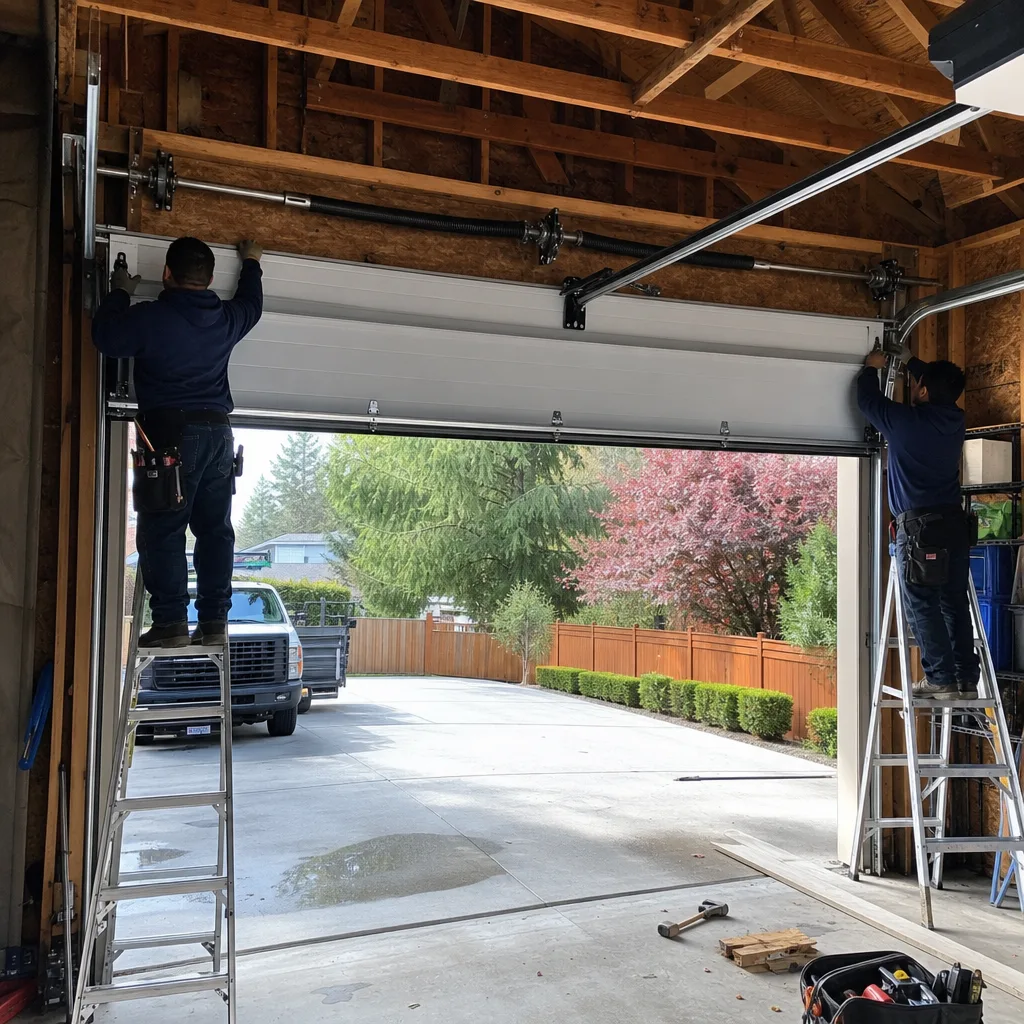
The force setting and limit switch must be calibrated to the specific door after installation, not left at factory default. We record the force test result - measured in pounds of resistance required to trigger reversal - and the travel limit positions in the job documentation. This is part of the photo record delivered to every customer.
How to Read Insulation R-Value Claims
R-value measures thermal resistance. Higher is better. The problem with garage door R-value claims is where and how the measurement is taken.
Most manufacturers test the center section of a single panel in a controlled laboratory environment. The result is the “center-of-panel” R-value. An installed door has edges, joints, windows, and hardware penetrations that reduce effective thermal performance by 20 to 40 percent. A door advertised as R-18 may perform at R-10 to R-12 in the field.
For Bellevue’s attached garages, the relevant comparison is to the wall assembly the door replaces. A 2×4 wall with fiberglass batts achieves approximately R-13. A 2×6 wall achieves R-21. The garage door should approach, not fall far below, these values to avoid becoming the thermal weak point.
Construction type determines realistic R-value:
- Single-layer (pan construction): No insulation, R-value approximately 2. Suitable only for detached, unconditioned garages in mild climates. Not recommended for Bellevue attached garages.
- Double-layer (steel + polystyrene): R-value typically 4 to 7. Better than single-layer but still below wall assembly performance. Acceptable for detached garages or budget replacements.
- Triple-layer (steel + polyurethane + steel): R-value 12 to 18 center-of-panel, 9 to 13 effective. Polyurethane foam bonds to the steel skins, adding structural rigidity and reducing thermal bridging. This is our standard specification for attached garages in Bellevue.
The Pacific Northwest climate adds a moisture consideration. Polyurethane foam is closed-cell and resists moisture absorption. Polystyrene (EPS or XPS) can absorb water if the panel seal fails, reducing R-value and potentially corroding the interior steel skin. In Bellevue’s wet winters, polyurethane is the technically superior choice despite higher cost.
When comparing quotes, ask whether the stated R-value is center-of-panel or whole-door effective. If the salesperson cannot answer, the number is likely center-of-panel and overstated by 30 percent or more. We state both figures on every quote, per Clause 1 of The Haven Standard: the written scope includes the specification, not just the price.
How to Read a Quote Line-by-Line
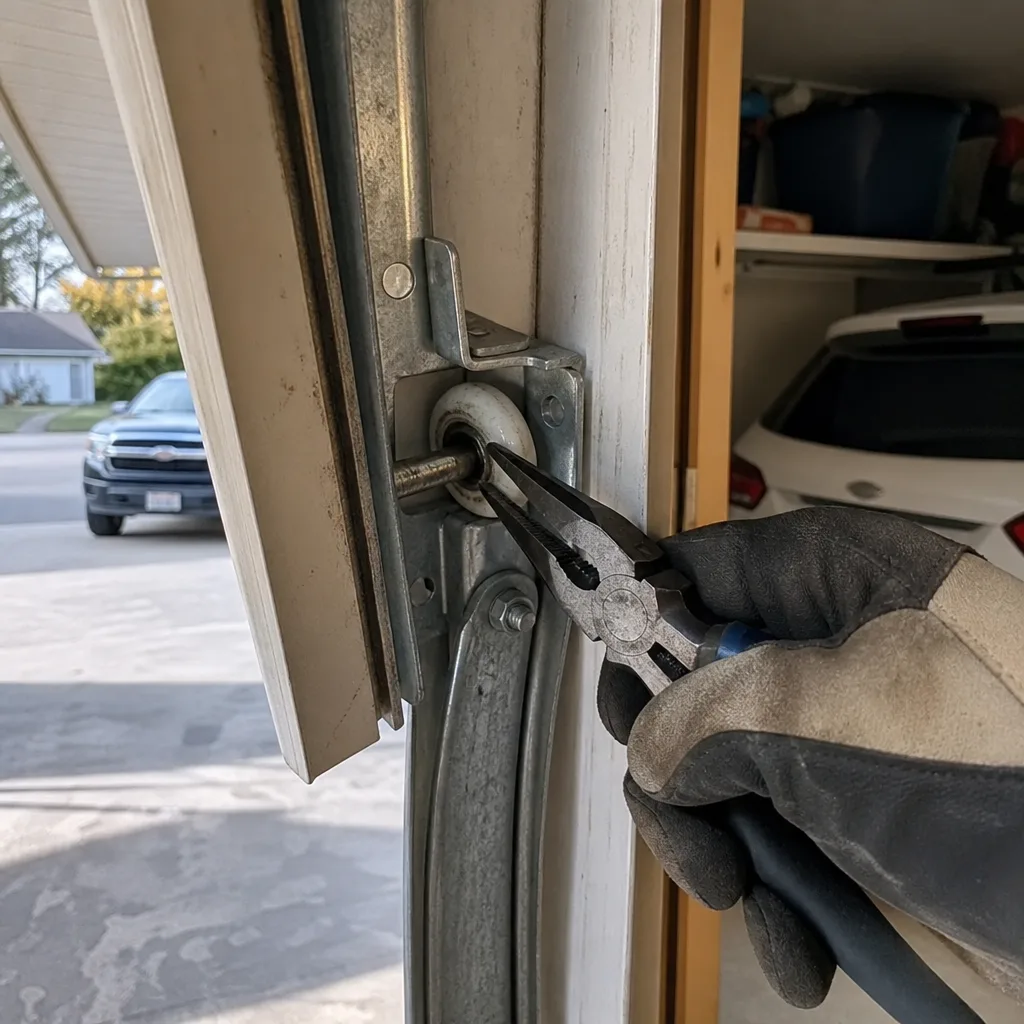
A garage door quote in Bellevue should itemize components, not lump them into “door installed.” Here’s how to audit what you receive, and for Garage Door Permits, Codes & Inspections in WA: What You Need to Know, check our compliance guide.
Line 1: Door model and size. Should specify manufacturer (Amarr, Wayne Dalton, Clopay, Raynor, or other), model line, size in width x height (typically 9×7, 16×7, or 18×7 for residential), construction type (single, double, or triple layer), gauge, and color/finish. “16×7 insulated steel door, white” is not sufficient. “Amarr Lincoln 3000, 16×7, triple-layer 25-gauge, R-16.2 polyurethane, white” is sufficient.
Line 2: Window inserts. If applicable, specify glass type (clear, frosted, seeded, obscure), frame color, and quantity. Window inserts reduce insulation value; the quote should acknowledge this or specify insulated glass.
Line 3: Track and hardware. “Hardware included” is a warning sign. The quote should list: vertical and horizontal track gauge (14-gauge minimum for two-car doors), hinge count and type (11-gauge residential or 14-gauge commercial), roller type (2-inch 10-ball nylon or 2-inch 13-ball steel), and bottom weatherseal type and length. These components vary in quality and lifespan; their specification determines whether the door operates quietly and seals properly.
Line 4: Spring system. Should specify torsion or extension, wire size, inside diameter, length, and cycle count. “New spring” is inadequate. “225 x 2 x 32, 20,000-cycle torsion spring, galvanized” is adequate.
Line 5: Opener. If included, specify brand, model, horsepower, drive type, rail length (for 7-foot or 8-foot doors), and features (battery backup, smart connectivity, security rolling code). The opener must match the door weight and height; a 7-foot rail on an 8-foot door is a return visit.
Line 6: Installation labor and removal. Should specify removal and disposal of the existing door, installation of the new system, calibration and testing, and cleanup. “Install new door” without removal specification may mean you are left with the old door in your driveway.
Line 7: Warranty terms. Manufacturer warranty on door sections (typically 1 year to lifetime depending on model), hardware (3 to 10 years), and finish (10 to 20 years). Installer warranty on labor (our standard is the 365-Day Done Right Promise - if it’s not right, we make it right, backed by The Haven Standard and a terms page, not a handshake).
Line 8: Documentation included. The quote should state what you receive after installation: photo record, written test results, warranty documents, and maintenance instructions. If documentation is not mentioned, it is likely not provided.
We deliver a flat, written price and written scope before any work starts - Clause 1 of The Haven Standard. “Call for a quote” is not how this works. The price we name is the price you pay; the scope we write is the work we do. No exceptions in 18,000+ jobs since 2015.
The Documentation Checklist Before Any Installer Leaves
The work is not complete when the door moves. It is complete when you have evidence of what was done and how it was verified. Before any installer leaves your Bellevue home, request and verify the following:
- Spring tension log. A record of the initial tension setting, measured in quarter-turns or inch-pounds, with the technician’s signature and date. This baseline allows future technicians to detect spring fatigue or tampering without disassembly.
- Opener force test result. The measured pounds of resistance required to trigger safety reversal, recorded at both the open and close travel limits. UL 325 requires reversal within 2 seconds of contact with a test object; the force test quantifies compliance.
- Photo of installed hardware. Clear images of the spring assembly, cable attachment points, roller-to-hinge engagement, and bottom bracket configuration. These serve as reference for future service and as proof of proper installation.
- Written warranty and terms. Not a verbal promise; a document with coverage periods, claim procedures, and contact information. Our 365-Day Done Right Promise and manufacturer warranties are delivered in writing, with The Haven Standard terms page referenced.
- Maintenance schedule. Lubrication points, inspection intervals, and warning signs to watch for. For Bellevue’s climate, we recommend annual inspection of weatherseal condition, hardware tightness, and spring balance, with lubrication of hinges, rollers, and torsion spring as needed.
We include all five items on every visit, without request and without additional charge. The photo record traces back to the founding rule Servo was built on in 2015: the customer sees the failed part before anyone quotes a replacement. The documentation is not optional; it is the product.
Common Mistakes to Avoid
- Choosing gauge by price alone. A 28-gauge door costs less upfront and dents within two years in a driveway where teenagers play basketball. In Bellevue’s active households, the replacement cost exceeds the initial savings.
- Ignoring the spring cycle count. A 10,000-cycle spring on a door used six times daily lasts under five years. For high-use doors, the upgrade to 20,000 or 30,000 cycles pays for itself in avoided service calls.
- Matching a new door to an old opener. A 15-year-old chain-drive opener with worn gears will fail within months of being connected to a heavier new door. Replace both, or verify the opener’s condition and capacity in writing.
- Accepting “hardware included” without specification. We’ve replaced hinges that failed at 18 months because the original installer used 18-gauge stamped hinges on a 16-foot door. The quote should name the gauge and type of every load-bearing component.
- Overstating R-value importance for detached garages. An R-18 door in a detached, unconditioned garage is wasted money. Match insulation to actual use, not to the highest number available.
- Skipping the documentation request. An installer who cannot produce a spring tension log or force test result likely did not perform these steps. The documentation is your protection against callbacks and disputes.
- Assuming all galvanized steel is equal. G30 galvanizing (0.30 ounces per square foot) is marketed as “galvanized” but offers half the corrosion resistance of G60. In Bellevue’s wet climate, the difference is visible within three years.
When to Call a Professional
Call when the door does not move smoothly and quietly, when the opener strains or reverses unexpectedly, when you see frayed cables or a gap in the torsion spring, or when the door will not stay open at the halfway position. These symptoms indicate spring fatigue, cable wear, or balance problems that worsen with use and can cause panel damage or safety system failure.
For new installation or replacement, call when your door is over 20 years old, when repair costs exceed 50 percent of replacement, or when you cannot verify the specifications of your current system. A professional assessment should include measurement, load calculation, and a written quote with itemized components - not a verbal estimate and a pressure close.
Servo Garage Doors Bellevue offers free estimates in Bellevue. Call (425) 696-3561 to schedule a measure and receive a flat, written price before any work starts. Our technician arrives in a marked vehicle, in uniform, with a background check on file and a license number visible. You’ll receive a named technician, an on-the-way text, and a documented photo record of what we find and what we do. Explore more guides & resources on garage door care and selection.
Frequently Asked Questions
A new steel garage door installed in Bellevue typically ranges from $1,200 for a single-car, single-layer door to $3,800 for a two-car, triple-layer insulated door with windows and a belt-drive opener. High-cycle springs, custom colors, or solid wood construction add to the upper end. Call (425) 696-3561 for an exact quote - estimates are free, and the written price is agreed before any work starts.
Standard removal and replacement of a residential garage door in Bellevue takes four to six hours, including opener removal and reinstallation if applicable. Custom sizes, structural modifications to the opening, or electrical work for new opener circuits extend the timeline. We schedule, not rush, and we do not promise same-day installation because the work is measured, ordered, and executed - not dispatched.
No. Our written price and written scope, delivered before any work starts, are fixed per Clause 1 of The Haven Standard. If we encounter concealed damage - rotted jambs, unsafe electrical, or structural failure - we document it, stop work, and present a separate written quote for the additional scope. You approve or decline before we proceed. No surprises.
Yes. Our service trucks stock torsion springs in common wire sizes, cables, rollers, hinges, weatherseal, and opener components for LiftMaster, Chamberlain, Genie, Craftsman, and Raynor systems. For garage door repair in Bellevue, we complete most spring, cable, roller, and opener repairs in a single visit. Specialty-order doors or custom-color panels require measurement and factory lead time.
Bellevue’s wet winters and marine air accelerate corrosion on under-spec steel and degrade non-polyurethane insulation seals. A 28-gauge non-galvanized door may show rust perforation in five to seven years. A 25-gauge G60 galvanized door with a 20-year paint warranty typically lasts 20 to 25 years with annual maintenance. The climate penalty is real, but it is avoidable with correct specification.
We service and install all eight major brands: LiftMaster, Chamberlain, Genie, Clopay, Amarr, Wayne Dalton, Craftsman, and Raynor. Our trucks carry parts for same-day repair on the six opener brands and common door hardware across all manufacturers. For new installation, we recommend based on specification match, not brand commission.
The Haven Standard is a documented operating system for independently owned garage door businesses, established in 2015. It codifies four clauses: written price before work starts (Clause 1), background-checked uniformed technicians (Clause 2), live phone coverage 24/7 (Clause 3), and photographic documentation of findings before quoting replacement (Clause 4). Servo Garage Doors Bellevue operates under this standard as an independently owned and operated business, with our own license and insurance.
The Bottom Line
A garage door in Bellevue is a system, not a product. The panel gauge determines the spring load, which determines the opener horsepower, which must be calibrated to the actual door weight. The insulation R-value must match the climate and the garage’s relationship to conditioned space, not just the highest number in the brochure. The quote must itemize components, not obscure them. And the installation must close with documentation - spring tension, force test, photo record, written warranty - that proves the work was done correctly, not merely claimed.
We’ve made 18,000+ garage doors right since 2015, every one with a written price before work started and a documented record when the technician left. If you are auditing a quote, planning a replacement, or troubleshooting a problem, we will give you the specification vocabulary to make an informed decision. No urgency, no upsell, no “call for pricing.” Just evidence, documented.
Call (425) 696-3561 for a free estimate. A live person answers, 24 hours a day, including holidays. You’ll receive a named technician, an on-the-way text, and a flat written price before any work begins.
Written by Marcus Deller, Owner at Servo Garage Doors Bellevue, serving Bellevue since 2015.