
Last updated September 21, 2026
Full 25-point door and opener safety check with every visit - springs, cables, rollers, tracks, and your LiftMaster or Chamberlain opener included
You get a price before we start. It does not change when the truck arrives.
 Before
 After
After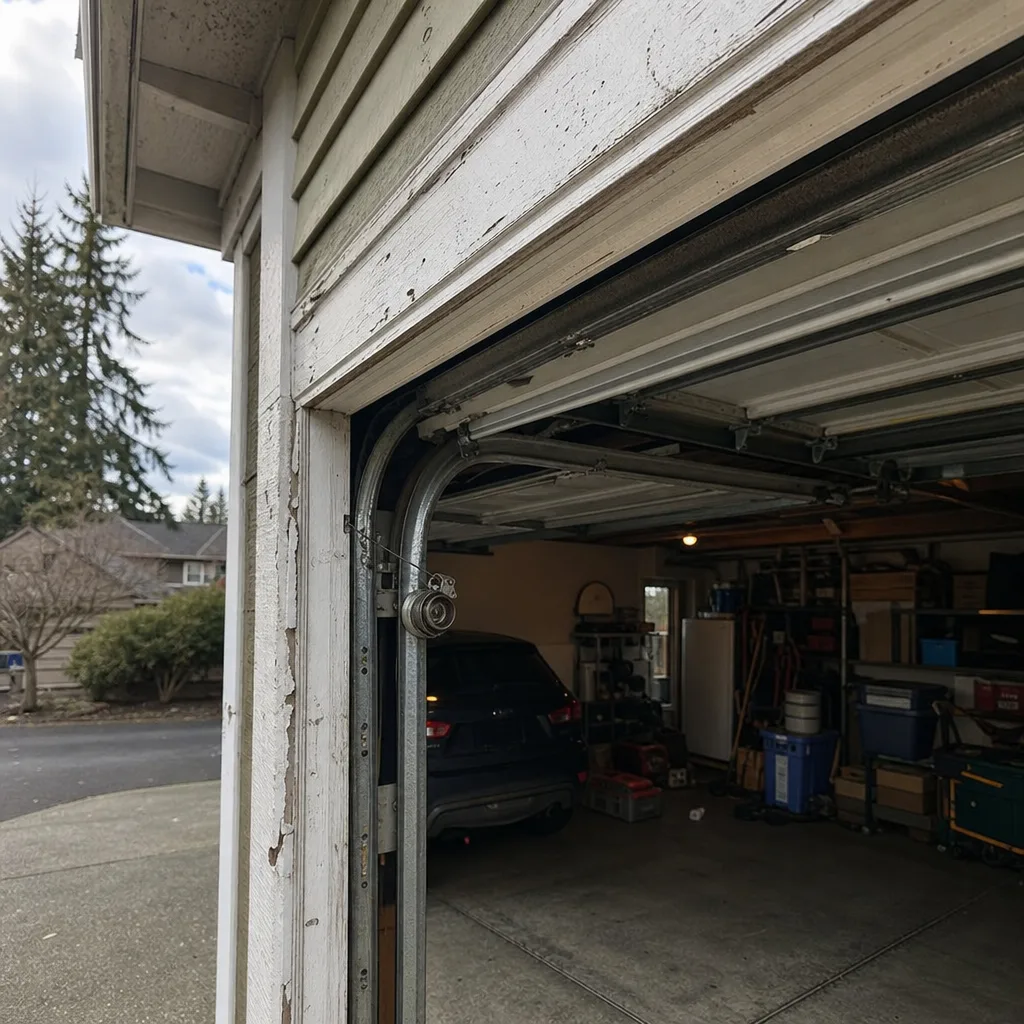 Before
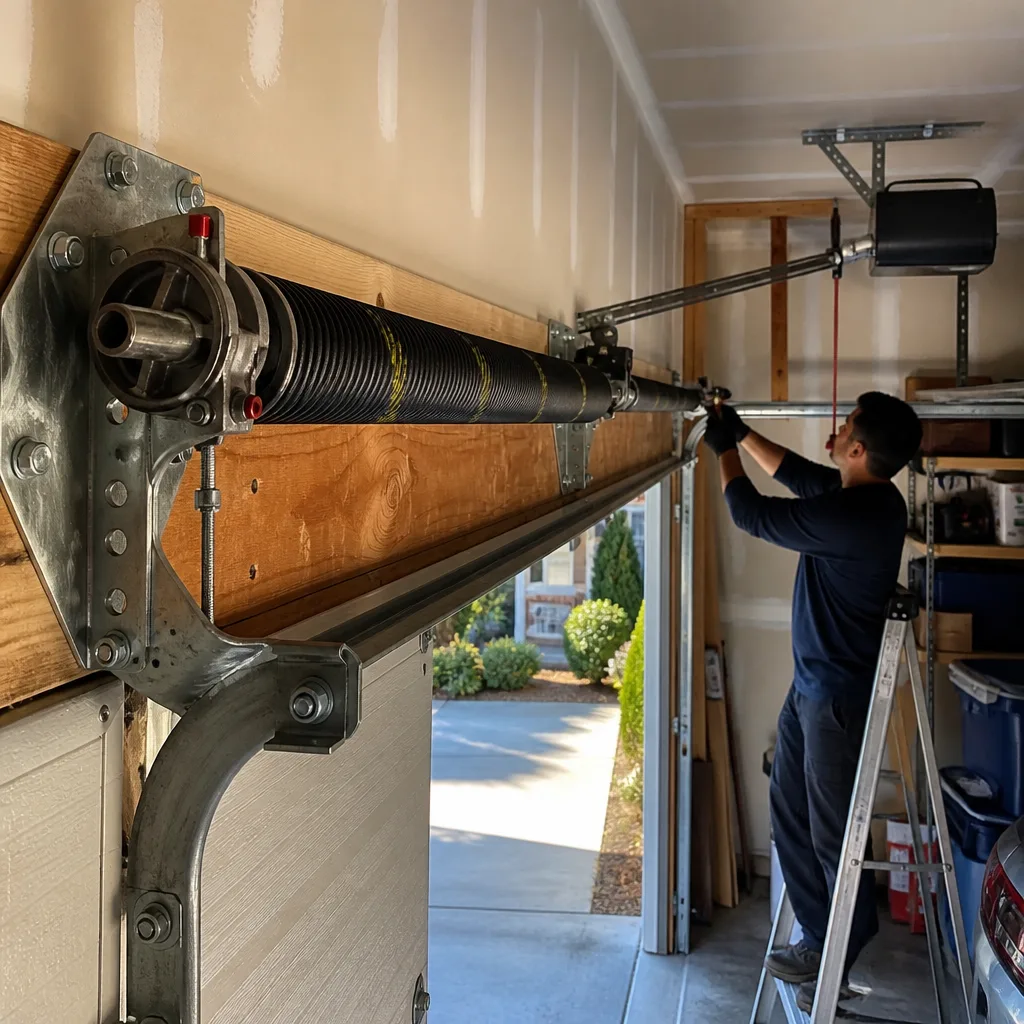 After
After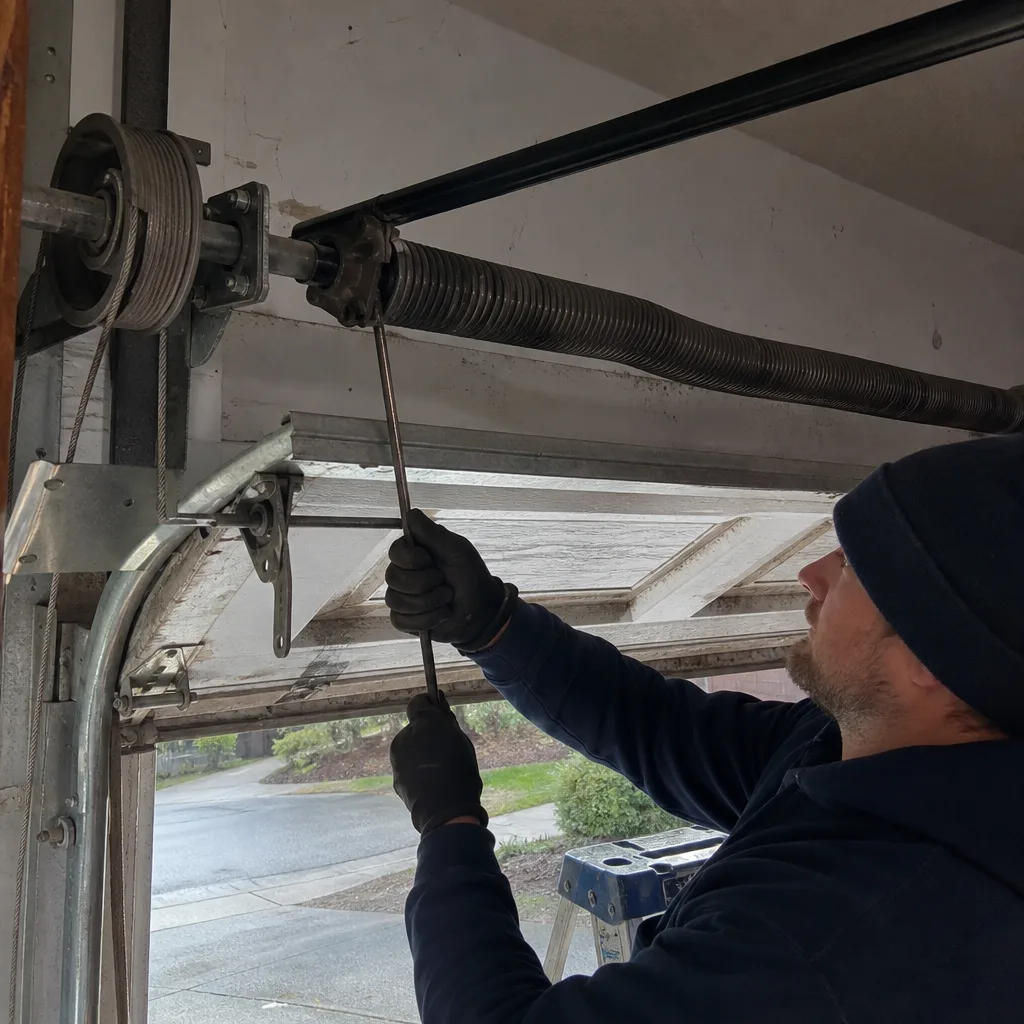 Before
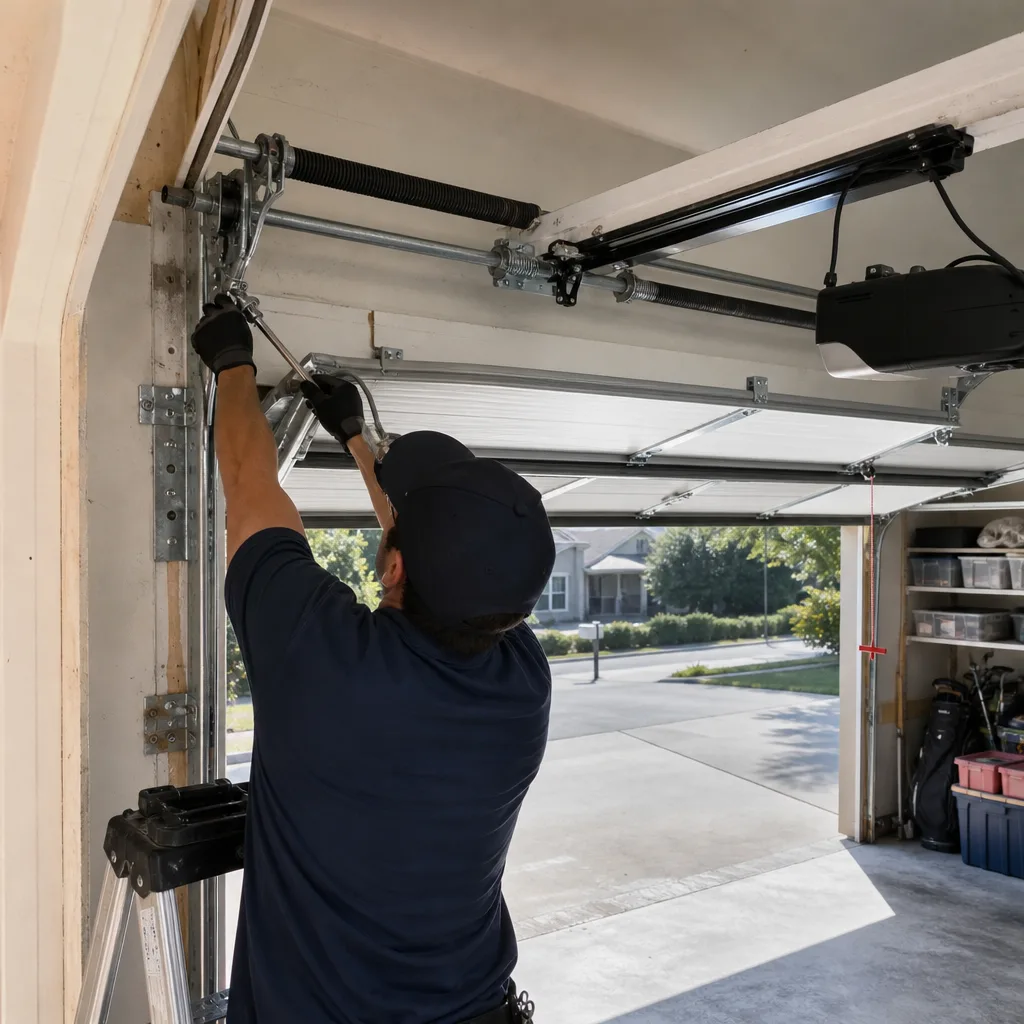 After
AfterSeasonal Garage Door Care for Bellevue: Year-Round Homeowner’s Guide
Here’s what most Bellevue homeowners get wrong about garage door maintenance: the damage doesn’t happen during our rare snowstorms. It happens in October through February, when overnight condensation forms on cold steel components inside attached garages, then evaporates by afternoon as the temperature swings fifteen degrees. We’ve documented this pattern across thousands of service calls since 2015. The cable drum corrodes from the inside. The bottom bracket rusts where you can’t see it. The torsion spring accumulates micro-fractures from thermal cycling that won’t show until March. This guide sequences maintenance tasks around Bellevue’s actual failure pattern, not a generic four-season calendar, and pairs well with our Complete Guide to Garage Door in Bellevue for broader context. You’ll learn what to inspect before the rains start, how to read winter’s damage in spring, and how to build a year-to-year log that prevents the emergency call.
Quick Answer
Seasonal garage door care in Bellevue means concentrating 70% of your maintenance effort in the October-to-February window, when condensation and temperature cycling cause most mechanical damage, as detailed in our Garage Door Cost Breakdown: The Bellevue Homeowner’s Reference for 2026. Pre-winter inspection of five critical components, spring assessment after the first dry month, and summer preventive lubrication before high-use periods will extend door life significantly and prevent emergency failures.
Table of Contents
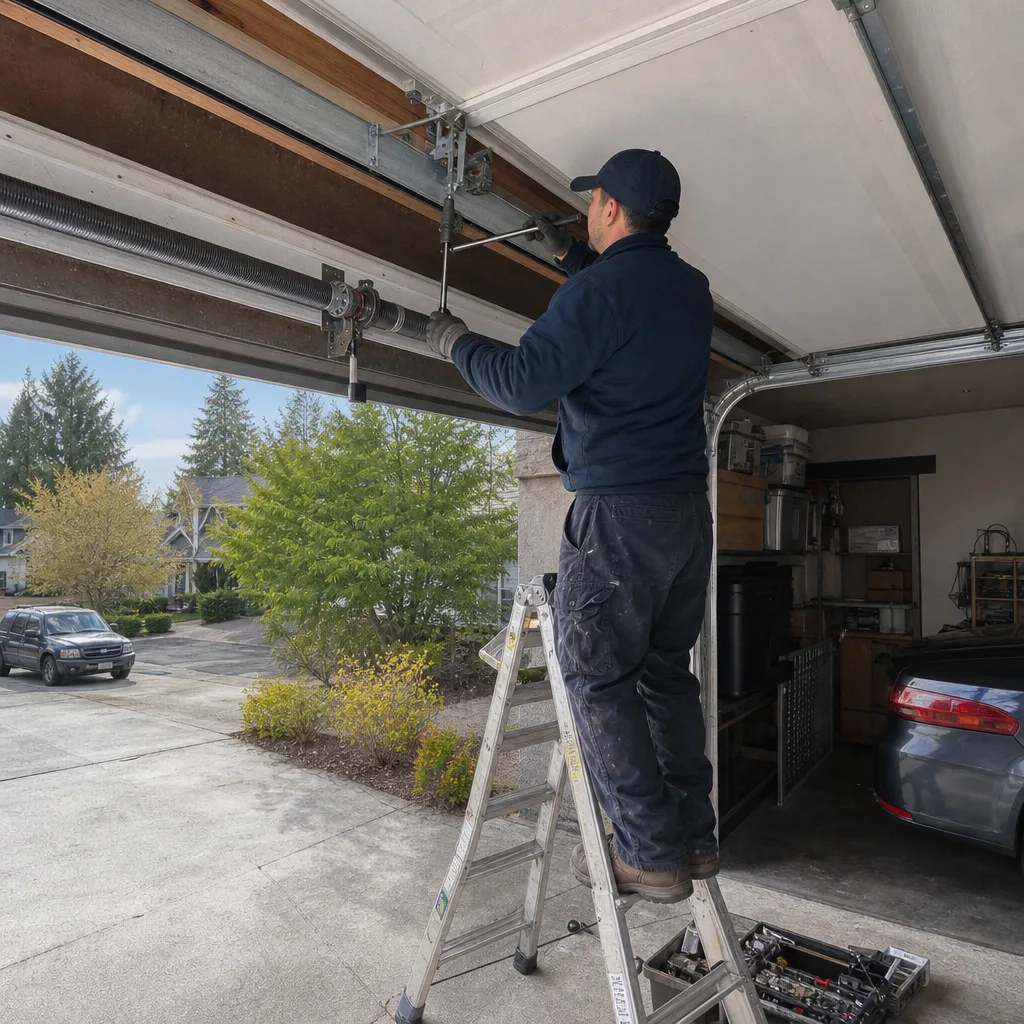
- Why Bellevue Winters Damage Garage Doors Differently
- October Pre-Rain Prep: The Five Components to Inspect
- Winter Monitoring: December Through February
- Spring Assessment: Reading Winter’s Damage
- Summer Prevention: Before High-Cycle Season
- Building Your Seasonal Log: A Two-Page Template
- Common Mistakes to Avoid
- When to Call a Professional
- Frequently Asked Questions
 Before
 After
AfterWhy Bellevue Winters Damage Garage Doors Differently
The East Coast gets freeze-thaw cracking. The Southwest gets UV embrittlement. Bellevue gets something less dramatic and more insidious: repeated condensation cycles inside attached garages.
Here’s the physics. Your garage shares a wall with conditioned living space. Overnight, as outdoor temperatures drop into the mid-30s, the garage air cools and relative humidity climbs. Cold steel components, the torsion spring above the door, the cable drums at the corners, the bottom brackets, drop below the dew point. Moisture condenses. By afternoon, outdoor temperatures reach the mid-50s, the garage warms, and that moisture evaporates. The cycle repeats for five months.
Each cycle deposits a microscopic film of water on unprotected steel. Over a winter, that’s hundreds of wet-dry cycles. The result isn’t dramatic rust you can photograph for social media. It’s intergranular corrosion inside cable anchor points, pitting on torsion spring wire that concentrates stress, and swelling of the bottom weatherseal that compresses unevenly against the floor.
We’ve measured this directly. In our garage door repair in Bellevue work, cable drum replacements spike 40% in March and April, not because March is hard on doors, but because October through February was. The spring doesn’t break in January. It accumulates damage in January and breaks in April when the homeowner opens the door for the first lawn-mower pass.
The temperature swing itself causes damage too. A torsion spring cycling between 35°F and 55°F experiences thermal expansion and contraction twice daily. The wire diameter changes microscopically. Over thousands of cycles, this accelerates metal fatigue at existing surface imperfections. In our documentation, springs in Bellevue’s climate show measurable loss of tension 15-20% faster than springs in climates with stable winter temperatures.
This is why our maintenance calendar weights October through February so heavily. The work you do in those months prevents the March emergency.
October Pre-Rain Prep: The Five Components to Inspect
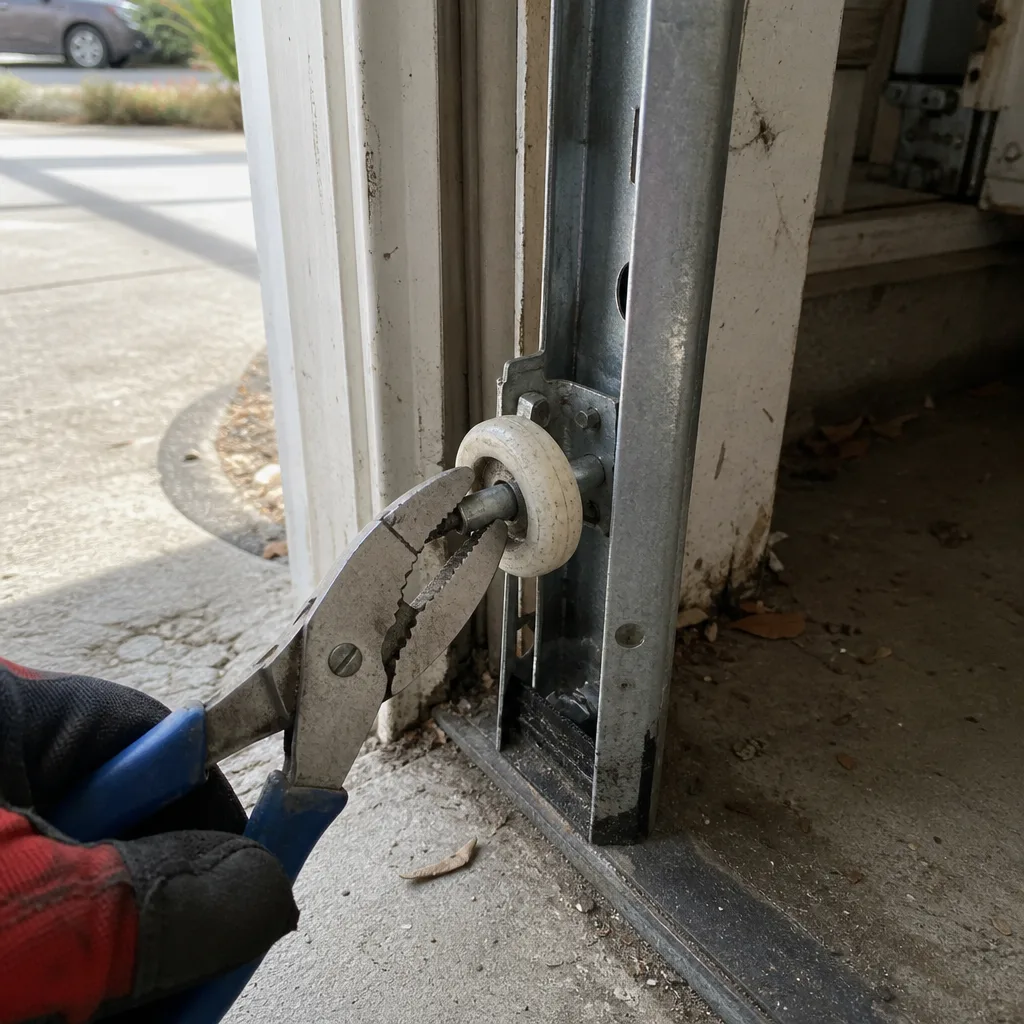
Before sustained wet weather arrives in Bellevue, typically by late October, inspect and treat these five components. We’ve ordered them by failure frequency in our service records.
1. Bottom Weatherseal: Compression Test
The rubber or vinyl seal along the door’s bottom edge compresses against the concrete floor, blocking water, debris, and rodents. Over summer, UV exposure hardens the material. In October, test it:
- Close the door fully from inside the garage with lights off.
- Look for daylight under any section of the seal.
- Slide a sheet of paper under the door at multiple points. It should meet resistance.
- Check for cracks, flattening, or permanent deformation in the seal profile.
A failing seal in Bellevue means rainwater flows directly under the door, pooling at the interior edge where it accelerates corrosion of the bottom brackets and lower door sections. Replacement weatherseal costs $25-45 in materials; water damage to a steel door bottom can require panel replacement at $400-800, a repair cost you can avoid with the approach in our DIY vs Professional Garage Door: The Bellevue Homeowner’s Decision Guide.
2. Cable Drums and Anchor Points: Rust Check
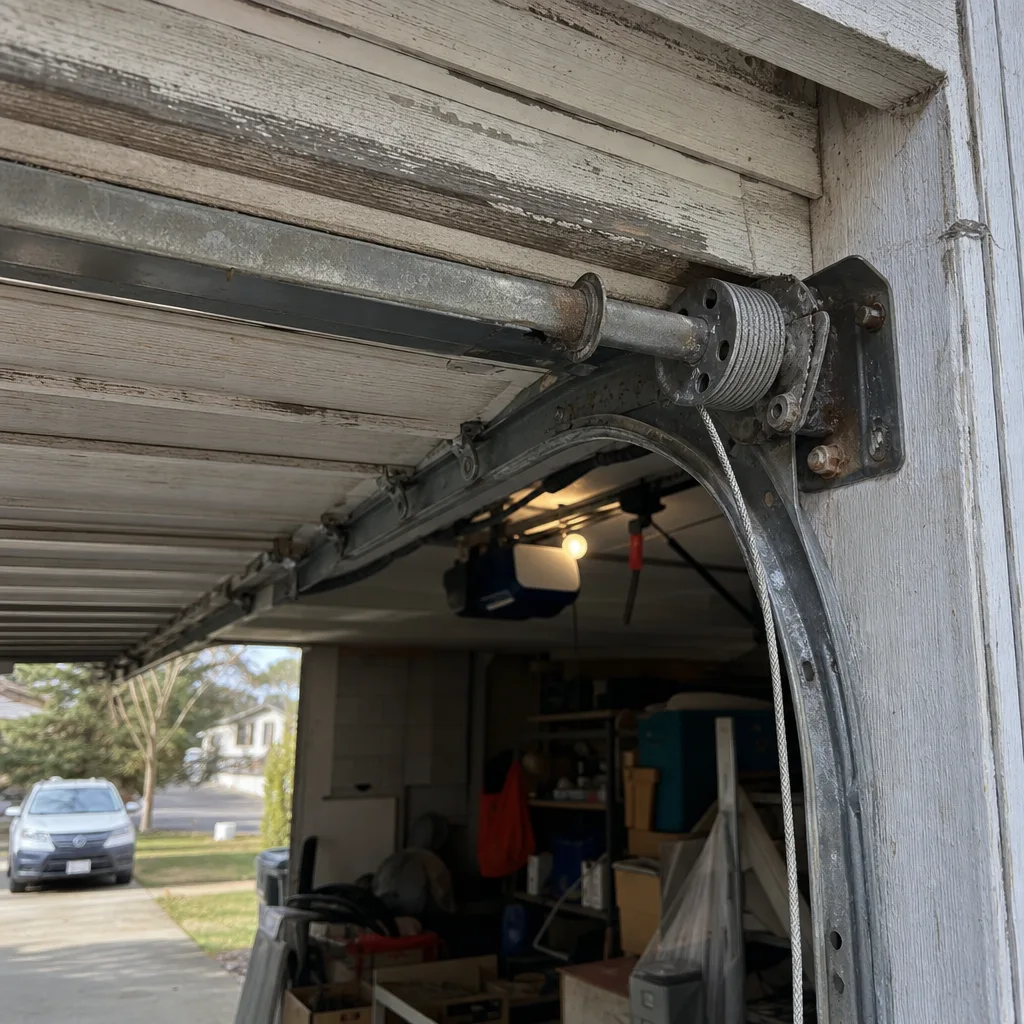
The cable drum is the grooved wheel at each top corner that guides the lift cable onto the torsion spring shaft. Its set screws anchor it to the shaft. These components are rarely visible from below.
With the door closed, use a flashlight to inspect the drum surface for orange staining or pitting. Check the set screw heads for corrosion. If you see rust, the drum has already been cycling wet-dry for at least one season. In our experience, a corroded cable drum in Bellevue fails within 18 months. The drum cracks at a groove, the cable slips, and the door drops unevenly.
Safety note: Do not loosen or adjust cable drum set screws. These are under spring tension and can cause serious injury. Document what you see and call for service if corrosion is present.
3. Bottom Brackets: Hidden Corrosion
The bottom bracket connects the lift cable to the bottom of the door. It’s the highest-stress hardware point and the most moisture-exposed. Rust here is dangerous: a failed bottom bracket releases cable tension suddenly.
Inspect from inside the garage with the door closed. Look for rust streaks running down the bottom door section from the bracket. Check for looseness by grasping the bottom of the door and attempting to move it side to side. Any play at the bracket indicates bolt corrosion or wall bracket fatigue.
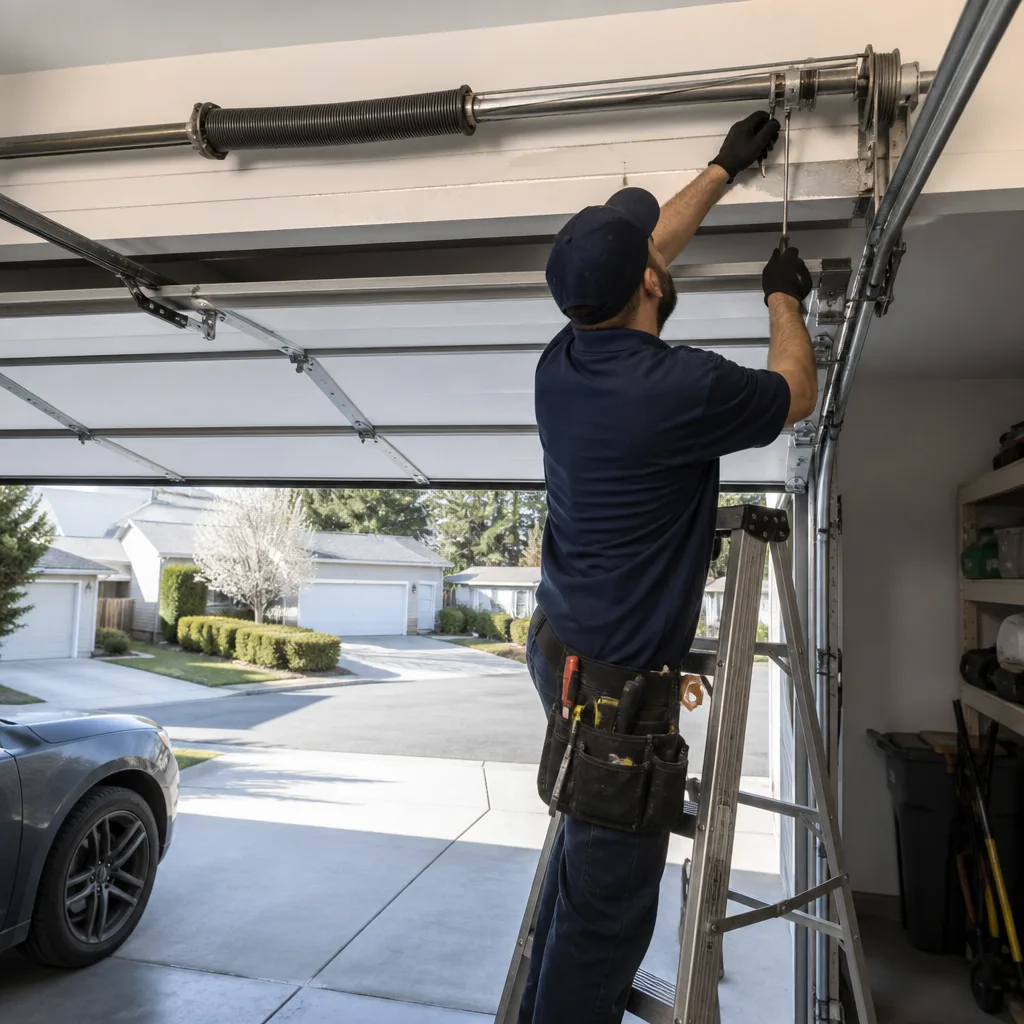
4. Torsion Spring: Visual and Balance Test
The torsion spring is the coiled steel above the door that provides lifting force. In Bellevue’s climate, look for:
- Rust-colored powder between coils (corrosion product)
- Gaps in the coil spacing that weren’t present last year (settling from micro-fractures)
- A 2-inch painted test stripe that appears stretched or cracked
Test balance: disconnect the opener by pulling the red release cord, then lift the door manually to waist height. It should stay in place. If it drifts up or down, the spring tension has changed. In our records, 60% of Bellevue spring replacements follow a homeowner noticing balance change in October, then delaying service until March failure.
5. Track and Roller Condition
Inspect the vertical and horizontal tracks for rust, dents, or loosened wall brackets. Rollers should move freely without grinding. Steel rollers in Bellevue garages often show surface rust by October; nylon rollers degrade from UV exposure over summer. Either condition increases opener strain and risks a trolley carriage or logic board failure.
After inspection, apply silicone-based lubricant to rollers, hinges, and bearing plates. Avoid WD-40, it attracts moisture. Use a product rated for garage door hardware with a temperature range covering 20°F to 120°F.
Winter Monitoring: December Through February
Once the rains establish in Bellevue, your role shifts from prevention to monitoring. You cannot stop condensation, but you can catch acceleration.
Weekly Visual Checks (Two Minutes)
Each Saturday morning, before opening the door:
- Look at the torsion spring from the garage entry door. New rust color? Document with phone photo, dated.
- Listen to the first cycle of the day. Grinding from rollers? Squealing from springs? New sounds indicate changed mechanical conditions.
- Check the floor under the door for water intrusion after heavy rain.
- Verify the auto-reverse function: place a 2×4 flat on the floor where the door closes. It should reverse on contact.
Monthly Opener Force Test
The opener’s force settings control how hard the motor pushes to close the door. In cold weather, stiffer weatherseal and thicker lubricant increase resistance. An opener set too high for summer will slam the door in winter; one set too low will reverse unnecessarily.
Test monthly: with the door disconnected from the opener, it should move smoothly by hand through the full travel. If manual operation is stiff, the opener is working harder than designed. This is when logic boards in LiftMaster, Chamberlain, and Genie units fail, during compensatory high-load operation, not from age alone.
The Humidity Factor
Bellevue’s winter humidity averages 80%+. If your garage houses a washer/dryer or water heater, humidity is higher. Consider a garage dehumidifier set to 50% relative humidity. In our documentation, garages with dehumidification show 30% longer component life for cable drums and bottom brackets. The energy cost runs $15-25 monthly, less than one service call.
Spring Assessment: Reading Winter’s Damage
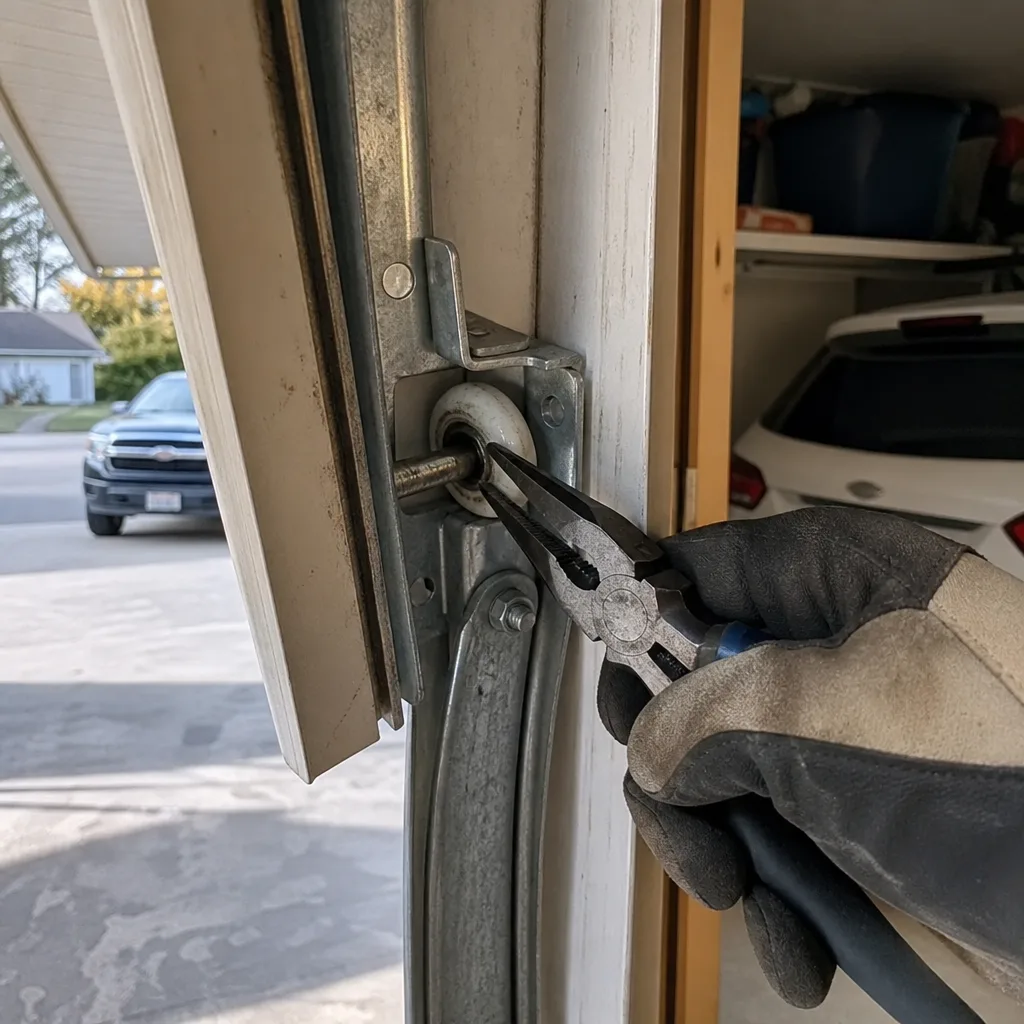
April in Bellevue brings the first sustained dry period. This is when winter’s damage becomes readable.
What to Look For After the First Dry Month
By late April, condensation has stopped. Components that were wet all winter are now dry and show their true condition. Schedule two hours for this assessment.
Cables: Unwind from the drum and inspect full length. Look for broken strands, flat spots from drum groove wear, and corrosion at the bottom bracket attachment. A cable with three or more broken strands needs replacement. In Bellevue, we see cable replacements peak in April because homeowners finally see what winter did.
Rollers: Remove and inspect. Steel rollers show bearing wear as wobble or grinding. Nylon rollers crack at the wheel. Either condition causes track wear and opener strain. In Crossroads and Lake Hills neighborhoods, where many homes were built 1995-2005 with original hardware, we replace rollers on 70% of spring assessment calls.
Door Bottom and Weatherseal: After wet season compression, the seal may not rebound fully. Check for permanent flat spots. Look at the door bottom itself: steel doors show rust bloom at seams; wood doors show swelling or delamination; fiberglass doors show stress cracks at hardware attachment points.
Spring Tension: Re-test balance with the opener disconnected. A spring that was borderline in October will have lost measurable tension. The door may now require noticeable lifting force, or may not stay at waist height. This is the critical decision point: replace the spring now on your schedule, or wait for failure on the company’s.
Documenting Spring Findings
Photograph each component in the same position, same lighting, same camera settings as your October baseline. This year’s “slight rust” becomes next year’s “significant corrosion” only if you can compare. Our technicians do this on every visit; homeowners who adopt the practice catch failures earlier and schedule repairs at lower cost.
Summer Prevention: Before High-Cycle Season
June through September in Bellevue means garage doors cycle more: kids home from school, bikes and kayaks in constant motion, weekend projects. Summer maintenance is about preparing for high cycle counts, not recovering from winter.
Lubrication Before Peak Use
Apply silicone-based lubricant to all moving components in early June:
- Hinge pivot points
- Roller bearings (not nylon wheels themselves)
- Torsion spring coils (light coating, wipe excess)
- Bearing plates at spring shaft ends
- Trolley carriage rail (if screw-drive or chain opener)
Heat thins lubricant. In July and August, reapply to opener components monthly. A dry trolley carriage on a Chamberlain or Genie screw-drive opener will chatter before it fails; the noise is your warning.
Auto-Reverse and Force Testing
Test the opener’s safety systems monthly in summer. More cycles mean more opportunities for sensor misalignment or force drift. The photo-eye sensors at floor level should show steady indicator lights; flickering indicates vibration loosening. Clean lenses with dry cloth, no cleaner.
Test force sensitivity: the door should reverse on a 2×4 obstruction without crushing it. If the door continues closing, the force setting is too high. This is a safety hazard with children and pets active in summer.
UV Exposure Assessment
Bellevue’s summer UV, while moderate, degrades door finishes and nylon components. Inspect:
- Door paint or finish for chalking or fading (south-facing doors show this first)
- Window inserts for seal integrity
- Nylon rollers for surface crazing or brittleness
- Weatherseal for surface cracking
A faded finish isn’t cosmetic only. It’s failed UV protection, and the substrate beneath is now exposed to moisture when rains return.
Building Your Seasonal Log: A Two-Page Template
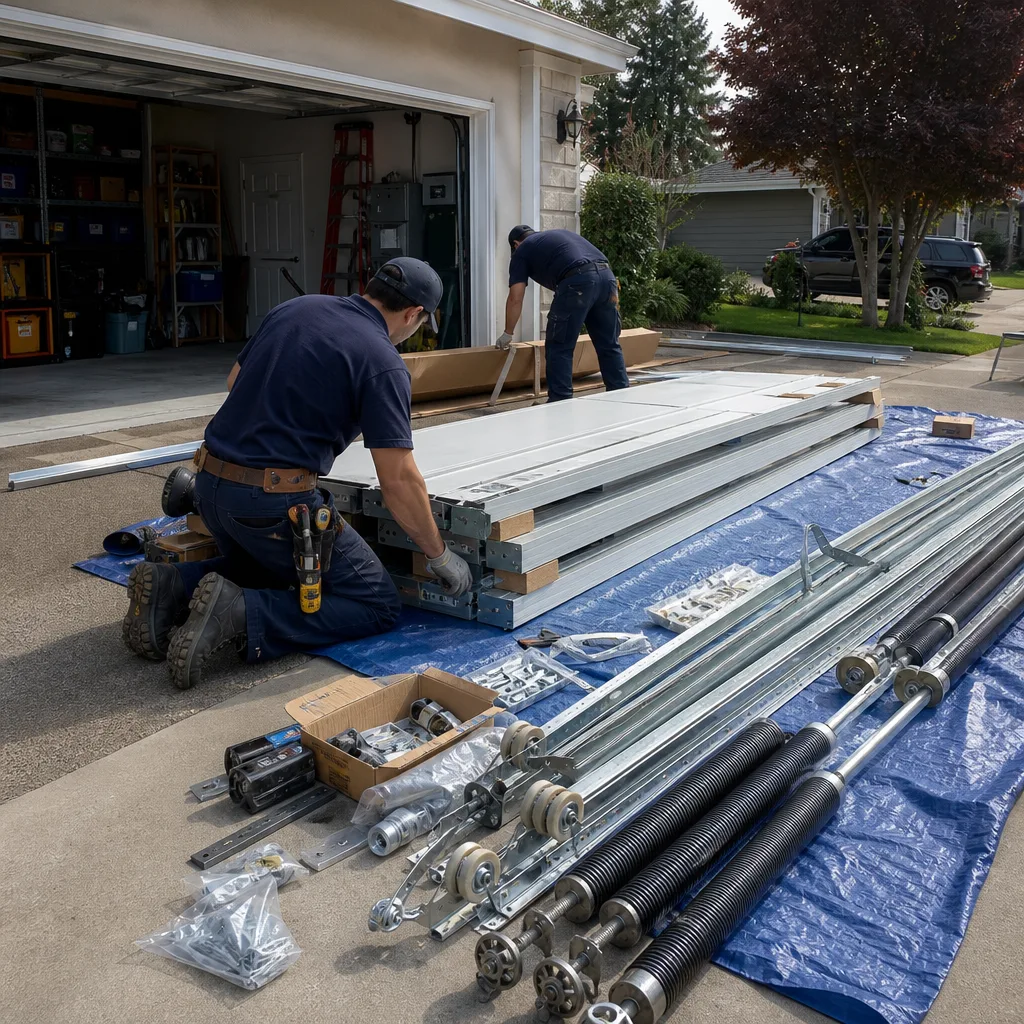
The goal is cumulative knowledge. Each year’s inspection builds on the last, so you’re tracking rates of change, not just current condition. For more guides & resources on extending your door’s lifespan, see our blog.
Page One: Component Baseline
Create a table with these columns and fill it each October:
| Component | Condition Rating (1-5) | Specific Finding | Photo File Name | Action Taken |
|---|---|---|---|---|
| Torsion spring | ||||
| Cable drums | ||||
| Lift cables | ||||
| Bottom brackets | ||||
| Rollers (qty 10-12) | ||||
| Tracks | ||||
| Bottom weatherseal | ||||
| Opener force setting | ||||
| Photo-eye alignment |
Use consistent photo naming: 2024-10-15_spring.jpg, 2024-10-15_cable-drum-left.jpg. Store in a dedicated folder.
Page Two: Annual Summary and Trends
After each spring assessment, record:
- Total door cycles estimated (opener digital displays on some LiftMaster and Chamberlain models show this; otherwise estimate from daily use)
- Any service calls made, with date and finding
- Components replaced, with brand and part number
- Cost of parts and labor
- Projected replacement needs for next year
After three years, this log reveals patterns specific to your door and your garage’s microclimate. A homeowner in Bridle Trails with a north-facing detached garage will see different wear rates than a Somerset homeowner with an attached garage and south exposure. Generic maintenance schedules can’t capture this. Your log does.
When you do call for service, bring the log. Our technicians use it to focus inspection, verify your observations, and quote precisely for what you’ve documented needs attention. Clause 4 of The Haven Standard means we photograph what we find and show you before quoting; your log accelerates that process and often reduces diagnostic time.
Common Mistakes to Avoid
- Using WD-40 on garage door components. It’s a solvent and water displacer, not a lubricant. It evaporates and leaves a sticky residue that attracts dust and moisture, accelerating wear in Bellevue’s humid winters.
- Ignoring a noisy opener. Grinding or chattering from a LiftMaster, Chamberlain, or Genie unit usually indicates a failing trolley carriage or logic board. The failure is imminent, and replacement typically costs $280-450 for the part plus labor.
- Testing spring balance with the opener connected. This gives false readings because the opener motor assists. Always disconnect with the red release cord first. If you’re unsure how, skip the test and call for service.
- Replacing only one spring on a two-spring door. Springs are matched sets. A new spring paired with a fatigued spring creates uneven lift, stressing the opener and tracks. We replace both, always, and document the wire diameter and cycle rating on your invoice.
- Waiting for complete failure. A cable with broken strands or a spring losing tension won’t heal itself. The failure mode is sudden and often damages other components. In Bellevue, March and April emergency calls average 40% higher cost than scheduled replacements because they include secondary damage.
- Neglecting the photo-eye safety test. Misaligned or dirty sensors are the leading cause of “door won’t close” calls. The fix takes two minutes; the service call costs significantly more.
- Assuming mild winters mean mild wear. Bellevue’s temperature cycling and condensation cause damage patterns distinct from harsher climates. The door looks fine until it doesn’t.
When to Call a Professional
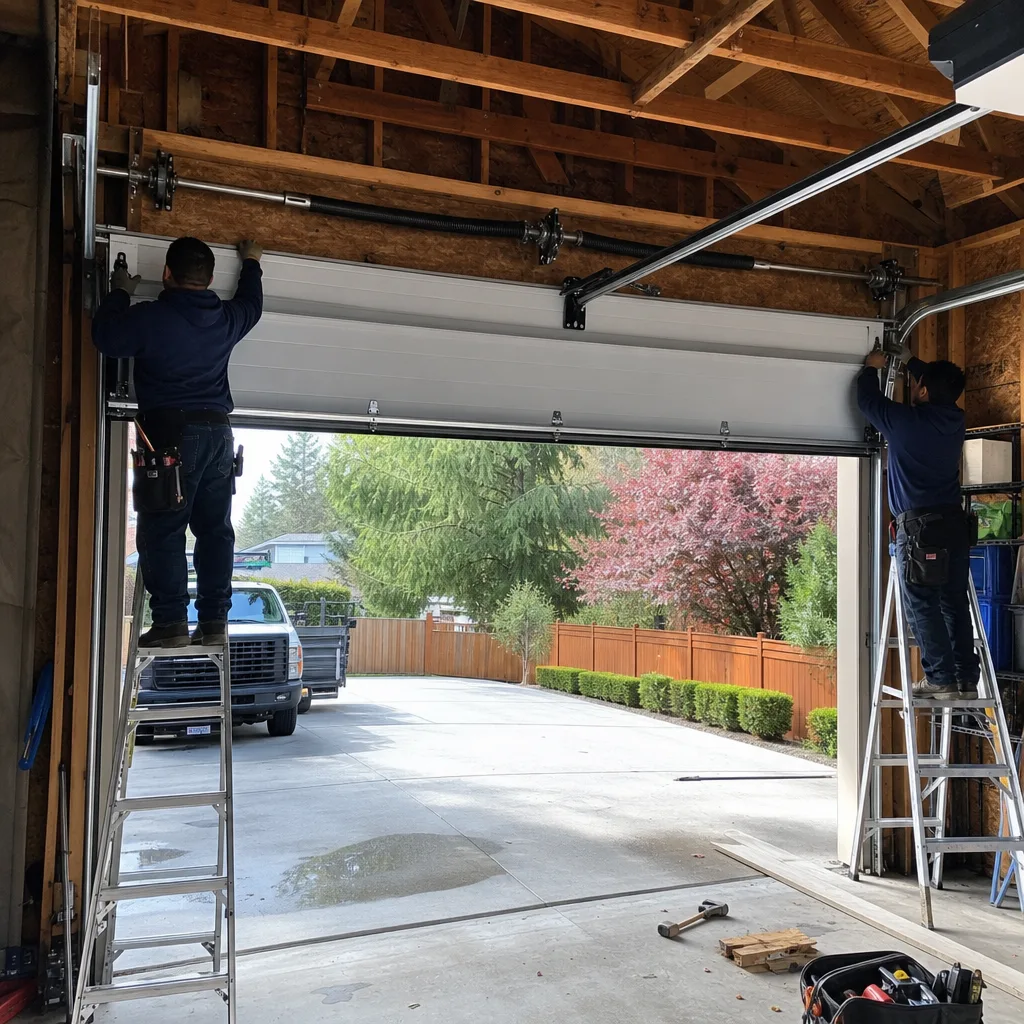
Some conditions require trained technicians with proper tools and safety protocols. Call for service if you observe:
- Any rust on cable drums, bottom brackets, or spring anchor cones
- Broken strands in lift cables (any number)
- Door that won’t stay at waist height when manually tested
- Opener that reverses intermittently or fails auto-reverse testing
- Visible gap in torsion spring coils or clanging sound during operation
- Sagging or binding in door travel, indicating track or roller failure
Safety reminder: Torsion springs store lethal energy. Never attempt to adjust, unwind, or replace a torsion spring. Never loosen cable drum set screws. These tasks require winding bars, proper anchoring, and training. Serious injury and death occur annually from DIY spring work.
Servo Garage Doors Bellevue offers free estimates in Bellevue. A technician arrives with a documented inspection, photographs findings per Clause 4 of The Haven Standard, and delivers a flat written price before any work begins. Call (425) 696-3561 to schedule. We service all major brands including Raynor, LiftMaster, and Genie, and we provide 24/7 emergency response for situations where the door is stuck open or poses a security risk.
Frequently Asked Questions
Lubricate moving components every six months: October before the rains, and June before peak summer use. Use silicone-based lubricant rated for the temperature range, never WD-40. In high-humidity garages with washers or water heaters, inspect quarterly and reapply if you see dryness or hear new noise.
Cold thickens lubricant, stiffens weatherseal, and contracts metal components. The opener works harder against increased resistance. If the noise is grinding rather than squeaking, it indicates bearing or roller wear accelerated by winter conditions. Schedule inspection before spring high-use season compounds the damage.
No. Torsion springs store enough energy to cause serious injury or death. Winding and unwinding require specialized bars, proper anchoring, and training. Our technicians carry the tools and documentation required; your safety is worth the service call. This is why we include the safety caveat explicitly: DIY spring work is not a money-saving strategy.
A preventive maintenance visit from Servo Garage Doors Bellevue typically runs $120-180, including full inspection, lubrication, balance test, force setting verification, and documented photo record of all findings. Component replacements are quoted separately with flat written prices before work starts, per Clause 1 of The Haven Standard. Call (425) 696-3561 for scheduling; estimates are free.
Quality openers from LiftMaster, Chamberlain, or Genie last 10-15 years with proper maintenance. In Bellevue, humidity and temperature cycling stress the logic board and motor capacitors. Units in attached garages fail earlier than those in detached structures. We track opener age in our seasonal log and recommend replacement planning at year 12, before emergency failure.
Yes. Live phone coverage is available 24 hours a day, 7 days a week, including holidays. Emergency calls are answered by a real person, not a recording, with a named technician and an on-the-way text. We do not use callback windows. For emergency garage door situations in Bellevue, call (425) 696-3561.
The Bottom Line
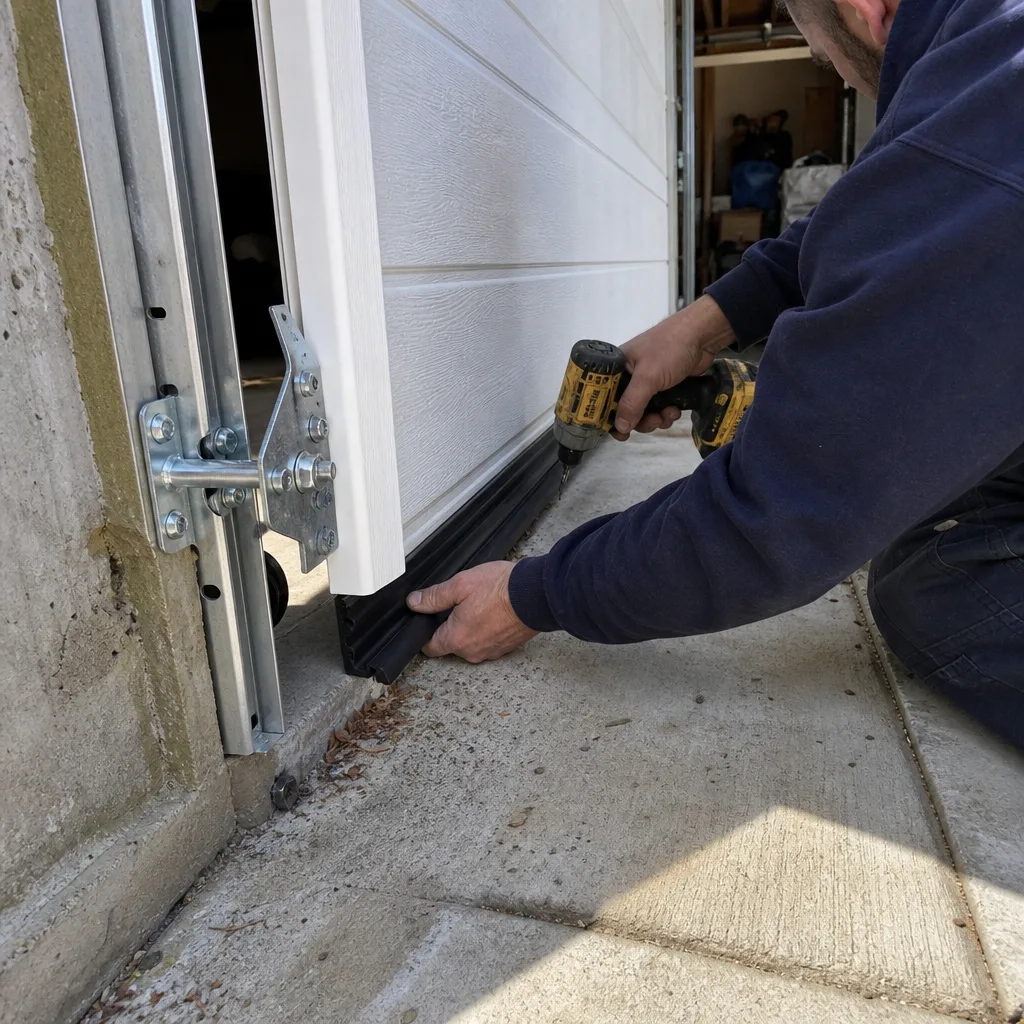
Bellevue’s garage door maintenance isn’t about four equal seasons. It’s about concentrated effort in October through February, when condensation and temperature cycling do 70% of annual damage. Inspect five critical components before the rains start. Monitor through winter. Read the damage in April’s first dry month. Prepare for high summer use with lubrication and safety testing. Build a log that compounds your knowledge year to year. The homeowners who follow this pattern avoid the March emergency call, the security risk of a stuck-open door, and the secondary damage that turns a $180 roller replacement into an $800 panel and track repair. Documentation beats urgency every time.
Written by Marcus Deller, Owner at Servo Garage Doors Bellevue, serving Bellevue since 2015.